
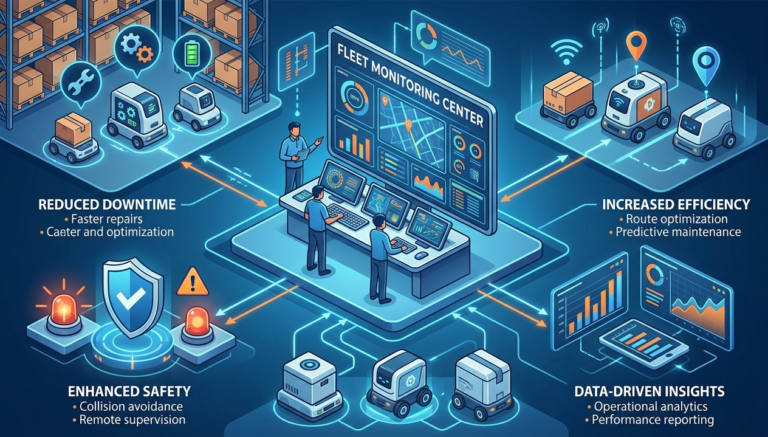
The automation revolution is no longer a distant concept; it’s a present reality transforming industries worldwide. At the forefront of this transformation are autonomous fleets, comprising mobile robots, autonomous mobile robots (AMRs), and sophisticated Transport Robots. These robotic fleets are rapidly becoming indispensable for tasks ranging from Material Handling in sprawling warehouse operations to complex logistical challenges. However, as the scale and complexity of these mobile robot fleets grow, the ability to simply deploy them is no longer sufficient. To truly unlock their potential and ensure peak Operational Efficiency, a sophisticated management approach is required. This is where robot monitoring services emerge not just as a beneficial add-on, but as a critical necessity. By providing Real-time Monitoring, proactive health management, and data-driven insights, these services empower organizations to optimize every facet of their autonomous operations, driving performance to unprecedented levels.
Defining Robot Monitoring: More Than Just a Dashboard
Robot monitoring services are sophisticated systems designed to provide comprehensive visibility and control over autonomous robotic fleets. Far beyond a simple dashboard displaying robot locations, these services offer a holistic view of fleet status, performance, and health. They encompass Real-time Monitoring of individual robots and the entire mobile robot fleet, continuous performance tracking, and detailed robot fleet health management. This advanced oversight allows for proactive intervention, predictive maintenance, and dynamic adjustments to operational strategies. It’s about transforming raw data into actionable intelligence, ensuring that autonomous systems operate at their absolute best, minimizing downtime, and maximizing productivity across all warehouse operations and beyond. This comprehensive approach is fundamental to successful Industry 4.0 integration.
The Pillars of Performance: How Monitoring Drives Key Improvements
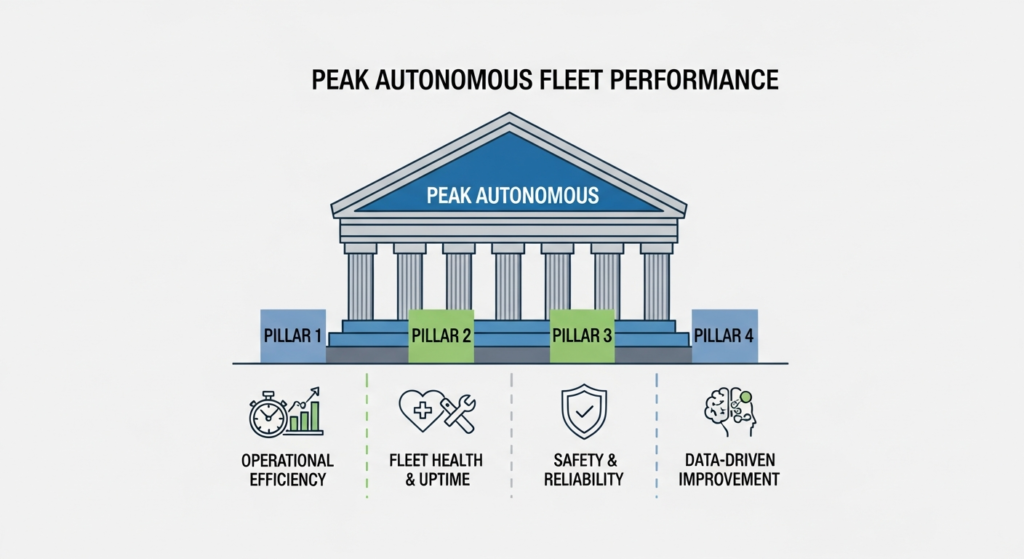
Effective robot monitoring is the bedrock upon which high-performing autonomous fleets are built. It directly impacts critical operational areas, transforming theoretical potential into tangible results. These improvements can be categorized into several key pillars: enhanced operational efficiency, robust fleet health and uptime, unwavering safety and reliability, and continuous data-driven improvement.
Supercharging Operational Efficiency
Maximizing Operational Efficiency is often the primary driver for adopting autonomous fleets. Robot monitoring services play a pivotal role in achieving this by ensuring that tasks are executed optimally and resources are utilized effectively. Sophisticated Fleet Management System capabilities, powered by real-time data, enable precise route planning and dynamic route optimization. This means Transport Robots are always following the most efficient paths, minimizing travel time and energy consumption.
The ability to intelligently schedule tasks and manage the flow of ad hoc tasks is crucial. Advanced task allocation systems within these monitoring platforms ensure that robots are assigned the right jobs at the right time, preventing bottlenecks and idle periods. For example, in Material Handling scenarios within warehouse operations, monitoring services can coordinate the movement of multiple AMRs to ensure efficient picking, stocking, and internal transport, directly impacting throughput. Furthermore, by optimizing Vehicle Movements, monitoring services reduce unnecessary travel, decrease wear and tear, and contribute to overall operational fluidity. This level of coordinated activity is essential for any organization looking to leverage the full power of its robotic fleets.
Ensuring Uptime with Proactive Fleet Health Management
Downtime is the enemy of productivity, especially with complex autonomous systems. Robot monitoring services are instrumental in minimizing unexpected failures through robust robot fleet health management. This goes far beyond simply checking battery levels. Advanced monitoring systems continuously track a wide array of crucial metrics, including detailed battery usage, gauge reading, and motor temperatures.
More sophisticated thermal monitoring and analysis of thermal image parameters can detect subtle issues before they escalate into major problems. For instance, acoustic leak detection can identify pneumatic or hydraulic leaks that might otherwise go unnoticed, leading to performance degradation or catastrophic failure. These systems generate timely maintenance alerts, providing technicians with precise information about potential issues, enabling them to perform predictive maintenance. This proactive approach contrasts sharply with reactive repairs, significantly reducing unplanned downtime. According to recent studies, 95% of predictive maintenance adopters report positive ROI, with 27% achieving full amortization within just one year. Furthermore, predictive maintenance, a core component of robot monitoring, can reduce unexpected failures by up to 70% and increase equipment lifespan by 20–50%. By continuously monitoring the health of every component, organizations can ensure their autonomous mobile robot units remain operational and reliable.
Upholding Safety and Reliability
Safety is paramount in any operational environment, and this is amplified when autonomous systems interact with humans and dynamic infrastructure. Robot monitoring services are integral to maintaining a Safe and reliable operational environment by enabling sophisticated Collision Avoidance strategies and fostering effective human-robot collaboration.
These systems often incorporate conflict detection and resolution systems that analyze the movements and proximity of multiple robots, and even human workers, to prevent collisions. This relies heavily on the autonomous decision-making capabilities facilitated by real-time data processing. In critical situations, the integration with an emergency stop button and other safety mechanisms ensures rapid containment of hazards. Beyond preventing accidents, monitoring services can also support visual inspections by providing camera feeds and data logs that help operators understand robot behavior and environmental conditions. For tasks involving precise interactions, such as when robotic arms are part of the autonomous system, monitoring ensures their movements are safe and accurate. The entire framework of AMR operation is enhanced when robust monitoring and safety protocols are in place.
Harnessing Data for Continuous Improvement
The true power of robot monitoring lies in its ability to transform operational data into actionable insights that drive continuous improvement. Through extensive data extraction, these services provide rich performance tracking and analysis against defined performance KPIs. This allows organizations to identify bottlenecks, inefficiencies, and areas for enhancement that might be invisible through manual observation.
Anomaly detection capabilities are crucial here, helping to flag unusual robot behavior, unexpected task completion times, or deviations from standard operating procedures. This is particularly useful for identifying changing needs in the operational environment or for optimizing inspection workflows, which can be further enhanced by specialized add-ons like a gauge reading computer vision add-on or an acoustic imager payload. The concept of digital twins, fed by real-time monitoring data, allows for simulation and predictive analysis, helping to forecast potential issues and test optimization strategies in a virtual environment before implementing them in the real world. This data-driven approach ensures that the autonomous fleet evolves and improves over time, adapting to new challenges and maximizing its long-term value.
The Technology Backbone: Powering Intelligent Monitoring
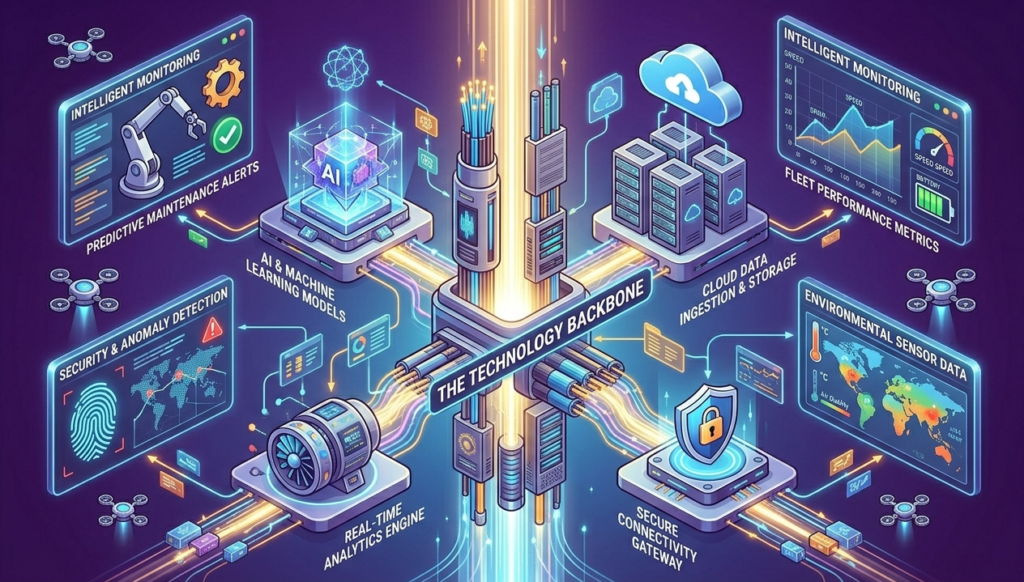
The sophisticated capabilities of modern robot monitoring services are built upon a foundation of advanced technologies. These technologies work in synergy to collect, process, and analyze vast amounts of data, enabling intelligent oversight of autonomous fleets. At the forefront is Artificial Intelligence (AI) and machine learning (ML), which power predictive analytics, anomaly detection, and adaptive decision-making within the fleet.
Navigation systems are critical, with Simultaneous Localization and Mapping (SLAM) and LiDAR navigation providing robots with the ability to perceive their environment and determine their precise location. The data generated by LiDAR, often in the form of Point Cloud data, is invaluable for detailed environmental mapping and obstacle detection, which monitoring services leverage for safety and efficiency analysis. Robust Navigation Software and advanced path optimization systems ensure that robots move efficiently and safely.
The interconnectedness of these systems is facilitated by real-time communication protocols and digital interconnectivity, underpinned by the industrial internet of things (IIoT) and various IoT integration systems. Edge computing allows for immediate data processing directly on the robots or local servers, reducing latency for critical decisions, while cloud-based systems and cloud-based monitoring solutions provide scalability, accessibility, and centralized data management. Standards like VDA 5050 and Model C2 are increasingly important, ensuring interoperability and seamless data exchange between different robot manufacturers and fleet management platforms, promoting a unified approach to monitoring. Crucially, all these operations must maintain a high level of cyber-secured operation to protect sensitive data and prevent unauthorized access.
Fleet Management Systems & Software: The Control Center
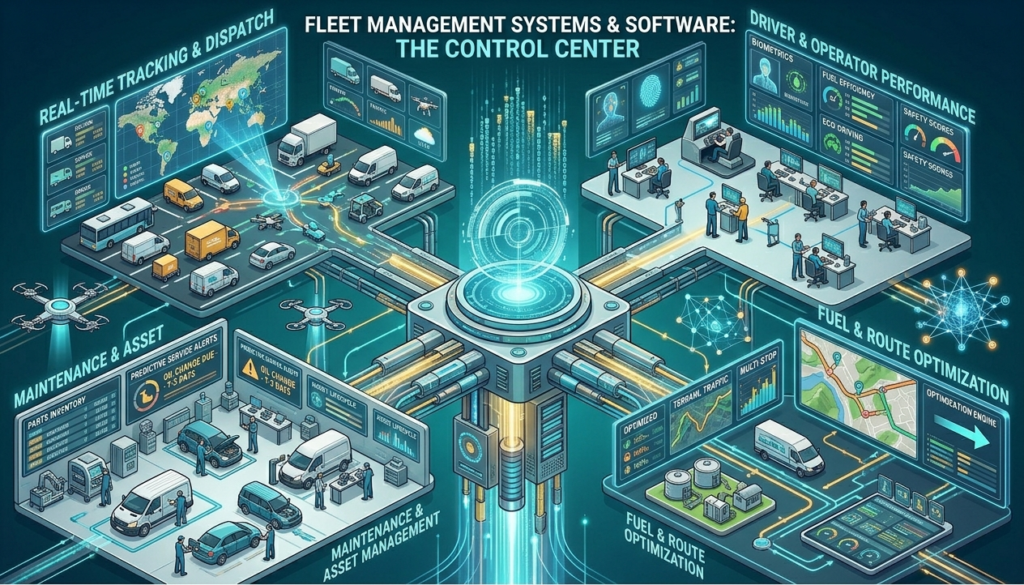
At the heart of effective robot monitoring and management lies the Fleet Management System (FMS). This overarching framework integrates all the operational aspects of an autonomous fleet, providing a centralized hub for control, monitoring, and optimization. Specialized fleet management software is designed to handle the unique complexities of robotic systems, offering functionalities that go beyond traditional fleet management tools.
Platforms like Orbit software and comprehensive solutions such as the Cogniteam Platform exemplify the power of integrated FMS. These systems provide the user interface through which Real-time Monitoring data is visualized, alerts are managed, and operational strategies are deployed. Features like Cloud Connect enable seamless integration with other enterprise systems, such as Warehouse Management Systems (WMS) or Enterprise Resource Planning (ERP) software, creating a truly interconnected operational ecosystem. The Cogniteam Platform, for instance, leverages advanced AI and ML to provide sophisticated fleet coordination, route optimization, and predictive maintenance capabilities, transforming raw data into actionable insights for peak Operational Efficiency. Such integrated software solutions are essential for orchestrating complex robotic fleets, ensuring they operate cohesively and achieve their full performance potential.
Beyond the Basics: Advanced Monitoring for Next-Level Performance
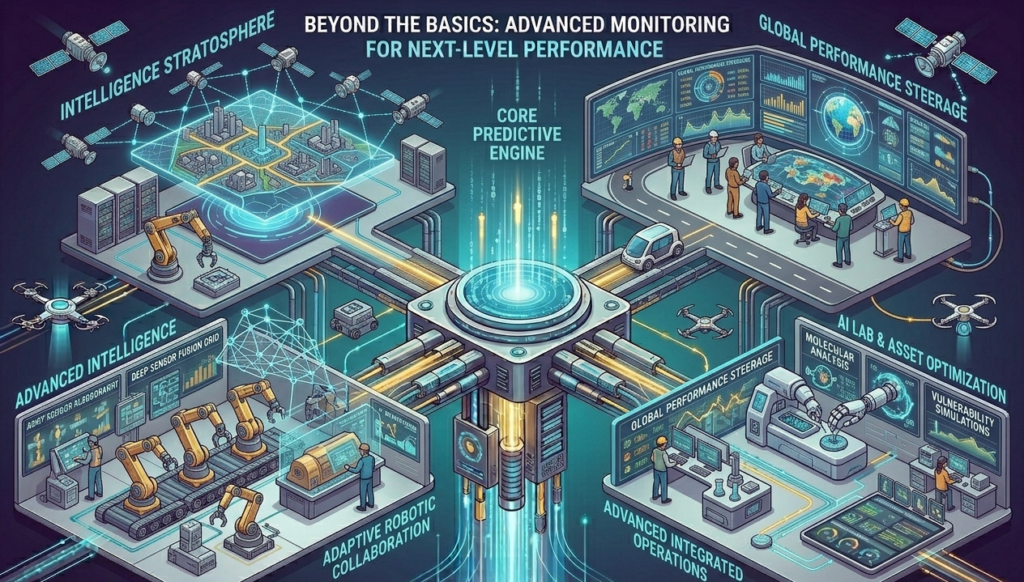
As the field of autonomous systems matures, robot monitoring services are evolving to offer capabilities that push the boundaries of what’s possible. This includes specialized functions like Autonomous Robotic Inspection, where robots equipped with advanced sensors can conduct inspections in hazardous or inaccessible areas, with monitoring services providing the oversight and data analysis crucial for actionable intelligence. This often involves advanced data extraction from camera views or specialized sensors.
The concept of digital twins is becoming increasingly important, providing a virtual replica of the fleet and its operational environment. Fed by real-time data, these digital twins enable predictive modeling, simulation of operational changes, and enhanced autonomous decision-making for maintenance and strategic planning. Furthermore, ensuring cyber-secured operation is not just a baseline requirement but an active area of development in monitoring, protecting valuable data, and operational integrity. The integration of human-oriented hardware and sophisticated audiovisual signaling systems also enhances the synergy between human operators and autonomous systems, making human-robot collaboration more intuitive and effective. As systems become more interconnected, utilizing third-party providers for specialized monitoring tools or analytics becomes common, further enriching the capabilities of the core FMS. The ability to manage changing needs and adapt standard operating procedures dynamically based on real-time monitoring data is key to future-proofing autonomous fleet operations.
Conclusion: The Future of Autonomous Fleets is Monitored and Optimized
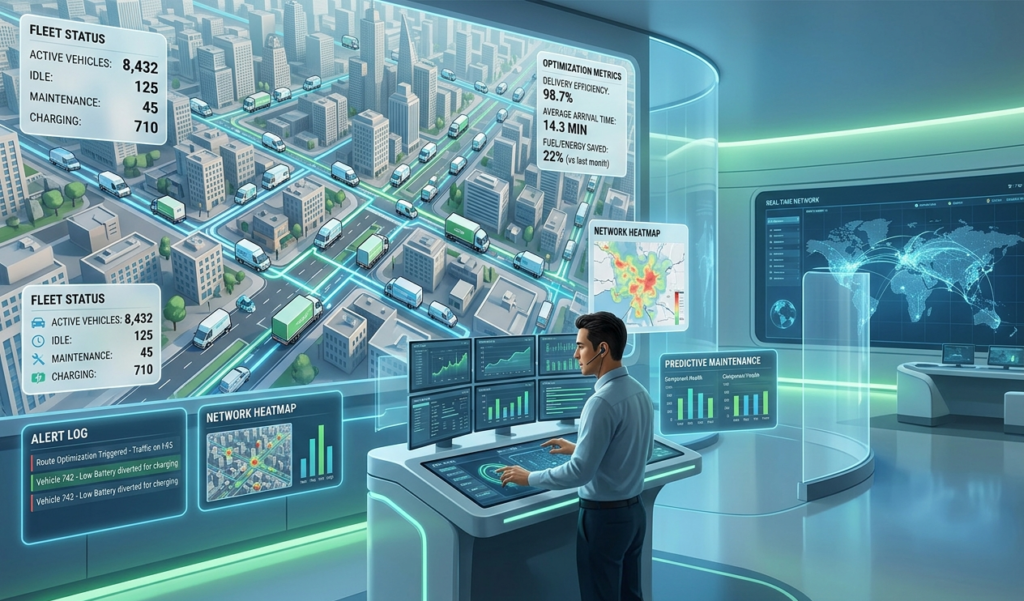
The integration of autonomous fleets into modern industrial and logistical landscapes is an irreversible trend. As these robotic fleets become more prevalent and sophisticated, the role of intelligent monitoring services shifts from a desirable feature to an indispensable cornerstone of operational success. By providing Real-time Monitoring, detailed performance tracking, and proactive robot fleet health management, these services unlock unprecedented levels of Operational Efficiency, ensure maximum uptime, and guarantee the safety and reliability of operations.
The ability to leverage advanced technologies such as Artificial Intelligence, machine learning, LiDAR navigation, and standardized communication protocols like VDA 5050, within robust Fleet Management System frameworks like the Cogniteam Platform and Orbit software, allows organizations to transform their fleets into highly adaptive and intelligent assets. From optimizing route planning and Material Handling in warehouse operations to enabling advanced functions like Autonomous Robotic Inspection, the impact of comprehensive monitoring is profound and far-reaching. Embracing these solutions is not merely about managing robots; it’s about cultivating intelligent, data-driven, and continuously improving autonomous systems that will define the future of operational excellence in the era of Industry 4.0. Organizations that invest in robust robot monitoring services today are positioning themselves for sustained competitive advantage and pioneering the next wave of automation.
