
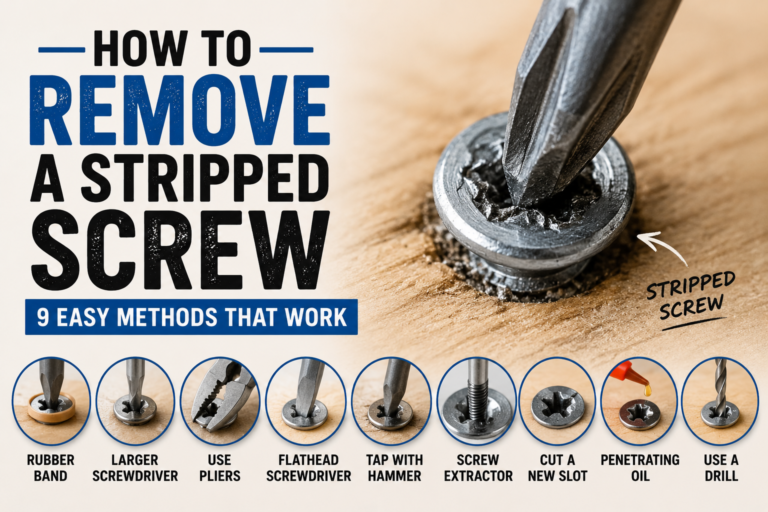
A stripped screw can turn a quick repair into a frustrating project. Whether you’re working on furniture, electronics, a door hinge, or a DIY home improvement task, knowing how to remove a stripped screw can save time, money, and unnecessary damage.
The good news is that most stripped screws can be removed with the right technique. As many experienced DIYers say, “Patience removes more screws than force ever will.” Instead of rushing, use the methods below to safely get the screw out.
What Is a Stripped Screw?
A stripped screw is a screw whose head has become damaged, making it difficult for a screwdriver to grip and turn it.
This usually happens when:
- The wrong screwdriver size is used.
- Too much force is applied.
- The screw is old or rusted.
- Low-quality screws wear out over time.
When the grooves are damaged, normal screwdrivers simply spin without turning the screw.
Why Learning How to Remove a Stripped Screw Matters
A stripped screw may seem like a small problem, but it can stop an entire repair project.
Knowing how to remove a stripped screw helps you:
- Avoid damaging surrounding materials.
- Save expensive tools and hardware.
- Complete repairs faster.
- Prevent further stripping.
Many people make the mistake of applying more pressure, but that often makes the situation worse.
Inspect the Screw Before Starting
Before trying any removal method, take a close look at the screw.
Ask yourself:
- Is the screw slightly stripped or completely damaged?
- Is it rusty?
- Is the head exposed?
- Is there enough room for tools?
The answer will help determine the best removal technique.
Method 1: Use a Rubber Band
One of the easiest tricks for how to remove a stripped screw involves a simple rubber band.
Place a wide rubber band over the screw head and press your screwdriver firmly into it.
The rubber fills the damaged grooves and creates extra grip.
Steps
- Place the rubber band directly over the screw.
- Insert the screwdriver.
- Apply firm downward pressure.
- Turn slowly counterclockwise.
This method works surprisingly well on mildly stripped screws.
Method 2: Switch to a Larger Screwdriver
Sometimes the original screwdriver no longer fits securely.
Try using:
- A larger Phillips-head screwdriver.
- A flathead screwdriver.
- A different bit size.
The larger tool may catch parts of the screw head that are still intact.
For many people learning how to remove a stripped screw, this simple change solves the problem immediately.
Method 3: Use Pliers for Better Grip
If the screw head sticks above the surface, locking pliers can be extremely effective.
Grip the screw head tightly and slowly rotate it.
Avoid jerking or twisting aggressively.
Think of it like opening a stubborn jar lid—steady pressure often works better than brute force.
Best Tools
- Locking pliers
- Needle-nose pliers
- Adjustable pliers
This method is ideal when part of the screw is exposed.
Method 4: Try a Flathead Screwdriver
A stripped Phillips screw may still allow a flathead screwdriver to fit across the damaged grooves.
Insert the flathead firmly and turn slowly.
The wider contact area often creates enough friction to remove the screw.
Many DIY professionals use this technique before moving on to more advanced solutions.
Method 5: Tap the Screwdriver with a Hammer
Sometimes a screwdriver needs extra help getting a grip.
Place the screwdriver in the screw head and gently tap it with a hammer.
The impact can:
- Improve contact.
- Break minor corrosion.
- Create a tighter fit.
After tapping, slowly attempt to unscrew it.
Use caution when working near delicate materials.
Method 6: Use a Screw Extraction Kit
A screw extractor is one of the most reliable tools for how to remove a stripped screw.
These kits are designed specifically for damaged screws.
How It Works
- Drill a small pilot hole into the screw.
- Insert the extractor.
- Turn counterclockwise.
- The extractor bites into the screw and removes it.
While it requires additional tools, it often works when nothing else does.
Method 7: Cut a New Slot
If the screw head is badly damaged, you can create a new groove.
Use:
- A rotary tool
- A small cutting wheel
Cut a straight line across the screw head.
Once the slot is created, use a flathead screwdriver to remove it.
This method is especially useful for larger screws.
Method 8: Apply Penetrating Oil
Rust and corrosion can make screw removal difficult.
Spray a penetrating lubricant onto the screw and allow it to sit for 10–20 minutes.
Popular options include:
- WD-40
- PB Blaster
- Liquid Wrench
The lubricant helps loosen the threads and makes removal easier.
When learning how to remove a stripped screw, don’t overlook lubrication—it often makes a huge difference.
Method 9: Use a Drill
When all else fails, drilling may be necessary.
Carefully drill into the center of the screw.
As the drill bit cuts deeper, the screw head may separate from the shaft.
Once the attached material is removed, the remaining screw portion can often be extracted with pliers.
Important Safety Tips
- Wear eye protection.
- Drill slowly.
- Keep the bit centered.
- Use the correct drill size.
Drilling should generally be a last resort.
How to Remove a Stripped Screw from Wood
Wood projects present unique challenges because excessive force can damage the material.
For wooden surfaces:
- Use the rubber-band method first.
- Try locking pliers if the head is exposed.
- Apply penetrating oil carefully.
- Use a screw extractor before drilling.
Protecting the wood should always be a priority.
How to Remove a Stripped Screw from Metal
Metal surfaces often involve rust and corrosion.
For best results:
- Apply penetrating oil.
- Let it soak thoroughly.
- Use an extractor kit if necessary.
- Drill only when other methods fail.
Patience is particularly important with metal screws.
How to Remove a Stripped Screw from Electronics
Electronics require extra care because components can be fragile.
For small screws:
- Use precision screwdriver sets.
- Try the rubber-band technique.
- Use a micro screw extractor.
- Avoid excessive force.
As technicians often say, “Small screws demand small movements.”
Common Mistakes to Avoid
Many people accidentally make the problem worse.
Avoid these mistakes:
Using the Wrong Screwdriver
A poor fit increases stripping.
Always use the correct size and type.
Applying Too Much Force
More pressure does not always mean more success.
Excessive force can completely destroy the screw head.
Rushing the Process
Taking a few extra minutes often prevents hours of frustration.
Ignoring Rust
Corrosion creates resistance.
Lubrication should be one of the first steps when rust is present.
Best Tools for How to Remove a Stripped Screw
Having the right tools makes the job much easier.
Useful options include:
- Screw extractor kits
- Locking pliers
- Rubber bands
- Precision screwdriver sets
- Penetrating oil
- Rotary tools
- Electric drills
Keeping these tools available can save countless headaches during repairs.
How to Prevent Stripped Screws in the Future
Prevention is always easier than removal.
Use Quality Tools
Cheap screwdrivers often slip and damage screws.
Match the Correct Bit
Use the exact screwdriver type and size.
Apply Steady Pressure
Keep the tool aligned while turning.
Avoid Over-Tightening
Excessive tightening weakens screw heads.
Replace Damaged Screws
If a screw already shows wear, replace it before it becomes a bigger problem.
When to Call a Professional
Most stripped screws can be removed at home, but some situations require professional help.
Consider expert assistance if:
- The screw is embedded in expensive equipment.
- The surrounding material is fragile.
- Multiple removal attempts have failed.
- Specialized tools are required.
In some cases, professional repair costs less than replacing damaged components.
Final Thoughts
Learning how to remove a stripped screw is a valuable skill for homeowners, DIY enthusiasts, and anyone who performs repairs. From simple rubber-band tricks to specialized extractor kits, there are multiple ways to tackle the problem safely.
Start with the least aggressive method and gradually move to stronger solutions if necessary. Remember that patience, proper tools, and careful technique usually lead to success. The next time a screw refuses to cooperate, you’ll know exactly how to remove a stripped screw without damaging your project.
