
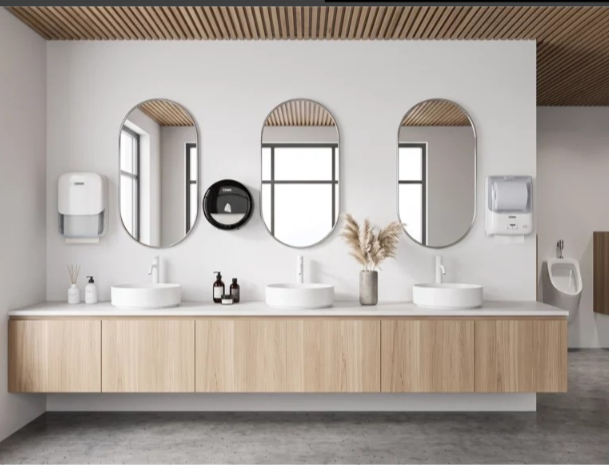
Commercial Bathroom Supplies Selection
Standard bathroom fittings will rarely suffice in public settings. Commercial facilities can range from airports and hotels to shopping centers, restaurants, offices, and many other premises. These places host hundreds or even thousands of visitors per day. The responsibility of selecting appropriate supplies lies in the hands of facility managers.
Hygiene is a critical concern in commercial bathrooms. However, economic considerations cannot be ignored either. Proper fittings contribute to improved sanitation practices and convenient use while lowering maintenance costs. By focusing on hygiene and practical fitting choices, effective commercial bathroom supplies wholesale management can be achieved.
Start With the Needs of the Facility
Facilities have varying requirements for restrooms.
An office facility could receive regular usage each day. In contrast, airports and malls would see constant usage throughout the entire day.
When selecting sanitary equipment, these facilities will have significantly different demands due to daily use. Usage estimates should be made during the design phase.
Usage estimates can be determined based on visitor numbers, periods of high activity, cleaning times, and maintenance staff availability. Such data may assist in identifying suitable equipment options.
Choose Durable Products
Why Durability Matters for High-Frequency Public Restrooms
Facilities like public restrooms encounter specific issues related to procurement and management. Replacements made frequently will result in higher total costs over time.
Choosing Products That Can Survive Commercial Settings
Procurement officers should evaluate if products meet the expected level of durability. Stainless steel, reinforced plastic, and other strong materials are examples of durable materials.
Quality Production Makes All the Difference in Usage
Products will require quality construction for frequent use. Components like hinges, sensors, fasteners, and dispensers are some examples that should last in regular use.
Suppliers with quality assurance processes will assure buyers about long-term product performance.
Focus on Hygiene and Touch Reduction
Why Hotels Should Invest in Touch-Free Restroom Products
Hygiene considerations play an essential role in the operation of public restroom facilities.
Touch-free devices can reduce physical contact with various fixtures in restrooms. Soap dispensers, towel dispensers, air dryers, and similar products can help create hygienic conditions.
Touch-free products can also create a more modern appearance within restrooms. In hospitality environments, this aesthetic consideration may affect how visitors view the entire building.
But adopting touch-free technology does not mean choosing new products just because they appear modern. Sensors should perform consistently, and the devices themselves should remain accessible for maintenance purposes.
Consider Dispenser Capacity
Dispenser Capacity Affects Maintenance Needs
In high-volume situations, the capacity of dispensers becomes quite relevant. Dispensers of small capacities require frequent checks to refill the contents.
However, dispensers of larger capacity allow reducing the number of refill operations. Such dispensers are helpful in airports, shopping malls, hotels, or places where there is heavy traffic and many users throughout the day.
The appropriate capacity will depend on traffic conditions and maintenance schedules. There should be a balance between sufficient capacity and available wall space.
Select Products That Are Easy to Maintain
Why Procurement Needs to Include Maintenance when Selecting Commercial Bathroom Equipment
It is essential to think about maintenance during procurement of bathroom equipment. While a product may look stylish, it becomes burdensome to maintain if it is complicated to operate, refill, clean, or service. Design features should enable easy access to consumable products. Parts availability and technical assistance could become necessary considerations for continued use.
Having many related categories of bathroom equipment under one supplier simplifies procurement. Rather than dealing with several vendors for individual products, facility managers might procure different restroom items via one procurement process.
Think About Appearance as Well as Function
Why Material and Appearance Matter in Commercial Restroom Design
Appearance matters even in functional facilities like restrooms. The design of restrooms in hotels and restaurants has been recognized as playing an important role in influencing the customer experience. A cohesive aesthetic using matching dispensers, trash cans, hand dryers, and related accessory items can create visual unity throughout the facility. Clean aesthetics can help present an orderly and hygienic impression.
Material choice is critical to the overall performance and appearance of bathroom accessories. Stainless steel accessories will complement contemporary commercial designs. Different materials could suit various design philosophies.
Look for Customization Options
Certain Projects Need Nonstandard Product Features
Some projects may have demands that go beyond what is available in ready-to-use products.
Examples include large hotel chains, commercial property developers, or facilities management firms. Specific color tones, brand logos, size specifications, packaging formats, or special assembly arrangements might be required.
Manufacturers offering OEM and ODM services can be more accommodating in such cases. Yet, customization should never jeopardize product effectiveness or maintainability.
Consultation with suppliers prior to production is beneficial. Technical considerations become part of the customization discussion.
Evaluate the Supplier, Not Just the Products
Manufacturing Capabilities of CDWK
While comparing manufacturers, the products themselves should not be the only criteria for decision-making. A reliable supplier will typically document manufacturing capabilities such as experience, quality assurance, production volume, testing processes, and after-sales support.
According to CDWK, the company has been operating in the market for over 23 years. Commercial restrooms products supplied by the company can be seen in airports, shopping centers, hotels, restaurants, and similar public buildings.
Available products include toilet paper dispenser units, liquid soap dispensers, waste bins, air fresheners, mosquito killer machines, and hand dryers.
Additional points worth noting are OEM and ODM customization services, as well as quality control throughout the entire manufacturing chain, including inspection before delivery.
Consider Smart Restroom Technology
Commercial Restroom Management Technology – An Emerging Element
Facility teams can benefit greatly from intelligent restroom technologies. They are designed to track usage data including the status of consumables, environmental parameters, occupancy rates, and other indicators.
In large-scale facilities, tracking can facilitate operational planning. Instead of following strict schedules, teams could base cleaning plans and inventory restocking on real-time demand.
Intelligent technology is not always essential for managing restrooms. High-traffic locations would be the ideal candidates for adopting advanced technology solutions.
Make the Decision Based on Long-Term Value
Low Cost Does Not Necessarily Equal Economical Option
The most economically sensible purchase does not always equate to choosing the lowest-priced product.
A cheaper wall mount soap dispenser that fails repeatedly will inevitably incur higher expenses due to frequent repairs and replacement costs. In contrast, while an appropriate dispenser with adequate capacity might initially command a higher purchase price, its operational expense could be significantly lower.
Factors for Commercial Bathroom Supply Purchases Wholesalers
The purchasing decision of a commercial bathroom supplies wholesale must take into account a variety of considerations.
These considerations include but are not limited to the quality, hygiene, capacity, ease of maintenance, appearance, customization capabilities, and technical assistance offered by manufacturers.
Through careful consideration of each factor, companies can establish a better-managed restroom facility without excessive maintenance activity.
