
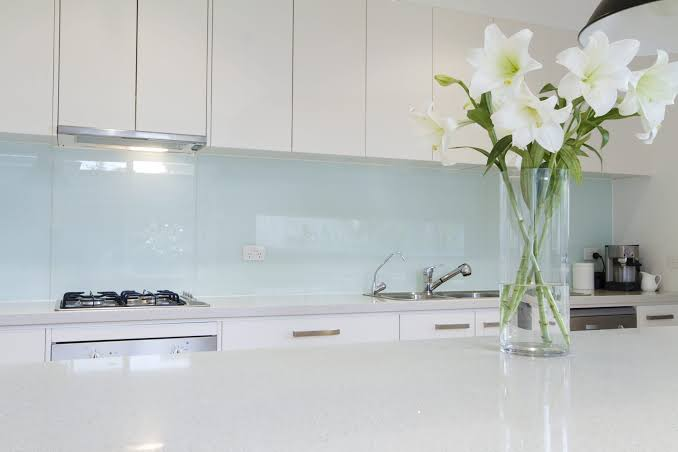
Walk through a few houses built in different decades and you will notice how rarely two kitchens share the same dimensions. Alcoves sit in odd places, chimney breasts jut out, windows land at different heights, and extensions add walls that were never designed to line up neatly. Modern homes often combine all of this in a single room.
That is why more homeowners are choosing a Made to measure splashback instead of a ready-sized panel. A panel cut to your exact dimensions fits the room you actually have. Here is why that matters, and how to get the most from the approach.
The Problem With One-Size Panels
Standard panels come in fixed widths and heights. If your wall is slightly shorter, longer or wider than the panel, something has to give. You might end up with a visible joint, a gap at the edge or a strip of leftover wall that needs filling with something else.
Those small compromises add up. A splashback is one of the first things people notice in a kitchen, and an uneven edge or a crooked seam draws attention for the wrong reasons.
What Cutting to Size Actually Solves
A panel made for your wall can deal with the details that make kitchens awkward.
- Wall length: The panel runs the full stretch of the worktop without needing a join.
- Height: It can finish cleanly under the wall units or run higher behind a hob.
- Cut-outs: Sockets, switches and pipe openings are positioned precisely.
- Corners: Angles and returns can be planned in advance instead of improvised.
- Edges: The finished line looks deliberate rather than patched.
For modern open-plan homes where the kitchen is part of a larger living space, this neatness matters even more. Visitors see the splashback from the sofa as well as from the cooker.
Why Modern Layouts Favour Bespoke Sizing
Contemporary kitchens often depart from the traditional run of units along one wall. Think of islands with hobs, peninsulas, full-height glass behind the cooking zone, and wide windows that interrupt wall space. Each of these changes how much surface is available and where it sits.
Islands and Peninsulas
When the hob moves onto an island, the wall behind it may disappear completely, or a freestanding screen may take its place. Panels for these uses need careful sizing and fixing, so exact measurement is essential.
Handleless and Minimal Designs
Sleek, handleless cabinets look best with a splashback that matches their precision. Even a few millimetres of misalignment shows against clean horizontal lines.
Small and Compact Spaces
In small kitchens, every centimetre of wall is visible. A cut-to-size panel can run edge to edge, which helps the room feel tidy and uncluttered.
The Measuring Stage
Accuracy is the heart of the process, so it deserves attention. Some suppliers offer a measuring visit, and others ask you to supply dimensions with a template. Either way, a few habits help.
- Measure in several places. Walls and worktops are rarely perfectly straight, so check the width and height at more than one point.
- Note every obstacle. Mark sockets, switches, pipes, vents and any wall-mounted fittings.
- Fit the worktop and units first. Measuring after the main installation avoids last-minute shifts.
- Sketch it out. A rough drawing with dimensions keeps everyone clear on the plan.
- Double-check before approval. Compare your numbers with the supplier’s drawing.
Taking a little extra time here is far cheaper than correcting a mistake after cutting.
Choosing Materials and Finishes
Cutting to size is available across several materials, though some suit custom work better than others. Glass Splashbacks are a popular example, since the panel can be shaped and finished to your dimensions in a wide range of colours. Smooth glass also avoids the grout lines that tiles create, which helps keep the wall easy to maintain.
When choosing, consider:
- Colour: Pick a shade that works with your cabinets and flooring.
- Finish: Gloss reflects more light, while matt looks calmer.
- Pattern: Printed designs suit feature walls, plain tones suit busy rooms.
- Thickness and fixing: Ask the supplier what suits your wall and appliances.
Remember that the panel’s heat suitability near a hob depends on the specific product and installation guidance, so ask for the supplier’s advice rather than assuming.
Lighting and Sockets: Plan Ahead
Bespoke panels work best when the rest of the kitchen is already planned. If you want under-cabinet lights, decide their positions before ordering. If you plan to move sockets, do it before the panel is made, because changing them afterwards can be awkward or impossible without replacing the panel.
A few quick prompts:
- Where will small appliances like kettles and toasters sit?
- Do you want sockets visible or tucked into a side wall?
- Will new lighting need cables in the wall space?
Answering these early prevents expensive adjustments later.
How It Compares With Off-the-Shelf Options
Ready-made panels do have their place. They can be convenient, quick to buy and suitable for simple, regular-shaped walls. The trade-off is flexibility. If your measurements fit the standard sizes, you may be perfectly happy. If they do not, cutting to size avoids compromise.
| Consideration | Ready-sized panel | Cut to your measurements |
| Fit on uneven walls | Can leave gaps | Planned around the wall |
| Cut-outs | Often made on site | Positioned in advance |
| Lead time | Often shorter | Usually longer, since it is made for you |
| Suitability | Simple layouts | Awkward or unusual layouts |
Which one wins depends on your kitchen, your timescale and how precise you want the finish to be. Ask suppliers for current lead times instead of assuming them.
A Better Finish for Resale Too
A neat, tailored finish helps a kitchen look well cared for. When buyers or visitors see clean lines and a coordinated look, the space tends to feel more thought-through. That does not guarantee a particular outcome in a sale, but a tidy splashback is one of the details that supports a good first impression.
Questions to Ask Before You Order
- Do you take measurements, or do I provide them?
- How are cut-outs checked before production?
- What is the typical lead time from approval to delivery?
- How should the panel be fixed to my wall type?
- What cleaning method do you recommend?
A supplier who answers clearly and without pressure is usually one you can trust with a careful job.
Final Thoughts
Modern homes come in all shapes, and the wall behind your worktop deserves to be treated as its own project. A splashback made to your measurements fits neatly around sockets, corners and windows, gives a crisp edge and suits layouts that standard panels struggle with. Measure carefully, plan your lighting and fittings early, and choose a material and finish that suits the rest of your kitchen. The result is a surface that looks like it was always meant to be there, which is exactly what a good splashback should do.
