
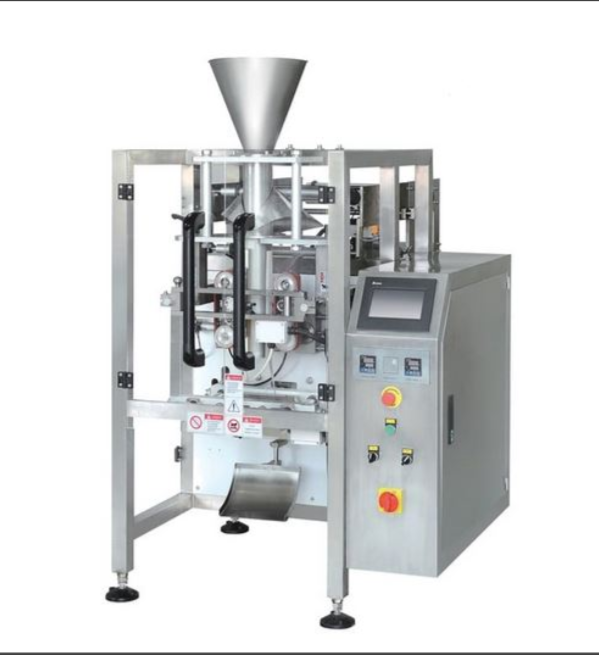
A four-sided sealing packaging machine is a machine that creates packages with four sides that are sealed. This type of machine is common in the packaging of sachets and small packages, where these packages have powdered items, liquids, granules, and many other things.
This packaging provides a good appearance to the product along with good sealing. The appropriate machine will depend on the nature of the product to be packed and other factors.
What Is a 4 Side Seal Packaging Machine?
A 4 side seal packaging machine is designed to form and seal flexible packages around the product. The four edges of the package are sealed to create an individual sachet or pouch.
The machine can be configured for different product categories. JOCHAMP lists applications involving solid, liquid, powder, granular, paste, and fragile products.
The filling system is selected according to the product. For example, powders and liquids require different feeding mechanisms.
How Does a 4 Side Seal Packaging Machine Work?
The exact sequence depends on the machine model. However, the basic process includes several important stages.
1. Film Feeding
Packaging film is supplied from a roll. The film passes through guiding and tension-control components before reaching the forming and sealing sections.
Proper film alignment is important. It helps maintain consistent package dimensions and prevents film deviation during production.
2. Film Guiding and Forming
The film is guided into the correct position for packaging.
Depending on the machine design, one or more film webs may be used. The film then moves toward the longitudinal sealing section.
3. Longitudinal Sealing
The machine creates the side seals along the length of the package.
JOCHAMP describes a longitudinal sealing section that uses heating elements to seal the left and right sides.
4. Product Filling
The product is introduced into the formed package.
Different filling mechanisms may be used for powders, liquids, granules, and pastes. The filling system should match the product’s physical characteristics.
5. Transverse Sealing
The transverse sealing mechanism creates the top and bottom seals.
This step separates individual packages while maintaining the required seal structure.
6. Cutting
After sealing, the finished packages are cut into individual units.
The cutting system must be synchronized with the sealing and film-feeding process to maintain consistent package dimensions.
Main Types of 4 Side Seal Packaging Machines
Different production requirements call for different configurations.
Vertical Multi-Lane Four-Side Seal Machine
Multi-lane machines can produce multiple sachets during each production cycle.
JOCHAMP’s JCF-500, for example, is a vertical four-side sealing machine configured for 4–8 lanes. Its published specifications indicate applications for granules, powders, liquids, and pastes.
The number of lanes affects production capacity and depends on the product, package size, and filling system.
Horizontal Four-Side Seal Machine
Horizontal systems move products and packaging material along a horizontal production path.
JOCHAMP lists the JCF-800 as a horizontal four-side seal packaging machine within its product range.
This configuration may be useful for applications that require a horizontal packaging arrangement.
Multi-Lane Packaging Machine
A multi-lane configuration divides the film into multiple packaging tracks.
This can increase output without requiring a single package to travel through the machine at an extremely high individual cycle rate.
JOCHAMP lists JCF-500, JCF-900, and JCF-1200 vertical multi-lane models, along with its JCF-800 horizontal model.
What Products Can Be Packed?
One of the main advantages of four-side sealing technology is its flexibility.
Powder Products
Suitable powders can include:
- Coffee powder
- Milk powder
- Instant drink powder
- Flour
- Chili powder
- Medical powders
- Seasoning powders
JOCHAMP specifically identifies powders such as coffee cream, milk powder, instant soup, flour, chili powder, and medical powders as applications for its four-side sealing equipment.
Granular Products
Free-flowing granular products can also be packaged in sachets.
Examples may include:
- Sugar
- Salt
- Coffee granules
- Pepper
- Brewing granules
The filling mechanism should be selected according to the flow characteristics and required filling quantity.
Liquid Products
Four-side sealing machines can also be configured for liquid products.
JOCHAMP lists products such as ketchup, honey, mayonnaise, olive oil, shampoo, and detergent among relevant liquid applications.
Paste Products
Products with a thicker consistency may require specialized filling equipment.
Examples can include sauces, creams, and other liquid-paste products.
The filler should be selected according to viscosity and required filling accuracy.
Packaging Materials
Film selection is an important part of machine configuration.
Different products may require different laminated or heat-sealable film structures. The material must be compatible with the machine’s sealing system and the product’s storage requirements.
For example, JOCHAMP’s JCF-500 documentation lists packaging materials including PET/AL/PE, PET/PE, NY/AL/PE, and NY/PE for that specific model.
These materials should not be assumed to apply to every four-side seal machine.
Before purchasing, manufacturers should provide the packaging film specifications and discuss them with the equipment supplier.
Key Components of a 4 Side Seal Packaging Machine
A typical system can include several major components.
Film Feeding System
This system controls the movement of the packaging material.
Guiding and Rectifying System
It helps keep the film aligned during production.
JOCHAMP identifies guiding and rectifying components as part of its four-side sealing system.
Filling System
The filler transfers the product into each package.
Its design depends on whether the product is a powder, liquid, granule, paste, or solid.
Sealing System
Heating elements and sealing mechanisms create the package’s four sealed edges.
Cutting System
The cutter separates finished sachets after sealing.
Control System
PLC and touchscreen controls can be used to manage machine functions and operating parameters.
JOCHAMP describes advanced control and touch-screen operation for its four-side sealing equipment.
Benefits of Four-Side Sealed Packaging
Reliable Package Closure
Four sealed edges can provide a secure package structure when the correct film and sealing parameters are used.
Seal quality still depends on temperature, pressure, dwell time, film structure, and machine setup.
Compact Sachet Format
Four-side sealed sachets can provide a compact packaging format.
This can be useful for single-use products, samples, small portions, and products that require controlled quantities.
Multiple Product Applications
The technology can accommodate powders, liquids, granules, and pastes when paired with appropriate filling systems.
Multi-Lane Production
Multi-lane systems can produce several sachets simultaneously.
This makes them suitable for applications where production volume is an important consideration.
Automated Operation
Automation can reduce repetitive manual packaging work.
A suitable control system can also help operators monitor production and adjust available machine settings.
Applications Across Different Industries
Food Industry
Four-side sealed packaging is used for suitable food products such as seasonings, coffee, sauces, sugar, and other small portions.
Pharmaceutical Industry
The format can be used for appropriate powders and other pharmaceutical products.
The machine and packaging materials must meet the requirements of the specific application.
Cosmetics
Liquid and paste products such as shampoo and cosmetic formulations can be packaged using suitable filling systems. JOCHAMP lists cosmetic applications for its four-side sealing machines.
Daily Chemical Products
Products such as detergent and other household formulations can be suitable for four-side sachet packaging.
How to Choose a 4 Side Seal Packaging Machine
Choosing the right machine requires more than comparing production speeds.
Consider the Product
Determine whether the product is:
- Powder
- Liquid
- Granule
- Paste
- Solid
- Fragile material
This information determines the most suitable filling technology.
Check Package Dimensions
Define the required:
- Sachet length
- Sachet width
- Filling volume
- Film width
These specifications should be matched with the selected machine model.
For example, JOCHAMP’s JCF-500 documentation lists a sachet length range of 50–120 mm, a width range of 50–105 mm, and a filling capacity of 0.5–60 ml for that particular model.
Determine Production Requirements
Estimate the required number of sachets per minute.
Multi-lane machines can increase output, but actual production depends on the filling system, product characteristics, package size, and operating conditions.
Evaluate the Film
Provide the manufacturer with the exact film structure and thickness.
This helps determine whether the film is suitable for the machine’s sealing system.
Consider Available Space
Vertical and horizontal machine configurations have different space requirements.
Review machine dimensions, operator access, maintenance space, and connections before installation.
Why Choose JOCHAMP?
JOCHAMP describes itself as a packaging machinery manufacturer providing research, development, sales, and service for packaging equipment. Its four-side sealing range includes vertical multi-lane and horizontal configurations.
The company also offers customization based on product type, packaging material, dimensions, and production requirements. Its stated process covers requirement consultation, solution design, manufacturing, testing, delivery, and installation support.
For manufacturers handling different product types, this approach can help match the filling system and sealing configuration to the actual packaging application.
Frequently Asked Questions
What is a 4 side seal packaging machine?
It is packaging equipment that forms individual sachets or pouches with four sealed edges. Depending on its configuration, it can package powders, liquids, granules, pastes, and other suitable products.
What products can be packed with a four-side seal machine?
Suitable applications include food products, pharmaceutical products, cosmetics, household chemicals, powders, liquids, granules, and pastes. The filling system must be matched to the product.
What is a multi-lane four-side sealing machine?
A multi-lane machine creates several packages simultaneously through separate packaging tracks. This configuration can increase production output for suitable applications.
What should I consider before buying a four-side seal machine?
Consider the product type, filling quantity, sachet dimensions, film material, production volume, number of lanes, available floor space, and required automation.
Can four-side seal machines pack liquids and powders?
Yes. Different filling mechanisms can be installed for different products. JOCHAMP’s published information includes separate applications for liquid, powder, granular, and paste products.
Conclusion
A 4 sides seal packaging machine represents a fully automatic solution for forming, filling, sealing, and cutting sachets one by one. This type of sealing machine offers a four-edge sealing system, which is appropriate for use in different food products, pharmaceutical, cosmetic, and daily chemical products industries.
It would be better to consider all necessary aspects before buying a machine in order to make the right choice based on real packaging requirements.
