
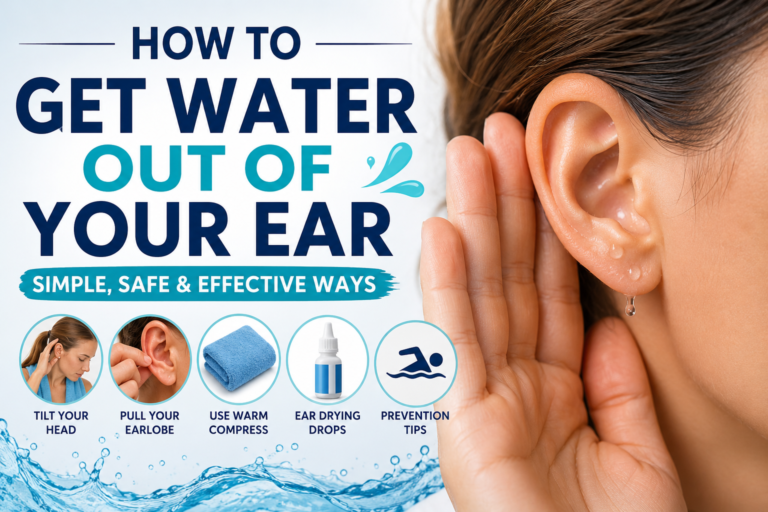
Water trapped inside your ear can be annoying, uncomfortable, and sometimes even painful. Whether it happens after swimming, showering, or washing your hair, many people immediately search for how to get water out of your ear because the sensation can linger for hours.
The good news is that in most cases, trapped water can be removed safely at home. Knowing how to get water out of your ear correctly can help prevent irritation, infection, and unnecessary discomfort.
Why Water Gets Stuck in Your Ear
The ear canal is a narrow passage that can sometimes trap water instead of letting it drain naturally. This is especially common after swimming or spending time underwater.
Some people are more likely to experience trapped water because of the shape of their ear canals, excess earwax, or frequent exposure to water. When water remains inside, it may create a blocked feeling or make sounds seem muffled.
As the saying goes, “A small amount of trapped water can feel much bigger than it really is.” Even a few drops can cause noticeable discomfort.
Common Signs of Water Trapped in the Ear
Recognizing the symptoms can help you determine whether you need to take action.
Common symptoms include:
- A feeling of fullness in the ear
- Muffled hearing
- A sloshing or bubbling sensation
- Mild discomfort
- Tickling inside the ear canal
- Temporary hearing changes
If these symptoms appear after swimming or bathing, trapped water is often the cause.
How to Get Water Out of Your Ear Safely
Several simple techniques can help remove trapped water without damaging your ear.
1. Tilt Your Head and Pull Your Earlobe
This is often the easiest solution.
Tilt your head toward the affected side and gently pull on your earlobe. This can help straighten the ear canal and allow gravity to do the work.
Many people find that the water drains out immediately after trying this method.
2. Use Gravity
Lie down on your side with the affected ear facing downward.
Remain in that position for several minutes. Gravity may slowly encourage the water to leave the ear canal naturally.
This method is simple, safe, and often surprisingly effective.
3. Create a Gentle Vacuum
Place your palm over the affected ear and gently press it inward before pulling it away.
This action can create mild suction that helps loosen trapped water.
After a few attempts, tilt your head and allow the water to drain.
4. Try the Yawning Technique
Yawning helps move the muscles around the ear and can open pathways that encourage drainage.
If a real yawn does not come naturally, try pretending to yawn several times.
Many people notice pressure relief almost immediately.
5. Chew Gum
Chewing gum creates jaw movements that may help release trapped water.
The movement affects the area surrounding the ear canal and can improve drainage.
This method works particularly well when water becomes trapped after swimming.
Use Warm Steam to Loosen Water
Steam can help relax the ear canal and promote drainage.
Fill a bowl with hot water or take a warm shower. Allow the steam to reach your ears while breathing normally.
After several minutes, tilt your head to encourage the water to flow out.
Think of it like loosening a stuck lid on a jar—sometimes a little warmth makes everything move more easily.
The Warm Compress Method
A warm compress can be another helpful option.
Place a warm, damp cloth against the affected ear for about 30 seconds. Remove it briefly and repeat several times.
The warmth may help open the ear canal and make it easier for trapped water to escape.
Use Ear Drying Drops
Over-the-counter ear drying drops are specifically designed to remove moisture.
These products typically contain ingredients that help water evaporate quickly.
Always follow the instructions on the package and avoid using drops if you have an ear injury, ear infection, or a ruptured eardrum.
What Not to Do When Water Is Stuck in Your Ear
Understanding how to get water out of your ear also means knowing what to avoid.
Never insert objects into your ear, including:
- Cotton swabs
- Hairpins
- Pens or pencils
- Fingers
- Tweezers
These items can push water deeper into the canal or damage sensitive ear tissues.
A useful rule is: “If it goes deeper than your fingertip, it probably does not belong in your ear.”
Why Cotton Swabs Can Make Things Worse
Many people instinctively reach for a cotton swab.
Unfortunately, cotton swabs often push water and earwax further inside the ear canal rather than removing them.
This can increase blockage and raise the risk of infection.
If you’re wondering how to get water out of your ear, cotton swabs should not be your first choice.
Can Earwax Cause Water to Stay Trapped?
Yes, excess earwax can contribute to the problem.
Earwax can create a barrier that prevents water from draining normally. As a result, moisture becomes trapped behind the wax buildup.
If trapped water occurs frequently, a healthcare professional may recommend safe earwax removal.
How Long Does Trapped Water Usually Last?
In many cases, trapped water drains naturally within a few minutes or hours.
Sometimes it may remain for a day or two before leaving on its own.
If symptoms continue for several days despite trying multiple methods, medical evaluation may be necessary.
Knowing how to get water out of your ear quickly can help prevent longer-lasting irritation.
When Trapped Water Leads to Swimmer’s Ear
Water that remains inside the ear for an extended period can sometimes lead to an infection called swimmer’s ear.
This condition develops when bacteria grow in the moist environment of the ear canal.
Signs of swimmer’s ear include:
- Increasing pain
- Redness
- Swelling
- Itching
- Drainage from the ear
- Reduced hearing
Prompt treatment can prevent complications.
When You Should See a Doctor
Most cases of trapped water resolve without professional help.
However, medical attention may be needed if you experience:
- Severe pain
- Fever
- Ear drainage
- Hearing loss
- Symptoms lasting more than several days
- Signs of infection
A healthcare provider can determine whether water, wax buildup, or another issue is causing the problem.
Preventing Water From Getting Trapped
Prevention is often easier than treatment.
Helpful prevention tips:
- Dry your ears thoroughly after swimming
- Tilt your head after showering
- Use a towel around the outer ear
- Wear swim earplugs if recommended
- Keep excessive earwax under control
- Avoid inserting objects into your ears
Taking a few seconds to dry your ears properly can save hours of discomfort later.
Best Practices After Swimming
Swimming is one of the most common causes of trapped water.
After leaving the pool or ocean:
- Tilt your head to each side.
- Gently tug your earlobes.
- Dry the outer ear with a towel.
- Use approved ear-drying drops if needed.
These simple habits can greatly reduce the chances of water becoming trapped.
Frequently Asked Questions
Is trapped water in the ear dangerous?
Usually not. Most cases resolve naturally or with simple home remedies. Problems generally arise only when water remains trapped for long periods.
Can sleeping help remove water from the ear?
Yes. Sleeping on the affected side may allow gravity to help drain the water overnight.
Can I use a hair dryer?
A hair dryer on the lowest heat and speed setting can sometimes help. Hold it several inches away from your ear and keep it moving.
How often should I use ear-drying drops?
Follow the manufacturer’s instructions. Overuse may irritate the ear canal.
What is the fastest way to remove trapped water?
For many people, tilting the head, pulling the earlobe, and using gravity provide the quickest results.
Final Thoughts
Learning how to get water out of your ear can save you from unnecessary discomfort and frustration. Most cases can be handled safely at home using simple methods like tilting your head, creating gentle suction, using steam, or allowing gravity to work naturally.
Remember that your ears are delicate. Avoid inserting objects into them, and seek medical advice if pain, hearing loss, or signs of infection develop. With the right approach, how to get water out of your ear becomes a simple problem with an easy solution.
