
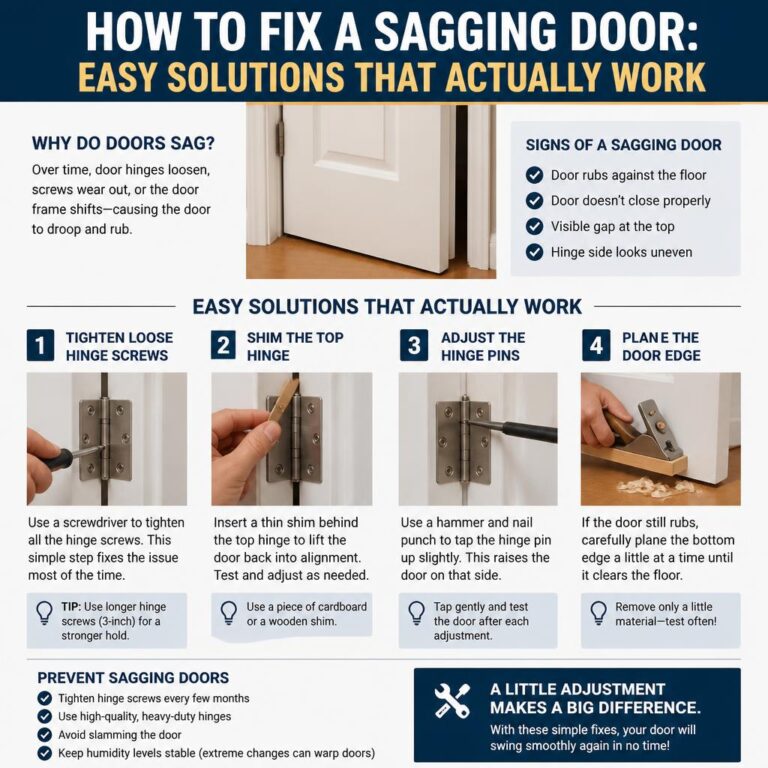
A sagging door can be one of the most annoying problems in a home. It may scrape the floor, stick when opening, or refuse to close properly. The good news is that learning how to fix a sagging door is usually much easier than most homeowners think.
In many cases, the problem comes from loose hinges, worn screws, or a door frame that has shifted slightly over time. With a few basic tools and a little patience, you can restore proper alignment and make your door work like new again.
As many carpenters say, “A door that doesn’t fit properly is often telling you exactly where the problem is.” The key is knowing where to look and what to adjust.
What Causes a Door to Sag?
Before learning how to fix a sagging door, it helps to understand why it happens.
Most doors sag because of:
- Loose hinge screws
- Worn-out hinge holes
- Heavy door weight
- House settling over time
- Warped door frames
- Humidity and seasonal changes
Even a small shift of a few millimeters can cause noticeable problems with closing and latching.
Signs Your Door Is Sagging
A sagging door usually shows obvious symptoms.
Look for these common signs:
- The door rubs against the floor.
- The top corner sticks against the frame.
- The latch no longer lines up with the strike plate.
- The door swings open by itself.
- Visible gaps appear around the frame.
If you notice one or more of these issues, it’s time to learn how to fix a sagging door before the problem gets worse.
Tools You May Need
Most repairs require only simple household tools.
Basic Tools
- Screwdriver
- Drill
- Wood screws
- Wood glue
- Toothpicks or wooden dowels
- Sandpaper
- Level
- Hammer
Having these items ready makes the repair process much smoother.
How to Fix a Sagging Door Step by Step
The best approach is to start with the easiest fixes first.
Step 1: Tighten All Hinge Screws
Loose screws are the most common cause of a sagging door.
Open the door and inspect every hinge screw carefully. Tighten each screw firmly using a screwdriver.
Many homeowners are surprised to find that simply tightening a few screws solves the entire problem.
After tightening, test the door again.
Step 2: Replace Short Screws With Longer Ones
If tightening doesn’t help, the screws may no longer grip the wall framing securely.
Remove one screw from the top hinge and replace it with a 3-inch wood screw.
The longer screw reaches deeper into the wall stud and pulls the door frame back into alignment.
This simple trick is one of the most effective methods for how to fix a sagging door.
Step 3: Repair Stripped Screw Holes
Sometimes screws spin freely because the wood inside the hole has worn out.
Here’s a quick repair method:
- Remove the loose screw.
- Fill the hole with wood glue.
- Insert several toothpicks or a wooden dowel.
- Trim the excess material.
- Let it dry.
- Reinstall the screw.
This creates fresh wood for the screw to grip.
Step 4: Adjust the Hinges
Bent hinges can pull a door out of position.
Check whether any hinge appears damaged or slightly bent.
You can:
- Tighten loose hinges.
- Replace damaged hinges.
- Carefully bend hinges back into alignment.
Small hinge adjustments often create a noticeable improvement.
Step 5: Add Hinge Shims
A shim is a thin spacer placed behind a hinge.
If one side of the door sits too low, adding a shim behind the appropriate hinge can improve alignment.
Thin cardboard or specialty hinge shims work well for this purpose.
Professional carpenters frequently use this technique because it offers precise adjustments.
How to Fix a Sagging Door That Won’t Latch
One of the most frustrating situations is when the latch no longer catches the strike plate.
If you’re searching for how to fix a sagging door that won’t latch, start by identifying where the latch is missing.
Check Latch Alignment
Close the door slowly and watch the latch position.
You may notice:
- The latch sits below the strike plate.
- The latch sits above the strike plate.
- The latch hits the edge of the strike plate.
These clues reveal exactly what needs adjustment.
Tighten the Top Hinge
A door that won’t latch often sags downward.
Tightening or replacing the top hinge screws frequently raises the latch enough to restore proper operation.
This is often the fastest solution for how to fix a sagging door that won’t latch.
Move the Strike Plate
If the door is otherwise aligned, adjusting the strike plate may be easier.
Remove the strike plate and reposition it slightly.
Sometimes moving it just a few millimeters is enough to solve the issue.
After reinstalling, test the door several times.
File the Strike Plate Opening
In some cases, the latch barely misses the opening.
Using a metal file, carefully enlarge the strike plate opening.
This creates additional clearance and helps the latch engage properly.
Always remove only a small amount of material at a time.
How to Fix a Sagging Door This Old House Style
Many homeowners search for how to fix a sagging door this old house because older homes present unique challenges.
Older houses often experience decades of settling, causing frames and doors to shift.
The repair process is similar, but additional inspection is important.
Inspect the Entire Door Frame
In older homes, the issue may not be the door itself.
Check for:
- Uneven gaps
- Cracked trim
- Bowed door jambs
- Signs of foundation movement
Addressing frame problems may be necessary before adjusting the door.
Reinforce the Hinges
Older wood can become soft and worn.
Installing longer screws helps anchor the hinges into stronger framing material behind the jamb.
This technique is commonly recommended in traditional home restoration projects.
Check for Warping
Wood doors in older homes may warp due to age and moisture.
Lay a straight edge along the door surface to identify any bowing.
A severely warped door may require planing or replacement.
Rebuild Damaged Hinge Areas
Some historic doors have hinge areas that are badly worn.
Wood filler, dowels, or partial wood repairs can restore strength and provide a secure mounting surface for new screws.
This approach preserves original doors while improving functionality.
When You May Need to Plane the Door
If all hinge adjustments fail, the door itself may need trimming.
Door planing involves removing a small amount of wood from the edge.
This should only be done after confirming the hinges and frame are properly aligned.
Removing too much material can create gaps and affect appearance.
Work slowly and test frequently.
Preventing Future Door Sagging
Once you’ve learned how to fix a sagging door, you’ll want to prevent the problem from returning.
Follow these maintenance tips:
- Tighten hinge screws annually.
- Address loose hinges immediately.
- Keep doors protected from excess moisture.
- Lubricate hinges periodically.
- Repair frame damage early.
Regular maintenance can add years to the life of your doors.
Common Mistakes to Avoid
Many DIY repairs fail because homeowners rush the process.
Avoid these mistakes:
- Ignoring loose screws
- Using screws that are too short
- Filing the strike plate before checking alignment
- Over-tightening screws
- Planing the door too early
A careful, step-by-step approach almost always produces better results.
Should You Call a Professional?
Most sagging doors can be repaired without professional help.
However, consider hiring a professional if:
- The frame is severely warped.
- Foundation settling is affecting alignment.
- Multiple doors are sagging.
- Structural repairs are needed.
A professional can identify larger issues that simple adjustments cannot solve.
Final Thoughts
Learning how to fix a sagging door can save time, money, and frustration. Most problems come down to loose hinges, worn screws, or minor alignment issues that are surprisingly simple to correct.
Whether you’re searching for how to fix a sagging door that won’t latch or researching how to fix a sagging door this old house style, the solution usually starts with careful inspection and small adjustments. In many cases, a few minutes of work can restore smooth operation and eliminate years of annoyance.
Remember the old saying: “A properly hung door should work effortlessly.” With the right approach, yours can too.
