
A garage door that refuses to close can be frustrating, especially when you’re in a hurry. In many cases, the problem is not the garage door itself but the safety sensors located near the bottom of the door tracks. Learning how to fix garage door sensor issues can save you time, money, and unnecessary service calls.
Garage door sensors are designed to prevent accidents. They stop the door from closing if something is detected in its path. While this safety feature is important, sensor problems can make your garage door act unpredictably. The good news is that most sensor issues are simple to diagnose and repair.
This guide explains how to fix garage door sensor problems in a clear and practical way, even if you have little experience with garage door systems.
Understanding Garage Door Sensors
Garage door sensors are small devices mounted on each side of the garage door opening, usually a few inches above the floor.
One sensor sends an infrared beam while the other receives it. When the beam is uninterrupted, the garage door closes normally. If something blocks the beam, the door stops or reverses.
Think of the sensors as a silent conversation between two devices. If they stop “talking” to each other, the garage door assumes something is in the way and refuses to close.
Common Signs Your Garage Door Sensor Needs Fixing
Knowing the symptoms can help you quickly determine whether you need to learn how to fix garage door sensor problems.
Signs to watch for:
- Garage door starts closing and reverses immediately
- Door will not close using the remote
- Sensor lights are blinking
- One sensor light is completely off
- Garage door closes only when holding the wall button
- Door behaves inconsistently
If you notice any of these issues, the sensors are often the first place to check.
Why Garage Door Sensors Stop Working
Before learning how to fix garage door sensor issues, it helps to understand the most common causes.
Misalignment
The sensors must face each other directly. Even a slight bump from a bicycle, lawn tool, or storage box can knock them out of position.
Dirty Sensor Lenses
Dust, spider webs, dirt, and moisture can block the infrared beam and create communication problems.
Loose Wiring
Over time, vibrations from daily garage door use can loosen wire connections.
Sunlight Interference
Direct sunlight can sometimes interfere with sensor performance, especially during certain times of the day.
Damaged Sensors
Old age, water damage, or accidental impacts can cause sensors to fail completely.
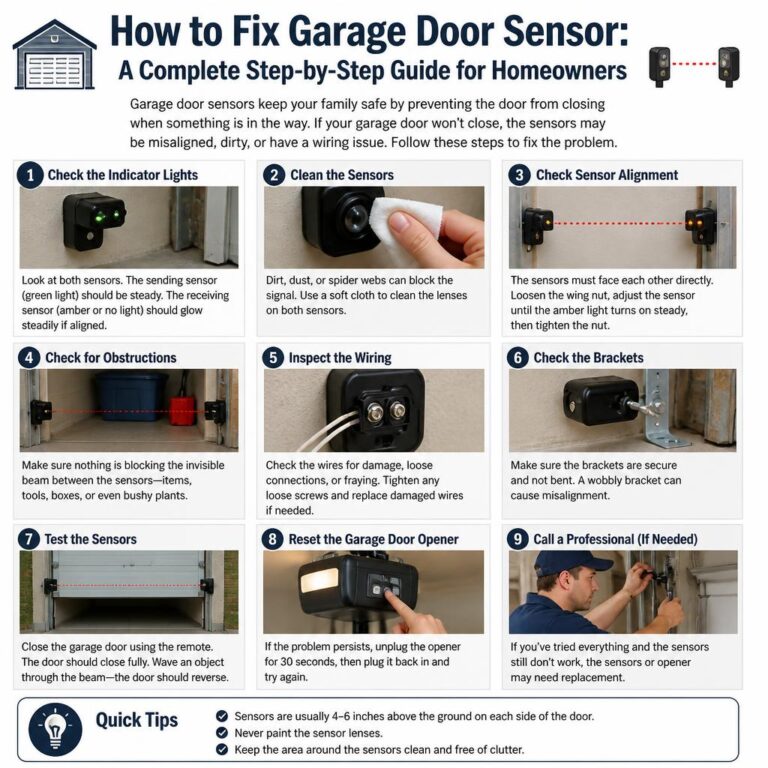
Step 1: Inspect the Sensor Lights
The first step in how to fix garage door sensor problems is checking the indicator lights.
Most garage door systems have LED lights on both sensors.
What the lights mean:
- Solid lights usually indicate proper operation
- Flashing lights often signal misalignment
- No light may indicate power or wiring issues
Check both sensors carefully and note any unusual light patterns.
A simple light inspection often reveals the problem within seconds.
Step 2: Clean the Sensor Lenses
One of the easiest fixes is cleaning the sensors.
Dust and debris can accumulate over time, affecting the beam connection.
How to clean them:
- Turn off the garage door opener if possible
- Use a soft microfiber cloth
- Gently wipe both sensor lenses
- Remove dirt, cobwebs, and moisture
Avoid harsh cleaning chemicals that could damage the lens surface.
Many homeowners are surprised that a quick cleaning solves their sensor issues immediately.
Step 3: Check Sensor Alignment
Misalignment is among the most common reasons people search for how to fix garage door sensor solutions.
The sensors must point directly at each other.
How to align garage door sensors:
- Locate both sensors.
- Loosen the mounting brackets slightly.
- Adjust each sensor until they face one another.
- Watch for the indicator lights to become steady.
- Tighten the brackets carefully.
A good analogy is aiming two flashlights directly at each other. Even a slight angle can break the connection.
Take your time during this step because precise alignment matters.
Step 4: Remove Any Obstructions
Garage door sensors require a completely clear path.
Look between the sensors and remove anything that could block the beam.
Common obstructions include:
- Storage bins
- Garden tools
- Children’s toys
- Pet bowls
- Leaves and debris
Even small objects can interrupt the sensor signal and prevent the garage door from closing properly.
Step 5: Inspect the Wiring
If alignment and cleaning don’t solve the issue, inspect the wiring.
Learning how to fix garage door sensor wiring problems can often restore operation without replacing parts.
Look for:
- Frayed wires
- Loose connections
- Broken insulation
- Rodent damage
- Corrosion
Carefully trace the wires from the sensors to the garage door opener.
If you notice loose wire connections, reconnect them securely.
Always disconnect power before working with electrical components.
Step 6: Check for Sunlight Problems
Many homeowners don’t realize sunlight can affect garage door sensors.
Strong sunlight may overwhelm the receiver sensor and create false obstruction readings.
Solutions include:
- Installing a small shade over the sensor
- Adjusting sensor positioning slightly
- Using manufacturer-approved sun shields
If the problem only occurs during specific hours of the day, sunlight interference may be the cause.
Step 7: Test the Garage Door System
After performing repairs, test the door several times.
Testing checklist:
- Open the garage door fully
- Close it using the remote
- Test using the wall button
- Repeat several cycles
- Observe sensor lights
The door should move smoothly without reversing unexpectedly.
Consistent operation usually confirms that you’ve successfully learned how to fix garage door sensor issues.
When to Replace Garage Door Sensors
Sometimes repairs are not enough.
Older sensors can wear out and eventually fail.
Consider replacement if:
- Sensor housing is cracked
- Lights never turn on
- Water damage is visible
- Wiring is severely damaged
- Sensors repeatedly fail after adjustments
Replacement sensors are generally affordable and can often be installed within an hour.
As many garage door professionals say, “A reliable sensor is a small investment that protects both property and people.”
Safety Tips While Working on Garage Door Sensors
Safety should always come first.
Important precautions:
- Disconnect power before repairs
- Never bypass safety sensors permanently
- Keep children away while testing
- Use stable ladders if needed
- Follow manufacturer instructions
Garage door sensors exist for a reason. Disabling them may create serious safety risks.
Preventing Future Sensor Problems
Once you’ve mastered how to fix garage door sensor issues, regular maintenance can help prevent future problems.
Maintenance tips:
- Clean sensors monthly
- Check alignment every few months
- Keep storage items away from sensor paths
- Inspect wiring annually
- Remove cobwebs regularly
A few minutes of maintenance can prevent many common garage door issues.
Frequently Asked Questions
Why is my garage door sensor blinking?
Blinking usually indicates misalignment, dirt on the lens, or an interrupted sensor beam.
Can I use my garage door if a sensor is bad?
Some systems allow temporary operation using the wall button, but the sensor should be repaired as soon as possible.
How long do garage door sensors last?
Most quality sensors can last 10–15 years or longer with proper care.
Are garage door sensors expensive to replace?
In most cases, replacement sensors are relatively affordable compared to major garage door repairs.
Can I fix garage door sensors myself?
Yes. Most homeowners can handle cleaning, alignment, and basic troubleshooting without professional assistance.
Final Thoughts
Learning how to fix garage door sensor problems is one of the most useful garage maintenance skills a homeowner can have. Most sensor issues are caused by simple problems such as dirt, misalignment, loose wiring, or obstructions.
Start with the easiest fixes first—cleaning the lenses, checking alignment, and removing obstacles. These simple steps solve the majority of sensor-related problems. If the sensors remain unreliable after troubleshooting, replacement may be the best solution.
Remember, a properly working sensor system helps protect your family, pets, vehicles, and belongings. Taking a few minutes to inspect and maintain your sensors can keep your garage door operating safely and reliably for years.
