
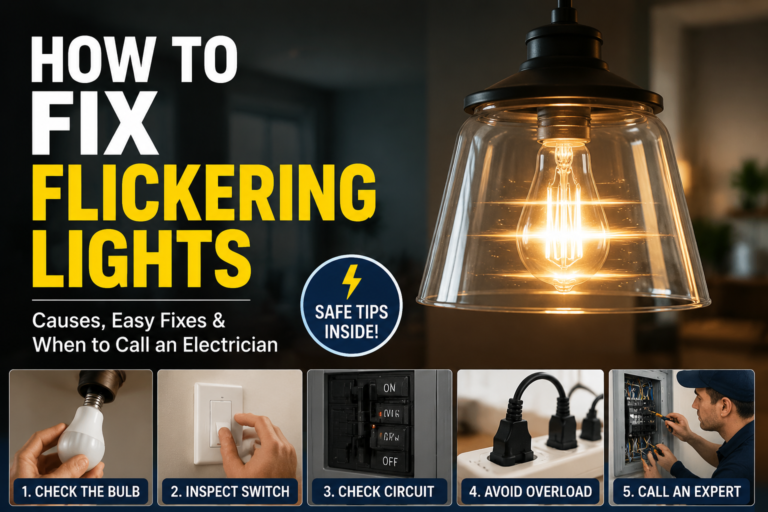
Flickering lights can feel annoying at first, but they can also be a warning sign that something in your electrical system needs attention. Sometimes the fix is simple, like tightening a bulb. Other times, it may point to loose wiring, an overloaded circuit, or a problem with your main electrical panel.
If you are searching for how to fix flickering lights, the first step is to understand what kind of flicker you are dealing with. A light that flickers once when a large appliance starts is very different from lights that blink all day across several rooms.
The good news is that many minor causes can be checked safely at home. The important part is knowing where to stop. As the saying goes, “A small electrical warning should never be treated like a small inconvenience.” Lights often show problems before outlets, switches, or breakers do.
This guide explains how to fix flickering lights in a simple, practical way so you can spot the cause, handle safe basic checks, and know when it is time to call a licensed electrician.
Why Do Lights Flicker?
Lights flicker when the electrical current flowing to them becomes unstable. That instability can happen because of a loose bulb, a weak switch, a bad fixture, poor wiring, or a sudden power demand from an appliance.
For example, if your lights dim for a second when the air conditioner turns on, that may happen because the unit pulls a large amount of power at startup. But if lights flicker randomly even when no big appliance is running, the cause may be more serious.
Understanding the pattern matters. One flickering lamp usually means a small local issue. Several flickering lights in different rooms may point to a larger electrical problem.
Before trying how to fix flickering lights, always look at where, when, and how often the flicker happens. That simple observation can save time and help prevent unsafe guessing.
Common Causes of Flickering Lights
The most common causes are usually easy to understand. A bulb may be loose in the socket, the bulb may be failing, or the fixture may not be compatible with the type of bulb you are using.
LED bulbs can also flicker when used with old dimmer switches. Many older dimmers were made for incandescent bulbs, not modern LEDs. This mismatch can cause buzzing, flashing, or uneven brightness.
Another common reason is an overloaded circuit. If too many devices are pulling power from the same circuit, your lights may flicker when something heavy turns on.
Loose wiring is one of the more serious causes. “Flickering lights are often the electrical system’s way of whispering before it starts shouting.” If the flicker is frequent, strong, or spreading across the home, do not ignore it.
Start With the Simple Checks
If you want to know how to fix flickering lights, begin with the safest and easiest checks first. Do not open electrical panels or touch wiring unless you are trained.
First, turn off the light and let the bulb cool. Then gently check whether the bulb is screwed in properly. A loose bulb can break contact inside the socket and cause flickering.
Next, try replacing the bulb with a new one. Bulbs near the end of their life can flicker before they fail completely. This is especially common with cheaper LED bulbs or older fluorescent lights.
Also check whether the flicker happens only in one lamp or fixture. If it does, the problem is probably limited to that bulb, socket, lamp cord, switch, or fixture.
Check the Bulb Type and Compatibility
Not all bulbs work well with every fixture. This is especially true with LED bulbs and dimmer switches.
If your lights flicker after switching from traditional bulbs to LEDs, the dimmer may not be LED-compatible. In that case, the best fix is to use dimmable LED bulbs with a dimmer switch designed for LEDs.
You should also check the wattage rating on the fixture. Using a bulb that exceeds the fixture’s rating can create heat and safety problems. Always stay within the recommended wattage.
When learning how to fix flickering lights, bulb compatibility is one of the easiest problems to solve. A better-quality bulb or the right dimmer can often stop the flicker quickly.
Look at the Light Switch
A weak or worn-out light switch can also cause flickering. If the light flickers when you touch, wiggle, or slowly move the switch, the switch may be failing.
You may also notice a crackling sound, warmth around the switch plate, or a delay when turning the light on. These signs should not be ignored.
Do not remove the switch cover or touch wiring unless you know how to work safely with electricity. A licensed electrician can replace a faulty switch quickly and correctly.
A bad switch may seem minor, but it can become a bigger issue. “Electricity does not give many second chances, so small warning signs deserve serious attention.”
Notice When Appliances Turn On
Large appliances can make lights dim or flicker briefly. Common examples include air conditioners, refrigerators, washing machines, dryers, microwave ovens, and space heaters.
These appliances need more power when they start. If the circuit is weak, overloaded, or shared with lights, the sudden demand can cause a visible flicker.
A quick flicker when a large appliance starts is not always dangerous. However, strong dimming, repeated flickering, or lights that stay dim for several seconds may mean the circuit needs attention.
If you are figuring out how to fix flickering lights, write down which appliance is running when the flicker happens. This clue can help identify whether the issue is load-related.
Check for Overloaded Circuits
An overloaded circuit happens when too many devices draw power from the same electrical line. This is common in older homes where modern appliances have been added over time.
Signs of an overloaded circuit include flickering lights, warm outlets, tripping breakers, buzzing sounds, or lights dimming when devices are plugged in.
Try unplugging some devices from the same area and see if the flickering improves. Do not rely on extension cords or power strips as a long-term fix for heavy electrical loads.
The proper solution may be adding a dedicated circuit for large appliances. This is especially important for space heaters, refrigerators, freezers, and air conditioners.
When Flickering Lights Are Dangerous
Some flickering lights are more than a simple annoyance. They can signal serious electrical hazards that need professional attention.
Call an electrician if you notice:
- Flickering in multiple rooms
- Burning smell near outlets or switches
- Buzzing sounds from fixtures or the panel
- Frequent breaker trips
- Warm switch plates or outlets
- Sparks when plugging in devices
- Lights getting unusually bright and dim
These symptoms may point to loose wiring, a failing breaker, a damaged circuit, or a problem with the main service connection.
When people ask how to fix flickering lights, the safest answer is not always “do it yourself.” Sometimes the smartest fix is to stop using the affected circuit and call a professional.
Flickering Lights in One Room
If flickering happens in only one room, the issue is usually local. It may involve a single switch, fixture, outlet, or circuit serving that room.
Start by checking bulbs and fixtures. Replace questionable bulbs and avoid mixing incompatible bulbs with dimmers.
If several lights in the same room flicker together, the room’s circuit may have a loose connection or overload problem. This is not something to guess about.
A licensed electrician can test the circuit, check the switch box, inspect the fixture wiring, and confirm whether the room is safely powered.
Flickering Lights Throughout the House
If lights flicker across the whole home, the problem may be larger. It could involve the main electrical panel, utility service, grounding issue, or a loose service neutral.
This type of flickering should be taken seriously. Whole-house flickering can affect appliances, electronics, and the safety of your electrical system.
You may notice lights getting brighter in one room while dimming in another. That can be a warning sign of a neutral connection problem, which needs urgent attention.
For whole-house flickering, do not try to fix it yourself. Contact an electrician and, if needed, your utility company. This is one of the most important safety points in any guide about how to fix flickering lights.
Flickering LED Lights
LED lights are energy-efficient, but they can flicker for several reasons. The most common cause is an incompatible dimmer switch.
Some LED bulbs also flicker because they are low-quality, damaged, or not designed for enclosed fixtures. Heat buildup can shorten their life and cause performance issues.
Voltage changes can also affect LEDs more visibly than older bulbs. Since LEDs react quickly to current changes, even small electrical fluctuations may show up as flicker.
To fix LED flickering, use dimmable LED bulbs, install an LED-compatible dimmer, and choose bulbs from reliable brands. This simple change often solves the problem.
Flickering Lights After a Storm
Lights may flicker after storms because of damaged outdoor lines, utility problems, moisture, or power surges.
If the flickering started right after lightning, heavy wind, or flooding, be extra careful. Electrical systems and water do not mix safely.
Check whether your neighbors are having the same issue. If they are, the problem may be on the utility side rather than inside your home.
If only your house is affected, call an electrician. Storm-related electrical damage can hide inside panels, outlets, or wiring and may not be visible from the outside.
Flickering Lights in an Older Home
Older homes are more likely to have outdated wiring, older panels, weak circuits, or too few dedicated lines for modern appliances.
A home built decades ago may not have been designed for today’s electrical load. Computers, chargers, HVAC systems, kitchen appliances, and entertainment devices all add demand.
If flickering is common in an older home, it may be time for an electrical inspection. This does not always mean a full rewiring job, but it does help identify safety risks.
When thinking about how to fix flickering lights in an older property, the goal is not just stopping the flicker. The real goal is making sure the home can safely handle modern power needs.
Safe DIY Fixes You Can Try
There are a few simple steps most homeowners can try safely before calling an electrician.
You can:
- Tighten loose bulbs
- Replace old or failing bulbs
- Use the correct bulb type
- Switch to LED-compatible dimmers
- Unplug overloaded power strips
- Move heavy appliances to proper outlets
- Check whether flickering affects one area or the whole home
These steps can solve many minor flickering problems. They also help you collect useful information if you need professional help later.
Avoid removing outlet covers, opening switch boxes, or working inside the breaker panel unless you are qualified. Basic checks are fine, but electrical repairs require skill.
What Not to Do
Do not ignore flickering lights that happen often. Repeated flickering can be a sign of heat, arcing, or unstable current.
Do not keep resetting a breaker without finding the cause. A breaker trips to protect the circuit, not to annoy you.
Do not use extension cords as a permanent solution for appliances. They can overheat, especially with high-demand devices.
Most importantly, do not attempt wiring repairs based only on online advice. Articles can guide you, but they cannot test your home’s electrical system.
When to Call a Licensed Electrician
Call an electrician if the flickering continues after replacing bulbs and checking compatibility. You should also call if the flickering is widespread, intense, or connected with smells, sounds, heat, or breaker trips.
An electrician can test voltage, inspect wiring, check the panel, identify overloaded circuits, and repair unsafe connections.
This is especially important if you live in an older home, recently installed new appliances, or noticed flickering after electrical work.
Professional help may cost money, but it protects your home and family. “The cheapest electrical repair is the one done safely before a small problem becomes a major failure.”
How Electricians Diagnose Flickering Lights
An electrician will usually begin by asking when the flicker happens. They may ask whether it affects one light, one room, or the whole house.
Then they may test the fixture, switch, circuit, breaker, and electrical panel. If needed, they may check voltage stability and load levels.
They can also determine whether the issue is inside your home or connected to the utility service. This matters because some problems must be handled by the power company.
A professional diagnosis removes the guesswork. That is important because flickering lights can have several causes that look similar from the outside.
Quick Troubleshooting Checklist
Use this simple checklist when trying to understand how to fix flickering lights at home:
- Does only one bulb flicker?
- Does the flicker stop after replacing the bulb?
- Is the bulb loose?
- Are you using LED bulbs with an old dimmer?
- Does flickering happen when an appliance starts?
- Do lights flicker in more than one room?
- Are outlets, switches, or breakers warm?
- Do you hear buzzing or smell burning?
- Has the issue started after a storm?
- Is your home older or recently renovated?
If the answer points to a simple bulb or dimmer issue, the fix may be easy. If the signs point to wiring, panels, or multiple rooms, call a professional.
How to Prevent Flickering Lights
Prevention starts with using quality electrical products. Cheap bulbs, poor fixtures, and overloaded outlets often create problems later.
Use bulbs that match the fixture and dimmer. For LEDs, choose dimmable bulbs only when using dimmer switches.
Avoid plugging too many high-demand devices into one area. Large appliances should have proper circuits whenever possible.
It is also smart to schedule an electrical inspection if your home is old, your breakers trip often, or your lights flicker regularly. Preventive checks can catch problems before they become emergencies.
Final Thoughts on How to Fix Flickering Lights
Learning how to fix flickering lights starts with simple observation. A loose bulb, wrong dimmer, or failing LED may be easy to solve. But frequent flickering, whole-house flickering, buzzing, burning smells, or warm outlets should never be ignored.
Start with safe checks: tighten the bulb, replace it, check dimmer compatibility, and notice whether appliances trigger the problem. These steps can help you narrow down the cause.
But when the flicker feels unusual, spreads across rooms, or comes with other warning signs, call a licensed electrician. Electrical problems are not worth guessing over.
In the end, how to fix flickering lights is about more than comfort. It is about protecting your home, your appliances, and your peace of mind.
