
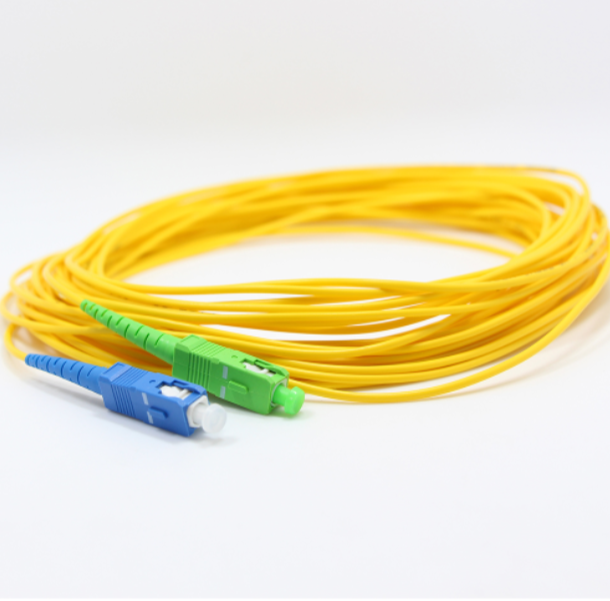
Fiber-to-the-Home networks require stable connections between the distribution point and the premises of the consumer. Conventional termination in the field may take some more time and even special tools to accomplish.
The FTTH pre-connectorised cable assembly offers a factory-terminated connection and could be considered by network providers in case they need a quick deployment of consistent connections.
What Does FTTH Pre-Connectorised Mean?
FTTH pre-connectorized cable denotes a fiber optic cable that comes fitted with a connector before being installed at its final destination.
Whereas the installation and connection of the fiber cables were done in the past by hand, now they come pre-prepared with just a plug-and-play action necessary to connect.
Pre-connectorized assemblies may be produced in many different forms depending on the architecture and point of connection of the FTTH network.
What Is a Pre-Connectorized FTTH Drop Cable?
A pre-connectorised FTTH drop cable is designed for the subscriber-side section of a fiber network.
It can connect distribution equipment to a customer’s premises or another designated termination point. A factory-installed connector provides a ready-made interface for compatible equipment.
OMC’s pullable pre-connectorised bullet SC/APC FTTH drop patch cord is designed for FTTH deployment and uses a pre-installed SC/APC connector. The company describes the assembly as suitable for applications where efficient installation and reliable optical connectivity are required.
How Does a Pre-Connectorised FTTH Cable Work?
The cable is manufactured with the required connector already attached.
During deployment, installers route the cable to the required location and connect the pre-terminated end to compatible equipment or a suitable optical interface.
This removes some of the field termination work associated with conventional fiber installation. It can also make the installation process more predictable because the connector is prepared and tested before deployment.
The exact installation method depends on the cable design and project requirements.
Benefits of FTTH Pre-Connectorised Solutions
Faster Installation
One of the main advantages is reduced field termination work.
Installers do not need to perform every connector termination on site. This can help shorten deployment time, especially when many subscriber connections need to be completed.
Consistent Connections
Factory termination allows the connector assembly to be produced under controlled manufacturing conditions.
This can help provide greater consistency between cable assemblies. Proper testing before shipment can also help identify potential connector or fiber issues before installation.
Reduced Need for Specialized Tools
Field fiber termination can require specialized equipment and trained personnel.
Pre-connectorised assemblies reduce the amount of termination work required at the installation site. This can make deployment more practical for certain FTTH projects.
Easier Network Deployment
FTTH deployments may involve hundreds or thousands of individual connections.
Using ready-made cable assemblies can simplify installation planning. Technicians can focus more on routing and connecting the cable rather than preparing each connector manually.
Practical for Last-Mile Connections
Subscriber connections often need to be deployed efficiently.
A pre-connectorised drop cable can provide a practical connection between the distribution network and the customer premises when its specifications match the network design.
What Is an SC/APC Connector?
SC/APC is a common fiber optic connector configuration.
SC refers to the connector design, while APC means Angled Physical Contact. APC connectors use an angled fiber end face to help reduce reflected optical power.
SC/APC connectors are widely used in FTTH and passive optical network environments.
However, the connector must match the equipment and adapter used in the network. An SC/APC connector should not be treated as interchangeable with every other fiber connector type.
Pullable Pre-Connectorised FTTH Cables
Some FTTH assemblies are designed to make pulling and routing easier during installation.
OMC’s pullable pre-connectorised bullet SC/APC FTTH drop patch cord is designed around this type of deployment requirement. Its product design combines a pre-installed SC/APC connection with a structure intended to support cable pulling during FTTH installation.
This is helpful in cases where the cables have to pass through conduits or other pre-prepared routes.
The installation process must always conform to the manufacturer’s instructions. Over-pulling, sharp bending, or incorrect handling of fiber optic cables can cause harm to them.
Where Are FTTH Pre-Connectorised Cables Used?
Residential FTTH
Residential broadband networks are a major application.
Pre-connectorised cables can help connect individual homes to the wider fiber distribution network. Their ready-to-connect design can support faster subscriber installation.
Multi-Dwelling Buildings
Apartment buildings and other multi-dwelling units can involve many subscriber connections.
Pre-terminated assemblies may help simplify repetitive installation work when the network architecture supports their use.
Fiber Distribution Networks
Pre-connectorised cables can also be used between different points within an FTTH distribution architecture.
The appropriate cable depends on the network design, connector type, fiber specification, and installation environment.
Telecom Deployments
Telecommunications operators can use pre-terminated fiber assemblies when deployment speed and consistent connectivity are important.
Large-scale rollouts can particularly benefit from standardized cable assemblies.
How to Choose the Right FTTH Pre-Connectorised Cable
Check the Connector Type
The connector must match the equipment and adapter.
If the network requires SC/APC, selecting another connector type may require additional adapters or may not be compatible with the intended installation.
Consider Fiber Specifications
Review the fiber type and relevant optical characteristics.
Single-mode fiber is commonly used in FTTH networks because of its suitability for long-distance optical transmission.
The exact fiber specification should match the network architecture and optical equipment.
Check Cable Length
Cable length should be selected according to the actual route.
A cable that is too short can create installation difficulties. Excessive length can result in unnecessary slack and more complicated cable management.
Consider the Installation Environment
The cable should be suitable for the intended routing method.
Consider whether it will be installed through ducts, conduits, outdoor pathways, building spaces, or other environments. The cable construction should match the conditions it will encounter.
Review Pulling Requirements
If the cable will be pulled through a pathway, check its pulling design and mechanical limitations.
Installers should follow the manufacturer’s maximum pulling force and bend-radius requirements.
Installation and Handling Considerations
Pre-connectorised does not mean the cable is immune to installation damage.
Fiber assemblies should be handled carefully during routing. Avoid excessive pulling, twisting, crushing, and tight bends.
Connector end faces should also be protected from dust and contamination before connection.
After installation, appropriate optical testing can help verify the completed link. Testing requirements depend on the network and project specifications.
Why Choose a Reliable FTTH Cable Manufacturer?
The quality of a FTTH pre-connectorised assembly depends on both the fiber cable and the termination process.
A reliable manufacturer should provide consistent connector termination, appropriate product configurations, technical documentation, and quality testing.
OMC offers FTTH and fiber optic products for telecommunications and network infrastructure. Its product portfolio includes pre-connectorised solutions designed for different FTTH deployment requirements.
The company’s pullable pre-connectorised bullet SC/APC FTTH drop patch cord is one option for deployments that require a ready-made SC/APC connection and practical cable routing.
Before ordering, network operators should confirm the required connector type, fiber specification, cable length, installation method, and compatibility with existing FTTH equipment.
Frequently Asked Questions
What is FTTH pre-connectorised?
FTTH pre-connectorised refers to a fiber optic cable assembly that is terminated with a connector before installation. It arrives ready to connect with compatible equipment, reducing the amount of fiber termination work required in the field.
What is an SC/APC connector used for?
SC/APC connectors are commonly used in FTTH and passive optical networks. The angled physical contact design helps reduce optical reflections and provides a suitable connection for compatible fiber equipment.
What are the benefits of pre-connectorised FTTH cables?
They can reduce installation time, minimize field termination work, provide consistent factory-made connections, and simplify large-scale FTTH deployments.
Are pre-connectorised FTTH cables suitable for residential networks?
Yes. They can be used for residential FTTH connections when the cable, connector, fiber type, and installation method are compatible with the network architecture.
How should pre-connectorised fiber cables be installed?
They should be routed according to the manufacturer’s requirements. Installers should avoid excessive pulling force, tight bends, crushing, and contamination of connector end faces. Qualified fiber technicians should handle installation where appropriate.
Conclusion
FTTH pre-connectorized systems can facilitate the process of fiber installation through factory-terminated cable assemblies ready for connection. This system can minimize termination on-site and facilitate the process of installation in both residential, commercial and telecom FTTH applications.
Choosing a pre-connectorized cable assembly requires attention to its connectors, fibers, cable length, the installation environment, pulling considerations and compatibility. Choosing a reliable supplier for bulk FTTH installation is also beneficial.
