
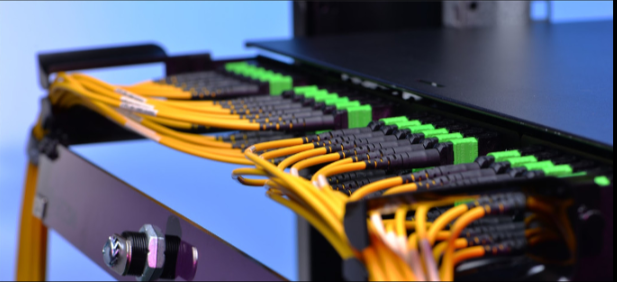
A modern network requires quick and structured fiber connections. With rising data amounts, conventional point-to-point cabling may become problematic. The MPO trunk cable provides a convenient solution to connect several optical fibers in a highly dense network.
The MPO trunk cable is usually taken into consideration for such applications as data centers and telecommunications networks. It is useful to learn about the features and applications of this type of cable.
What Is an MPO Trunk Cable?
MPO stands for Multi-Fiber Push-On. It is a multi-fiber connector technology designed for high-density fiber optic applications.
An MPO trunk cable contains multiple optical fibers and uses MPO connectors to provide a consolidated connection. Instead of managing many individual fiber connections separately, multiple fibers can be connected through a compact interface.
This design can simplify cabling in environments where many optical links need to be deployed within limited rack or pathway space.
How Does an MPO Trunk Cable Work?
An MPO trunk cable carries multiple optical fibers through a single cable assembly. MPO connectors at the ends provide multi-fiber connections to compatible equipment, patch panels, cassettes, or other fiber assemblies.
The cable becomes part of a larger fiber architecture. Depending on the network design, it may connect high-density patching equipment or provide backbone connectivity between different areas.
Proper connector matching and polarity planning are important. A cable should be selected according to the equipment and cabling architecture used in the network.
Why Use MPO Trunk Cables?
High-Density Connectivity
One of the main advantages of MPO technology is its ability to consolidate multiple fibers into a compact connection.
This can help reduce the amount of space required for fiber connections. It is particularly useful in data centers where rack space and cable organization are important.
Faster Deployment
Pre-terminated trunk assemblies can simplify network deployment.
Instead of terminating every fiber individually on site, a prepared cable assembly can provide multiple connections at once. This can reduce installation work and make large fiber deployments easier to organize.
Better Cable Management
Large networks can contain hundreds or thousands of optical fibers.
Using multi-fiber trunk assemblies can make cable routing more structured. Organized cabling can also make future maintenance and network changes easier.
Support for High-Bandwidth Networks
MPO technology is widely used in high-density optical environments.
OMC notes that MPO applications include data centers requiring high bandwidth and low latency, as well as telecommunications networks that need scalable fiber infrastructure.
The actual transmission performance depends on the complete optical system, including fiber type, transceivers, connectors, link length, and other components.
Common Applications of MPO Trunk Cable
Data Centers
Data centers are one of the most common environments for MPO connectivity.
Large server facilities require extensive fiber infrastructure. High-density connections can help connect servers, switches, patch panels, and other networking equipment while making better use of available rack space.
MPO solutions are particularly useful when networks need to scale to higher fiber counts and bandwidth requirements.
Telecommunications
Telecommunication networks also require organized optical connectivity.
MPO trunk cable assemblies can support fiber distribution and connectivity within network infrastructure. Their compact design can be useful where many fibers must be managed within limited spaces.
Enterprise Networks
Large enterprise facilities may also use high-density fiber systems.
Organizations with extensive server rooms or network infrastructure can use multi-fiber cabling to simplify connections and support future expansion.
High-Density Fiber Infrastructure
MPO trunk cables can be useful wherever many optical connections need to be consolidated.
Their application is not limited to one type of building. The appropriate configuration depends on the network architecture and equipment being connected.
MPO Trunk Cable Configurations
MPO trunk cables can be produced in different configurations.
Important variables may include:
- Fiber count
- Fiber type
- Cable length
- Connector type
- Connector gender
- Polarity
- Cable construction
- Optical performance
OMC’s MPO product range includes different fiber-count configurations. Its website displays options including 24F, 48F, and 72F MPO trunk cable assemblies, while other configurations are available within its MPO/MTP product range.
The correct configuration should be selected according to the network’s actual requirements.
Single-Mode vs. Multimode MPO Cable
Fiber type is an important selection factor.
Single-mode fiber is commonly used for longer-distance transmission and many telecom and backbone applications. It is designed to carry optical signals over longer distances with suitable network equipment.
Multimode fiber is often used for shorter-distance connections, including certain data center environments.
Neither option is universally better. The correct choice depends on transmission distance, transceiver requirements, network architecture, and performance goals.
How to Choose the Right MPO Trunk Cable
Check Fiber Count
Determine how many fibers the network requires.
Selecting an appropriate fiber count can help support current connectivity while leaving room for future network expansion.
Verify Connector Compatibility
The connector must match the equipment and fiber infrastructure.
Check whether the system requires MPO or another compatible interface. Connector specifications should be confirmed before ordering.
Consider Polarity
Polarity is especially important in MPO-based systems.
The transmit and receive fibers need to align correctly across the optical link. An incorrect polarity arrangement can prevent a connection from operating properly.
Polarity should therefore be planned according to the network architecture and connected equipment.
Check Optical Performance
Insertion loss and return loss can affect overall optical link performance.
Insertion loss represents the optical power lost through a connection. Return loss relates to reflected optical power. The required values depend on the complete network and its optical budget.
Avoid selecting a cable based only on physical compatibility. Its optical characteristics should also meet the requirements of the system.
Choose the Appropriate Length
Cable length should suit the actual routing path.
A cable that is too short can create installation problems. Excessive length can add unnecessary slack and make cable management more difficult.
Installation and Maintenance Considerations
Proper handling is important during installation.
Fiber cables should be routed according to the manufacturer’s bend-radius requirements. Excessive pulling, sharp bends, or unnecessary mechanical stress can affect cable performance.
Connector cleanliness is also important. Dust or contamination on fiber end faces can increase optical loss and affect link performance.
After installation, appropriate testing can help verify the completed connection. Depending on the project, testing may include insertion loss, polarity, continuity, and connector inspection.
Any installation or testing work should follow the manufacturer’s instructions and the requirements of the network project.
Why Choose a Reliable MPO Trunk Cable Manufacturer?
The quality of the cable assembly can influence the reliability of a high-density fiber network.
A suitable manufacturer should provide clear technical information, appropriate configurations, consistent manufacturing, and support for network deployment.
OMC offers MPO and MTP products as part of its fiber optic product portfolio. Its MPO trunk cable options have been designed to be used in high-density situations, such as data centers and telecommunication infrastructures. It also claims that its products are created for easy installation and maintenance and provides technical support during their implementation.
In case the potential purchaser evaluates several configurations, he/she may use the information on fiber count, connectors needed, polarity, cable length, fiber type, and optics specifications to choose the appropriate one.
Frequently Asked Questions
What is an MPO trunk cable?
The MPO trunk cable is an optical cable assembly that uses the MPO connector technology to provide high-density fiber connection. It enables multiple fiber connections through one cable assembly in a compact form factor suitable for data centers, telecoms, and network applications.
Where is MPO used?
The MPO connector technology is applied in high-density fiber connections. This connector technology is usually employed in data centers, telecoms, and networks where multiple optical fibers need to be connected.
How do I choose an MPO trunk cable?
Consider fiber count, fiber type, connector configuration, polarity, cable length, optical performance, and compatibility with the existing network equipment. The complete optical architecture should be evaluated before selecting the cable.
Why is polarity important in MPO cabling?
The polarization of MPO helps align the transmit and receive fibers properly throughout the network. Incorrect MPO polarity may cause problems in how the optical connection performs.
Is MPO trunk cable ideal for data centers?
Yes. MPO trunk cable is ideal for use in dense data centers due to its capability to handle multiple fiber connections and scalability in cabling infrastructure.
Conclusion
MPO trunk cables offer a useful solution for dealing with fiber connectivity requirements. The idea behind MPO trunk cables is that by bundling several optical fibers together in one cable assembly, it will be possible to simplify your cabling process in data centers, telecommunications networks, and other situations with many fiber requirements.
When choosing an MPO trunk cable, you should pay attention to such aspects as the number of fibers, their type, compatibility of connectors, polarity, cable length, and optical characteristics of the cable.
