
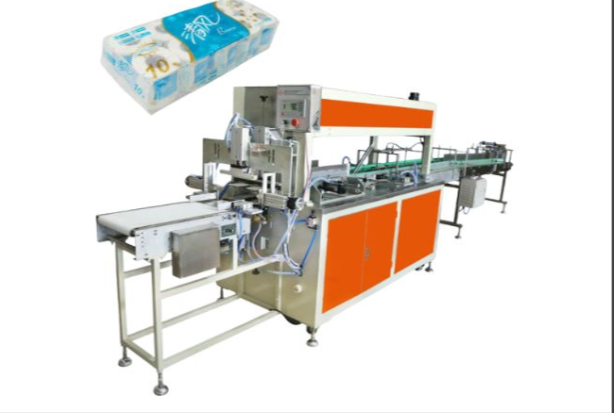
The automated tissue paper packing machine helps in the packaging of tissues such as facial tissues, toilet paper, hand towels, napkins, wet wipes, and many more. This machine helps in the complete packaging operation including feeding, counting, stacking, film wrapping, sealing, and discharge of the product.
Automated machines for tissue manufacturing help in decreasing repetitive manual operations and ensure consistent packaging for the tissue products. Selection of appropriate machinery is based on the type of product to be packed.
What Is a Tissue Paper Packing Machine?
A tissue paper packing machine is automated equipment used to prepare tissue products for retail or distribution. Depending on the machine configuration, it can fold, count, stack, wrap, seal, and discharge finished packages.
JOCHAMP provides customized systems for facial tissues, handkerchief papers, hand towels, toilet paper rolls, paper napkins, and other tissue products.
The machine can be used as an individual packaging unit or connected with other equipment to create a complete tissue production and packaging line.
How Does a Tissue Paper Packing Machine Work?
The exact process depends on the tissue product and packaging format. A typical system includes several stages.
1. Product Feeding
Finished tissue products enter the machine through a feeding system.
The conveyor keeps products moving toward the counting and packaging sections. Proper feeding helps maintain a stable production flow.
2. Counting and Stacking
The machine counts the required number of tissue sheets, packs, or rolls.
Products are then arranged into the required package configuration. Automatic counting is particularly useful for high-volume tissue production.
3. Folding
Some tissue packaging systems include folding functions before wrapping.
JOCHAMP’s equipment uses vacuum suction folding technology for suitable tissue products.
4. Film Wrapping
Packaging film is placed around the tissue product or bundle.
The film type and wrapping method depend on the required package format.
5. Sealing
The packaging material is sealed around the product.
Controlled sealing helps create a consistent package and protects the tissue during handling and transportation.
6. Discharge
The finished package leaves the machine through a discharge conveyor.
It can then move to case packing, cartoning, palletizing, or another downstream process.
Main Types of Tissue Paper Packing Machines
Different tissue products require different packaging configurations.
Facial Tissue Packing Machine
A facial tissue packing machine is designed for folded facial tissues and similar products.
JOCHAMP describes automatic facial tissue packaging systems that can perform feeding, sealing, glue spraying, and box loading. Its published information also lists individual, bundle, family-pack, and other packaging formats.
Toilet Paper Packing Machine
A toilet paper packing machine is designed for tissue rolls.
JOCHAMP lists a bathroom tissue packing option with a packaging speed of approximately 120 rolls per minute on its tissue packaging page. Actual output depends on the specific machine configuration and production conditions.
Napkin Packing Machine
Napkin packing machines package table napkins and similar folded paper products.
JOCHAMP describes equipment for packaging table napkins and cotton tissue products in plastic bags.
Tissue Box Packing Machine
A tissue box packing machine is designed for boxed tissues and related products.
These systems can automate feeding, sealing, labeling, and other packaging operations. JOCHAMP also offers different tissue box configurations, including standard-speed and high-speed systems.
Wet Wipes Packaging Machine
Wet wipes require packaging that helps maintain product moisture.
A suitable wet wipes packaging machine can be integrated into a packaging line based on the required pouch or pack format. JOCHAMP lists wet wipes among the tissue-related applications of its packaging machinery.
What Products Can Be Packed?
A tissue paper packing machine can be configured for various paper and hygiene products.
Common applications include:
- Facial tissues
- Toilet paper rolls
- Table napkins
- Paper hand towels
- Handkerchief tissues
- Box tissues
- Wet wipes
- Kitchen tissue rolls
The actual machine configuration should be matched to the product dimensions, folding method, package quantity, and packaging material.
Tissue Packaging Formats
The desired package format is an important consideration when choosing equipment.
Common formats can include:
- Individual packs
- Bundle packs
- Family packs
- Boxed tissues
- Roll packs
- Lengthwise bundle packs
- Widthwise bundle packs
JOCHAMP’s facial tissue packaging information identifies individual, bundle, family, and other packaging formats.
The selected machine should support the required package dimensions and film structure.
Key Features of a Tissue Paper Packing Machine
Vacuum Folding
Vacuum suction can be used for suitable folding operations.
This can help handle tissue products while maintaining the required folded configuration.
Automatic Counting
Automatic counting helps determine how many tissue products should enter each package.
This is useful when manufacturers need consistent quantities across large production runs.
Adjustable Tension Control
Film tension affects packaging quality.
JOCHAMP uses adjustable tension devices to help maintain consistent finished product sizes.
Servo Control
Servo systems provide controlled movement during packaging.
JOCHAMP describes its tissue packing equipment as using standard servo drive and precise servo control systems.
PLC and Touchscreen Control
A PLC manages programmed machine functions.
The touchscreen interface allows operators to monitor production and adjust available parameters.
Automatic Shutdown
An automatic shutdown function can help prevent unnecessary material waste when certain machine problems occur.
Benefits of Using a Tissue Paper Packing Machine
Higher Production Efficiency
Automation can increase packaging speed and reduce manual bottlenecks.
JOCHAMP positions its tissue packaging equipment for high-volume production and continuous packaging applications.
Reduced Labor Requirements
Automated feeding, counting, folding, wrapping, and sealing reduce repetitive manual operations.
This allows operators to focus on machine monitoring and other production tasks.
Consistent Packaging
Automated processes can provide more consistent package dimensions and sealing when the machine is correctly adjusted.
This can improve product presentation and packaging quality.
Better Material Control
Controlled film tension and automated packaging movements can help reduce packaging problems and unnecessary material waste.
Flexible Production
A suitable machine can support different tissue sizes and packaging formats.
JOCHAMP states that its equipment can accommodate different product sizes and packaging formats, with configurations designed for faster changeovers.
How to Choose a Tissue Paper Packing Machine
Selecting the right equipment starts with the product.
Consider the Tissue Product
Determine whether you are packaging:
- Facial tissues
- Toilet rolls
- Napkins
- Hand towels
- Wet wipes
- Boxed tissues
Different products require different feeding, folding, and wrapping systems.
Define the Package Size
Provide the manufacturer with the product dimensions and desired finished package size.
This information helps determine the suitable machine configuration.
Determine Production Capacity
Calculate the required packages or rolls per minute.
Do not choose equipment based only on its maximum advertised speed. Actual output can depend on product arrangement, package size, film type, and machine configuration.
Select the Packaging Material
The film must be compatible with the machine’s wrapping and sealing system.
Manufacturers should provide film specifications before final machine selection.
Consider Factory Space
Machine dimensions, operator access, maintenance space, and conveyor connections should all be considered.
A compact machine may be preferable where floor space is limited.
Think About Future Production
If you expect to add new tissue products or package sizes, flexibility becomes important.
A configurable system can make future production changes easier.
Why Choose JOCHAMP for a Tissue Paper Packing Machine?
JOCHAMP provides tissue packaging equipment for different tissue products and production requirements. Its range includes napkin, toilet paper, facial tissue, tissue box, and wet wipes packaging solutions.
The company states that its tissue packing machines can be customized according to product characteristics, production capacity, packaging requirements, and automation needs. Its process includes requirement analysis, engineering design, manufacturing, testing, installation guidance, operator training, and after-sales support.
JOCHAMP also provides video technical support, online assistance, spare parts, repair services, field maintenance, and production support.
For tissue manufacturers, this type of customized approach can help match the packaging machine to the actual product and production workflow.
Frequently Asked Questions
What is a tissue paper packing machine?
A tissue paper packing machine is automated equipment used to count, fold, stack, wrap, seal, and package tissue products. The exact functions depend on the machine model and product.
What products can a tissue paper packing machine package?
It can be configured for facial tissues, toilet paper rolls, napkins, hand towels, box tissues, wet wipes, and other suitable tissue products.
What is the difference between a tissue packing machine and a toilet paper packing machine?
A tissue packing machine is a general term covering equipment for different tissue products. A toilet paper packing machine is specifically designed for toilet paper roll packaging.
Can tissue packing machines be customized?
Yes. JOCHAMP says its tissue packaging machinery could be tailored based on product size, packaging speed, packaging material, factory arrangement, and level of automation required.
Are tissue paper packing machines suitable for high-volume production?
Yes. Tissue packaging machines have been designed for continuous operation, thus capable of high-volume packaging. The capacity will be determined by the type of the machine, type of product being packaged, packaging format, among others.
Conclusion
A tissue packing machine can automatically pack tissues through feeding, counting, folding, stacking, film wrapping, sealing, and discharge. Various packing machines can be used for different types of tissues, such as facial tissues, toilet roll papers, napkins, hand towels, tissue boxes, and wet tissues.
The type of machine to buy will depend on the type of tissue, packaging style, production capacity, packaging materials, and production space available. Evaluating these factors prior to purchase helps in getting machines that provide consistency in packaging and efficient production in the long run.
