
Introduction
The correct selection of a case packing machine goes way beyond the speed of your line. Labor cost, product protection, foot print, maintenance cycles, and the future potential growth of your business will be influenced by your decision.
Being in the manufacturing environment for many years now, I am aware of the fact that a machine which looks great on paper is not necessarily performing well on your production floor. A machine that performs ideally during the demo may get annoying because of the need for constant adjustments to fit your products. It all starts with knowing how the machines operate.
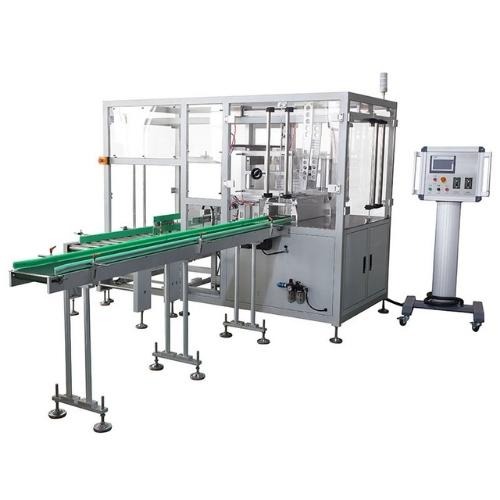
Understanding What a Case Packer Machine Does
The Case Packers machine will automatically place the products inside their respective cases before they are sealed and ready for shipment. These machines can be found in various industries like food processing, beverages, pharmaceuticals, personal care products, and consumer goods.
There are some that are very fast in handling bottles. There are others that are geared towards packing cartons, pouches, cans, jars, or flexible packaging. Getting the right machine for the right product is often the make or break point when it comes to purchase decision.
Not only do we need high-speed machines, but accuracy in production is important too.
Top-Load Case Packers
Best for Delicate or Irregular Products
Vertical top loaders load products into cases by dropping the products vertically from an overhead location.
Such systems perform very well with products which need special loading, like glass bottles, delicate packaging materials for food, cosmetics, or pharmaceutical products. Because the products do not get inverted while loading, the risk of getting scratched is reduced.
However, vertical top loaders tend to be slower than some horizontal loading options. But many manufacturers are ready to pay that price for better product protection.
Side-Load Case Packers
Designed for High-Speed Production
Side-load case packers push products horizontally into waiting cases.
They’re common in beverage plants and consumer packaged goods facilities where production lines rarely stop. Once properly adjusted, these systems can maintain impressive throughput while keeping product orientation consistent.
One detail operators often appreciate is the relatively straightforward product flow. When cases, conveyors, and upstream equipment stay synchronized, side-load machines tend to require fewer manual corrections during long production runs.
Wraparound Case Packers
Whereas packaging equipment fills products into an already shaped case, the wraparound machines fold the corrugated board directly around the group of products.
This design is more economical on the corrugated board, yet it makes a tight packaging for shipment. It is not uncommon to find beverage companies that opt for this type of equipment because of pallet stability and cost effectiveness.
Over large production amounts, one is able to see results. Saving a little bit of corrugated board on every package does add up.
Automatic vs. Semi-Automatic Case Packers
It is not essential to have automation for all businesses.
Semi-automatic case packer may be an efficient option for small or medium-sized manufacturing facilities, regional food manufacturers, or companies with moderate production requirements. Though operators do some operations like case handling or loading, a lot of repetitive actions become obsolete.
Automatic case packers are designed to operate in a non-stop mode. By combining with conveyor systems, robotics, and case sealer units, these machines involve less operator’s interaction. The cost of the machine is justified by reduced labor costs and stable productivity in places with multi-shifts.
Nevertheless, if the frequency of your production process changes often, it should be considered that the changeover time is as important as operating speed.
Factors That Should Influence Your Decision
Product Size and Shape
Products that have irregular sizes or packaging tend to need unique handling.
Pouches act different from bottles. Multi-packs create spacing needs that are different from those created by single cartons. Selecting equipment tailored for your specific product generally avoids future modification problems.
Production Volume
Over-sizing of machinery is an easy mistake to make.
A firm that manufactures 20 cases a minute will have completely different demands from one that ships out 200 cases a minute. Big machines do not necessarily offer any advantages, and they usually cost more to maintain.
Available Floor Space
There is generally little space for packaging departments.
Some case packers are smaller than you might imagine, whereas others may need additional conveyor space, maintenance space, and operator space. In the course of planning, it is usually wise to consider equipment layout prior to committing to a purchase order.
Future Growth
One issue that the purchasing team sometimes forgets to ask is how the manufacturing process will operate in three to five years.
With plans for future growth already underway, a modular system that produces more units could be more cost-effective in the long term than replacing the entire packaging line.
Common Buying Mistakes
The speed rating gets all the attention, but that doesn’t mean that everything there is to know is in this one measure.
An exceptionally fast machine will never realize its potential if the equipment feeding it into the process cannot provide an adequate supply of product. Also, purchasing a cheap system may turn out to be more expensive due to downtime and maintenance. Another problem is neglecting serviceability.
Fast technical support and easy-to-replace parts get their importance only after installation.
A Practical Example
Consider two companies.
The first company manufactures hand-made glass sauce bottles in various bottle sizes that need regular label changes. A machine with easy changeover features will be much more useful to this company than a machine that is solely built for speed.
The second company has a beverage manufacturing plant making thousands of similar cans per hour. In this scenario, a fast side-load or wraparound case packer would be more useful for this company.
Neither of the machines is superior to the other. The choice depends upon the application.
Maintenance Should Never Be an Afterthought
The thing that most clean production lines have in common is the following: Maintenance isn’t delayed.
Regular lubrication, checking sensors, adjusting belts, and regular replacements of worn parts minimize a lot of unexpected breakdowns. Moreover, maintenance becomes easier when machines feature easily accessed points.
Design features such as clearly marked adjustment areas, easily removable guards, and simple controls turn out to be very useful after several months of use.
FAQ
What is the most common type of case packer machine?
Side-load case packers are widely used in high-volume manufacturing because they offer excellent speed and consistent product handling. Top-load systems remain popular for fragile or specialty products.
Is an automatic case packer worth the investment?
For facilities running high production volumes or multiple shifts, automatic systems often reduce labor costs while improving consistency. Smaller operations may achieve a stronger return on investment with semi-automatic equipment.
How long does a case packer machine typically last?
With preventive maintenance and proper operation, many industrial case packers remain productive for 15 to 20 years or longer. Equipment quality, maintenance practices, and production demands all influence service life.
Can one case packer handle multiple products?
Many modern machines support multiple package sizes through adjustable guides and changeover components. The ease of switching products varies considerably between manufacturers, making changeover time an important buying consideration.
Conclusion
What works for you may not be what the fastest or most expensive case packer machine does. What works for you is the one which is suitable for your products, your production objectives, available space, and your plans in general, without introducing any complexity.
Take your time in assessing how the machine suits your work process rather than concentrating solely on technicalities. Seeing how machines function with similar products, asking in-depth questions about maintenance, and thinking about future growth may prove more effective in choosing a machine than mere speed comparisons.
