
Introduction
Flow wrapper machines can help to boost efficiency of an entire packaging line significantly, but this does not just come down to their speed of work. The secret lies in the way the machine can integrate several processes of packaging into one seamless process while ensuring high quality of packaging. In case of companies striving to boost production rates without reducing efficiency, such an approach is very difficult to resist.
After working near automated packaging lines for some time, one will realize that it is not speed that defines the most efficient operation, but the ability to work smoothly with no interruptions and adjustments and without compromising the quality of the final products.
What Is a Flow Wrapping Machine?
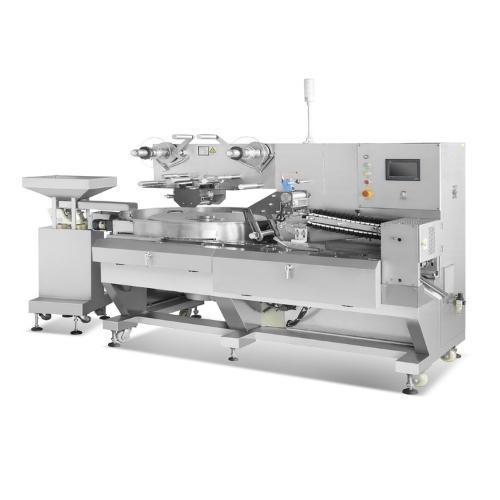
The flow wrapping machine, which is also referred to as the horizontal flow wrapper, is a machine that packages products in a roll of thin film. It wraps, seals and cuts the film around the product before passing it through the conveyor belt.
These machines are used to package all sorts of products including snacks like granola bars, bakery items, medical equipment, hardware, cosmetics and household items.
Faster Packaging Speeds
Automation Keeps Production Moving
Among the greatest efficiencies, automation must rank high.
Whereas in the past products had to be manually packed in bags or packaged individually, with the flow wrapping machine all processes such as forming, sealing, and cutting occur in an unbroken sequence. Continuous movement of products through the flow wrapping machine minimizes time lags in the process.
This efficiency is especially important when dealing with thousands of products being processed per shift.
Reduced Labor Requirements
Hand packaging is time-consuming, especially when done in bulk.
Flow wrappers allow operators to control the machines rather than engage in repetitive wrapping processes. In some cases, one operator can manage a whole packaging unit by concentrating on inspections and making adjustments.
This does not mean that qualified staff is no longer needed. It just means that the personnel are able to dedicate more time to other important processes.
Consistent Package Quality
Consumers notice the packaging first before the actual product.
The flow wrapper ensures that there is consistency in the packages with respect to sealing, film tension, and overall appearance. In addition to making the packaging attractive, consistency ensures that fewer packages need to be reworked.
I have seen operators pick up flaws in the manufacturing process just by noticing that one particular package was different from the rest.
Better Product Protection
Packaging Does More Than Look Good
Good sealing is essential to ensure protection for goods in terms of storage, distribution, and marketing.
Flow wrapping serves as a protection from dust, dampness, and contamination while assisting in retaining freshness of the products. Fragile goods will also have additional protection layer due to which the surface will remain protected during the transportation process.
The consequence will be fewer damaged goods available to consumers and fewer losses from returns.
Less Packaging Material Waste
Efficient equipment doesn’t just save time.
Modern flow wrapping machines use precise film control systems that minimize excess material while maintaining secure package seals. Accurate film tracking reduces misaligned packages, and consistent cutting lowers the amount of discarded packaging.
Even small reductions in material usage become meaningful over months of production, particularly for manufacturers packaging high volumes every day.
Quick Product Changeovers
Production plants will usually pack more than one product in the same packing line.
With machinery that can be easily changed over, one is able to alter the length of the package, the seal, and product guides with ease. There are some machines that actually hold recipe information about different products, thus making setup much faster.
The above features become important when there are shorter production runs.
Improved Integration with Packaging Lines
The flow wrapper does not work alone.
It normally is linked to upstream conveyors, feeders, check scales, metal detectors, label applicators, and case packers. If all this equipment communicates well together, then the product will go smoothly through the packaging process.
In many instances, good integration is far more important than getting the fastest piece of equipment available.
Increased Production Reliability
Fewer Interruptions Mean Better Output
Unexpected stops are costly.
Flow wrappers made with reliable components and control panels minimize interruptions during the manufacturing process by facilitating easy adjustments and maintenance procedures. Such innovations as automatic film guidance, diagnostic screens, and convenient service access points enable operators to detect potential problems before they develop into serious ones.
A good manufacturing process is not determined by maximum speeds but rather by consistent performance during the whole shift.
A Practical Example
Imagine a company making packaged cakes in an individual wrapper.
Manual packaging would mean many staff members need to be employed to do the task at the same speed as the production line. The flow wrapping machine makes the process automatic so that staff members can concentrate on quality checks, packing of ingredients, and packaging of finished goods for transportation.
Think about the packaging of sterile medical instruments in a medical device manufacturing plant.
In this case, the sealing ability of the machine becomes as important as the speed of production.
Maintenance Supports Long-Term Efficiency
No matter how high-quality packaging machines are, they need care anyway.
It involves cleaning the sealing jaws, testing the belts, replacing old blades, and adjusting the film position. Packaging machines which are built with easy access points save time when being maintained and make faster restarts possible.
Plants which have preventive maintenance practices run into fewer shutdowns than those which wait until something breaks.
FAQ
What products can a flow wrapping machine package?
Flow wrapping machines package bakery products, candy, snack bars, fresh produce, medical devices, cosmetics, hardware, electronics, and many other consumer goods.
How does a flow wrapping machine reduce labor costs?
By automating the wrapping, sealing, and cutting process, fewer employees are needed for repetitive packaging tasks, allowing staff to focus on quality control and production support.
Is a flow wrapping machine suitable for small businesses?
Yes. Compact models are available for growing manufacturers with moderate production volumes, while larger industrial machines support high-speed packaging operations.
How does flow wrapping improve product protection?
Flow wrapping creates a secure, sealed package that helps protect products from moisture, dust, contamination, and handling damage during storage and transportation.
Conclusion
The Flow Wrapper machine combines all of these qualities into one efficient machine. Fast packaging may be advantageous but the main benefits are achieved through saving time, high-quality packaging, reduced waste of materials, and smooth operation within the entire production chain.
When deciding on purchasing a flow wrapper, keep in mind the performance capabilities of the machine at your particular plant instead of being limited to just the speed of the equipment. The machine which works reliably, is capable of adapting to production requirements, and easy to maintain will definitely prove its value.
