
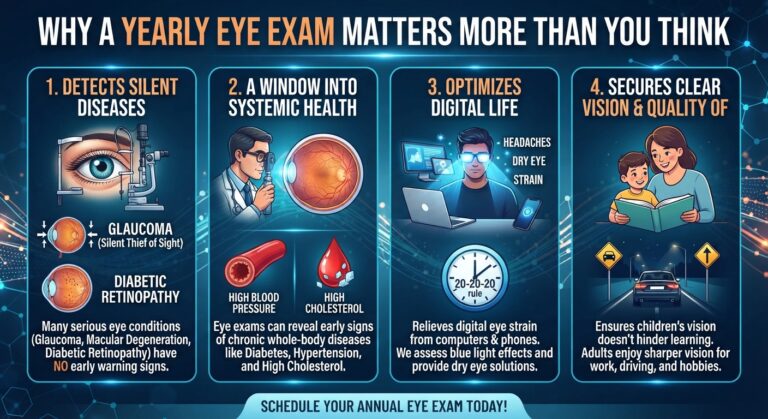
Many people only think about an eye exam when something seems wrong, like blurry road signs, headaches after a long day at the screen, or squinting at a menu. But some of the most important things an eye exam catches have no symptoms at all. A regular comprehensive eye exam is one of the simplest ways to protect your vision and your overall health.
More Than a Vision Test
A quick vision screening at school or the DMV checks whether you can read letters on a chart. That’s useful, but it’s only a small part of the picture. A comprehensive eye exam performed by an optometrist looks at how well you see and how healthy your eyes are.
During a thorough exam, your eye doctor typically checks:
- Visual acuity and prescription: how clearly you see at different distances, and whether you need glasses, contact lenses, or an updated prescription.
- Eye pressure: elevated pressure inside the eye can be a sign of glaucoma, a condition that often progresses without warning signs.
- Retinal and internal eye health: the doctor examines the retina, the optic nerve, and the blood vessels at the back of the eye.
- Eye coordination and focusing: how well your eyes work together, which matters for reading, driving, and screen use.
Your Eyes Can Reveal Your Health
The back of the eye is one of the few places in the body where doctors can see blood vessels directly, without any incision. Because of that, an eye exam can reveal early signs of conditions that affect the whole body, including diabetes and high blood pressure. Sometimes these signs appear before a person has noticed any other symptoms.
Eye diseases such as glaucoma and diabetic eye disease are often easiest to manage when they’re found early. Waiting until vision changes become noticeable can mean waiting too long. Regular exams give your eye doctor a baseline. They can then compare year over year and spot small changes before they become big problems.
How Often Should You Get an Eye Exam?
Most adults benefit from a comprehensive eye exam once a year, even if their vision seems fine. Your eye doctor may recommend a different schedule based on your age, health, family history, or any existing eye conditions. People with diabetes, for example, are usually advised to have their eyes checked regularly because of the higher risk of diabetic eye disease.
Children need regular eye exams too. Kids rarely complain about their vision, because they assume the way they see is normal. A child who struggles to see the board or reads with difficulty may simply need glasses. Regular exams support learning and development and help catch issues early.
Signs You Shouldn’t Wait for Your Next Exam
Schedule a visit sooner if you notice any of the following:
- Blurry or fluctuating vision
- Frequent headaches or eye strain
- Trouble seeing at night
- New floaters, flashes of light, or a shadow in your vision
- Eye pain, redness, or sudden changes in how you see
Sudden flashes, a curtain-like shadow, or a rapid loss of vision should be treated as urgent. Contact an eye doctor right away.
Making the Most of Your Appointment
To get the most from your visit, bring your current glasses or contact lenses, a list of any medications you take, and notes on any vision changes you’ve noticed. Let your doctor know about health conditions in your family, such as glaucoma or diabetes. These details help your optometrist give you a more complete evaluation.
Finding an Eye Doctor on the Seacoast
For families on the New Hampshire Seacoast, local care makes it easier to stay on schedule. Fox Run Eye Care is an independent optometry practice in Greenland, NH, led by optometrists Dr. Amy Catalano Boyer and Dr. Susan Gallant-Behan. The practice offers eye exams near Portsmouth, NH for adults and children, in an office conveniently located for patients across the Portsmouth area.
The Bottom Line
Good vision is easy to take for granted until something changes. A yearly comprehensive eye exam keeps your prescription up to date, protects your long-term eye health, and can even offer an early look at your overall health. If it’s been more than a year since your last exam, now is a good time to schedule one.
