

International travel usually means managing a pile of gadgets. Pocket translators, phone GPS applications, action cameras, and offline guide apps all compete for space in your daypack. However, modern AI Glasses aim to fold that entire stack into a single wearable, and the current generation comes closer to that promise.
The RayNeo X3 Pro runs on the Qualcomm Snapdragon AR1 Gen 1 processor with Google Gemini serving as its backbone. It does not require a wired phone as a display source, covering five distinct travel functions with fewer handoffs. Below is an objective look at each function and the hardware.
The Carry-Everything Problem
A gear-heavy international trip can add several dedicated tools beyond a smartphone: a handheld translator, an action camera, and sometimes a phone mount. Modern AI Glasses consolidate these functions into a head-worn device that keeps both your hands entirely free.
The cost and clutter add up remarkably fast. A handheld translator runs around two hundred dollars, action cameras cost similar amounts, and each requires unique chargers. When every gram in your luggage counts, this consolidation shifts from a luxury to a highly practical option.
The real question is whether wearables match dedicated tools in actual performance metrics. The RayNeo X3 Pro makes a strong case right now, packing five essential travel functions into one wearable framework while reducing your reliance on several separate dedicated tools.
What the RayNeo X3 Pro Replaces
Travel-focused functions sit at the core of the RayNeo X3 Pro. Its binocular MicroLED waveguide display projects information into both eyes at up to six thousand nits. Three specific functions stand out immediately for travelers navigating foreign streets and unfamiliar environments.
Real-Time Translator
These AI Glasses offer fourteen-language voice subtitle translation, plus optical character recognition for signs. Floating subtitles appear in your field of view during live conversations, so you maintain natural eye contact. Point the camera at a menu, and the translated result appears in the glasses display.
Heads-Up Navigator
Turn-by-turn navigation arrows appear directly in your natural line of sight. The AR overlay guides you through unfamiliar streets without pulling out a smartphone every block. In dense city centers, this heads-up approach keeps your attention on your surroundings rather than a screen.
12 MP POV Camera
A Sony sensor captures high-quality wide-angle photos and casual POV video from eye level, a feature rarely found in other smart wearables. First-person footage works well for documenting street markets or architectural details without stopping to frame a separate shot. You record what you actually see.
Beyond Basic Features: Two More Uses
Beyond translation, navigation, and camera duties, AI Glasses pack additional functions that push past what standard tech offers today. Both rely on the onboard AI engine and heads-up display working in tandem, something standard standalone gadgets simply cannot easily replicate on the road.
Google Gemini as a Visual Guide
Point the camera at a historical landmark or a sign, and Google Gemini provides context about places when asked. It can identify buildings or provide historical background when the scene is clear and network access is available. This immediate response gives the RayNeo X3 Pro a clear convenience advantage.
- Identifying landmarks and explaining historical context when asked.
- Helping interpret menus, signs, and unfamiliar objects.
- Answering travel questions through the heads-up display.
Built-In Teleprompter
Travel content creators can load scrolling scripts into the heads-up display of these AI Glasses while filming first-person footage. This reduces the need for a separate teleprompter rig or repeated takes on location. The camera records the view while the creator reads directly from the AR overlay.
The Hardware Powering the Experience
Hardware specifications determine whether the RayNeo X3 Pro works in real outdoor conditions or remains confined to indoor demos. Four key design choices actively shape its capability as a travel device that functions reliably under heavy daily usage scenarios.
6,000-Nit MicroLED Display
The binocular full-color MicroLED waveguide display on these glasses reaches up to six thousand nits peak brightness. For context, typical smartphones top out around two thousand. That high optical brightness helps keep subtitles and navigation cues more readable outdoors, although direct sun and complex backgrounds can still affect visibility.
Snapdragon AR1 Gen 1 Processor
The Snapdragon platform handles core device processing on the glasses, while AI and translation features use cloud services depending on the task. This ensures solid response times when querying information or translating sentences via your AI Glasses, provided you have adequate wireless connectivity.
Reduced Phone Dependency
Unlike older smart glasses that require a wired display source, this device runs its own operating system. While setup and network access involve a phone, applications and navigation function directly on the unit. For travelers, that means fewer cables to manage and less phone-checking.
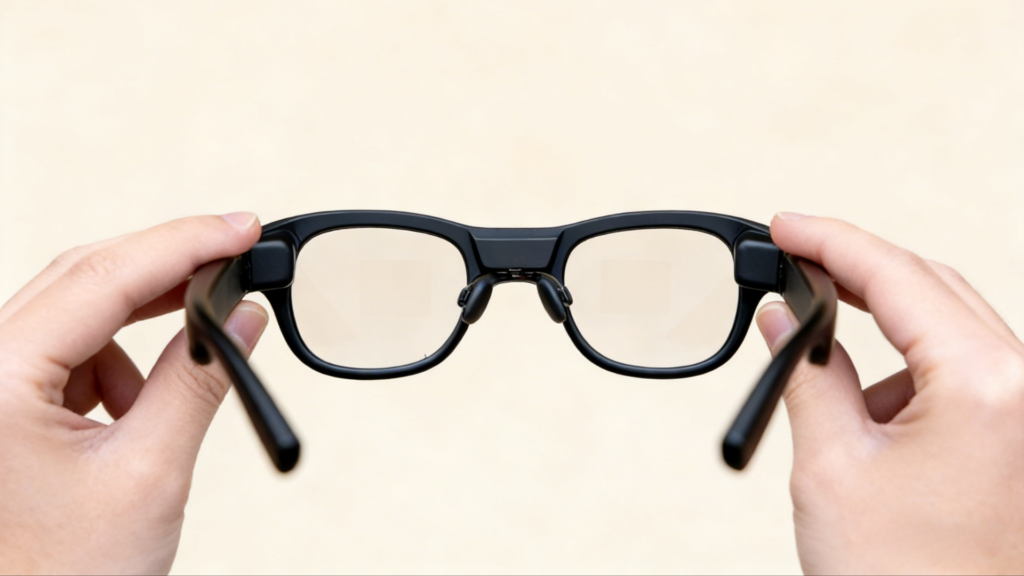
Lightweight 76-Gram Frame
At seventy-six grams, the frame weighs more than standard eyeglasses but far less than any mixed-reality headset. The glasses support snap-on custom prescription lenses through RayNeo’s optical partners. This sturdy build suits focused travel sessions, making it a highly realistic wearable option.
AI Glasses vs. Separate Travel Gear
Consolidating five distinct functions into one single device shifts the fundamental trade-off from peak specialization to pure practical convenience. The following breakdown compares dedicated travel items directly against the integrated approach of modern AI Glasses during typical international trips.
| Travel Function | Separate Device Setup | RayNeo X3 Pro |
|---|---|---|
| Translator | Handheld unit ($150) | 14-language voice subtitles |
| Navigation | Phone GPS app & mount | AR turn-by-turn overlay |
| Camera | Action camera ($300) | 12 MP Sony sensor |
| Assistant | Phone with multiple apps | Google Gemini integration |
| Teleprompter | Dedicated rig ($100) | Built-in scrolling script |
Carrying a single RayNeo X3 Pro reduces reliance on several separate tools, cutting down on charging cables and mental load. This integration fundamentally streamlines how efficiently you move through airports, train stations, and unfamiliar urban environments while abroad.
Practical Limits of the RayNeo X3 Pro
An objective assessment of any AI Glasses should directly address current limitations alongside their structural strengths. The device delivers impressive utility, but two specific practical factors deserve careful attention from anyone considering it for regular international travel usage.
Managing Battery Life
Official battery figures vary by task, but independent heavy-use testing suggests it should be treated as a session device rather than an all-day wearable. You use it for a specific task, then easily recharge it with a standard portable power bank.
Premium Price in Context
At roughly thirteen hundred dollars, the price sits firmly in premium territory. Buying basic separate devices can actually cost less, so the real value lies in the integration, hands-free use, and AR display access rather than pure financial savings.
- Handheld language translator costs around two hundred dollars.
- Quality action camera setups require three hundred dollars.
- Portable teleprompter rigs add another one hundred dollars.
Who Benefits Most on the Road
Frequent international travelers gain substantial value from the RayNeo X3 Pro. When trips involve language barriers or unfamiliar cities, this device removes genuine friction. For travelers who value hands-free translation and visual AI, it is becoming a practical session-based tool.
Modern AI Glasses are no longer just concept-style demos. By combining several travel functions into one wearable, this specific device can simplify the packing list for travelers who prioritize extreme mobility and immediate hands-free access while navigating abroad.
