
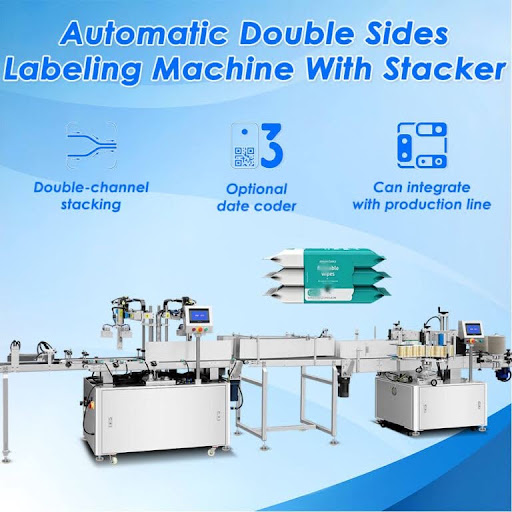
An automatic bottle labeling machine is an essential part of any modern day packaging process where label can be accurately and efficiently applied to bottles. Irrespective of whether you manufacture beverages, cosmetics, drugs, food items, or chemicals, a suitable labeling system will make presentation look good and will save your time by avoiding any manual effort.
As the demand for manufacturing increases, the industry invests in automatic labeling systems in addition to filler, capper, coder, and inspection machines, creating an automatic packaging line. It is vital to know how such machines work and what aspects of them matter.
What Is an Automatic Bottle Labeling Machine?
Automatic Bottle Labeling Machine is an industrial machine used for the automatic application of pressure sensitive label on bottles. The automatic machine consists of the feeding of bottles, dispensing of labels, their placement and sticking.
Depending on production requirements, an automatic labeling machine can handle:
- Round bottles
- Square bottles
- Oval containers
- Flat bottles
- Irregularly shaped packaging
Modern systems also support multiple labeling styles, including wrap-around, front-and-back, top, bottom, and double-sided labeling.
Compared with manual or semi-automatic equipment, automated systems provide greater consistency, higher throughput, and reduced operator involvement, making them suitable for medium- and high-volume manufacturing.
How an Automatic Bottle Labeling Machine Works
Although machine configurations vary, most automatic labeling systems follow the same sequence:
- Bottles enter the conveyor labeling system.
- Sensors detect each container’s position.
- PLC controls synchronize conveyor speed and label dispensing.
- A servo motor or precision drive feeds labels accurately.
- The automatic label applicator places the label in the programmed position.
- Rollers or brushes smooth the label to eliminate wrinkles and air bubbles.
- The labeled bottle continues to coding, inspection, capping, or packaging.
This synchronized process delivers precise label placement while maintaining continuous production, even at high operating speeds.
Types of Automatic Bottle Labeling Machines
Different products require different labeling solutions. Selecting the appropriate machine depends on container shape, label position, and production speed.
Wrap-Around Labeling Machine
Designed primarily for cylindrical containers, this round bottle labeling machine applies a single label around the bottle with excellent alignment.
Double-Sided Labeling Machine
Suitable for square and oval bottles, this machine applies front and back labels simultaneously, improving efficiency and appearance.
Top and Side Labeling Systems
Ideal for cartons, jars, flat containers, and specialty packaging requiring labels on specific surfaces.
Multi-Function Automatic Labeling Machines
Some manufacturers, including ZONESUN, offer configurable systems that can accommodate multiple bottle shapes and labeling applications with changeable guides and adjustable settings. This flexibility helps manufacturers reduce equipment investment when producing diverse product lines.
Key Features to Consider Before Buying
Not all labeling equipment offers the same performance. Before investing, evaluate these critical factors:
- Labeling accuracy for consistent product appearance.
- Production speed compatible with existing output.
- Compatibility with glass, PET, plastic, aluminum, and metal containers.
- Touch-screen interface for quick setup and recipe storage.
- Servo-driven label applicator machine for precise positioning.
- Reliable sensors for accurate bottle detection.
- Easy adjustment for different bottle sizes.
- Stable conveyor system for smooth product handling.
- Simple maintenance with accessible wear parts.
Also consider label material compatibility. A self-adhesive labeling machine should handle paper, transparent film, metallic labels, and specialty materials without frequent adjustments.
Industries That Benefit from Automatic Bottle Labeling
The automatic bottle labeling machines cater to many industries where precision, traceability, and packaging presentation play an important role.
Beverage Industry
Water, juices, carbonated soft drinks, wines, beers, and dairies require automated production line labeling machines.
Cosmetics & Beauty Products
Automated labeling machines are used by cosmetic products manufacturers for precision labeling of bottles with distinctive shapes and attractive presentation on shelves.
Pharmaceutical Industry
With the help of pharmaceutical labeling machines, labeling of regulation data, batches, and products is ensured.
Food Processing
Labeling of sauces, cooking oil, condiments, honey, and nutrition products is performed by food packaging labeling machines.
Chemical Industry
Automated labeling machines are required for labeling of industrial chemicals, detergents, lubricants, and cleaning agents.
How to Choose the Right Automatic Bottle Labeling Machine
Speed is not always the best thing; speed must match your manufacturing process.
Consider the following factors:
- Which bottle shapes do you want to label?
- How many bottles per minute does your machine have to handle?
- Will your manufacturing quantities grow in the next three to five years?
- Is your machine compatible with your filling machines, capping, and coding machines?
- How fast can your operators change from one bottle size to another?
The ability to scale is often neglected. Choosing equipment that comes with upgrading features saves you the trouble of purchasing new equipment once you expand your production quantities.
Just as important is the cost of ownership of the equipment. Apart from buying cost, consider the maintenance cost, spare parts availability, operator training cost, energy consumption, and overall reliability.
Why Automation Improves Packaging Efficiency
Labeling automation provides advantages going past faster processing speeds.
Automation reduces mistakes, increases label uniformity, cuts down on product loss, and ensures uniform branding throughout every item. Packaging machinery automation makes processes more efficient by connecting the labeling process with other tasks like filling, closing, coding, and inspecting.
For companies making many kinds of products, PLC controls and touchscreen systems enable easier changes in recipes without any loss of time during product changes.
Maintenance is another way that performance can be enhanced. Regularly checking sensors, conveyor belts, rollers, and label feeders increases accuracy of labels and prevents unforeseen production halts.
ZONESUN manufactures automatic packaging machine systems that can be customized according to container type and production needs.
Conclusion
It is not enough to consider the production speed when selecting an automatic bottle labeling machine. The best option should suit the containers you have, be compatible with the current packaging line, be scalable, and provide accurate labeling over the years of operation.
For any company dealing with beverages, drugs, cosmetics, foods, or chemicals, purchasing an efficient automatic labeling machine can make a big difference. This will help you enhance your efficiency, lower labor expenses, and achieve more from your production process.
FAQs
How does the automatic bottle labeling machine differ from the semi-automatic bottle labeling machine?
The automatic machine labels the bottles continuously without much human intervention, whereas the semi-automatic machine requires manual loading of bottles.
Can one machine perform labeling for bottles of varying shapes?
One can label round, square, oval, and even flat bottles using the right guides and conveyor machine settings.
Is it possible to incorporate an automatic label within an existing packing line?
Yes. Almost all industrial processes allow integration with equipment for filling, capping, coding, inspection, and conveyors to create a fully automated production line.
Which labels are suitable for these machines?
Most labelers are capable of processing self-adhesive paper labels, clear film labels, metallic labels, and other pressure-sensitive labels.
How is labeling accuracy ensured by producers?
Routine cleaning, maintenance, sensor calibration, spare parts replacement, and appropriate training for operators ensure constant labeling performance.
