
Introduction
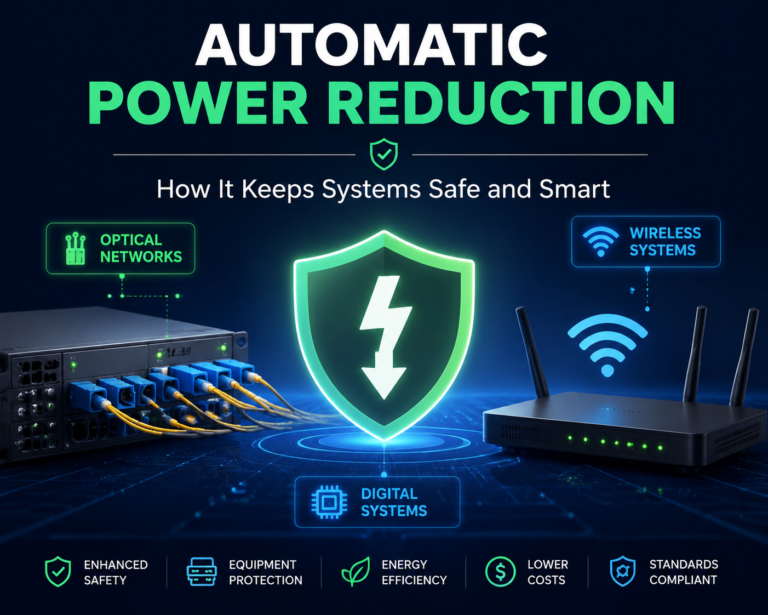
In today’s tech-driven world, safety and energy efficiency are top priorities in network systems. Whether you’re managing optical networks, wireless devices, or digital circuits, Automatic Power Reduction (APR) plays a pivotal role. This smart feature steps in during abnormal conditions, ensuring systems remain safe while minimizing energy consumption. Let’s dive into how APR works, its importance across industries, and why it’s a must-have in modern technology.
What is Automatic Power Reduction (APR)?
Automatic Power Reduction (APR) is a system-level safety feature that automatically reduces power when unexpected disruptions occur in network or device operation. It detects faults, such as fiber breaks in optical systems or unusual signal drops in wireless networks, and reacts by lowering power to safe levels. This helps prevent potential damage to equipment and ensures the safety of operators.
Think of APR like a car’s safety airbag—while you don’t expect it to deploy, it’s a crucial feature that safeguards you when things go wrong.
Why Does Automatic Power Reduction Matter?
Automatic Power Reduction matters because it addresses several critical needs:
- Safety: High-powered lasers or signals can cause serious harm, such as eye injuries or equipment damage. APR ensures that the power levels are lowered to safe standards when something goes wrong.
- Protecting Equipment: Systems and devices often experience wear and tear when running at full power continuously. By reducing power under low-traffic conditions, APR minimizes stress on components, prolonging their lifespan.
- Energy Efficiency: Instead of using full power all the time, APR optimizes power consumption. This lowers energy use, reducing costs and benefiting the environment.
- Compliance: Many regions, such as Europe and North America, enforce strict safety standards (like IEC 60825-1) for high-power devices. APR ensures that devices remain compliant with these safety regulations.
How Does Automatic Power Reduction Work?
APR functions in a straightforward yet effective manner. Here’s the step-by-step process:
- Monitoring: Continuous sensors track signal strength, power levels, and operational conditions in a system.
- Detection: When the system detects an abnormal condition—such as a fiber break in optical networks or a sudden drop in signal—the APR mechanism is triggered.
- Reduction: The system then reduces power to a safe level, often within milliseconds. This prevents further damage or safety hazards.
- Recovery: Some systems send a low-power signal to check if conditions have returned to normal. Once the system detects that everything is back to usual, the power is gradually ramped up to normal levels.
APR in Optical Networks: Safeguarding High-Power Lasers
In optical networks, especially those using Erbium-Doped Fiber Amplifiers (EDFAs), APR is essential for safety. High-power lasers can cause serious harm, as their light is often invisible to the naked eye. APR quickly reduces the power output when a fiber break or disconnection is detected, preventing laser light from escaping and posing a risk to technicians.
Moreover, it prevents damage to optical components, such as connectors and cables, by lowering the power when issues arise. This significantly reduces the risk of expensive repairs and downtime.
APR in Wireless Systems: Optimizing Network Performance
APR isn’t just for optical systems—it’s also crucial in wireless networks. Devices like Cisco Meraki access points use APR to manage power based on environmental conditions. For example, when many devices are connected to a Wi-Fi network in a busy office, APR adjusts the transmit power to reduce interference and improve performance. This results in better network coverage, fewer dead zones, and a more efficient system.
By adjusting transmit power dynamically, wireless systems can prevent excessive interference while maintaining optimal signal quality. This makes APR a key feature in managing network traffic efficiently.
APR vs. Power-Off: Understanding the Difference
While Automatic Power Reduction and the Power-Off Function share similar goals—protecting systems—they work in distinct ways. APR reduces power temporarily in response to a fault or issue, but the system remains active, constantly monitoring conditions. On the other hand, a power-off function completely shuts down the system if the issue persists, offering no further monitoring until the system is manually restarted.
APR is a smarter, more efficient response to network issues, ensuring that devices stay operational and safe without unnecessary shutdowns.
Smart Power Saving: Clock Gating and APR
Another technique that complements APR is Clock Gating, used in digital systems. This power-saving method turns off the clock signal to parts of a circuit that are not in use, reducing dynamic power consumption. Combined with APR, clock gating ensures that systems only consume the energy they need, helping devices run cooler and more efficiently.
Best Practices for Implementing APR
To get the most out of APR, consider these best practices:
- Enable APR on Devices: Always activate APR in devices like optical amplifiers and routers to ensure safety and efficiency.
- Monitor Alerts: Set up systems to alert you when APR is triggered. This allows for prompt action and maintenance if necessary.
- Avoid Maximum Power: Let the system adjust power based on real-time needs instead of running at full power all the time.
- Regular Maintenance: Regular system checks and fiber inspections ensure APR functions effectively and prevent faults from escalating.
Conclusion
Automatic Power Reduction is a smart, essential feature in modern systems. Whether in optical networks, wireless devices, or digital systems, APR protects both people and equipment, reduces energy consumption, and ensures systems remain compliant with safety standards. By automatically adjusting power when needed, APR helps maintain the efficiency, safety, and longevity of today’s most advanced technologies.
FAQs
1. What triggers automatic power reduction in systems?
APR is triggered by abnormal conditions, such as signal loss, fiber breaks, or unexpected drops in signal quality.
2. How does APR save energy?
By reducing power during low-activity periods, APR lowers energy consumption, contributing to lower costs and reduced heat generation.
3. What is the difference between APR and a power-off function?
APR reduces power temporarily, allowing systems to continue monitoring and recovering, while the power-off function completely shuts down the system during critical failures.
4. Can APR improve device lifespan?
Yes, by reducing stress and heat, APR helps extend the lifespan of network devices and equipment.
5. How fast does APR react to faults?
APR typically reacts within milliseconds, ensuring that systems are protected almost instantly.
