
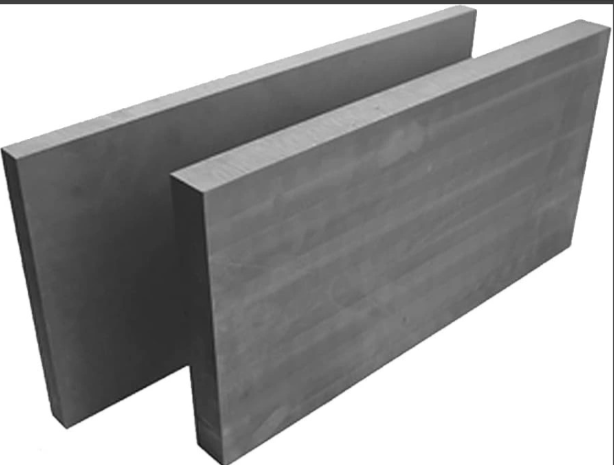
There is a need in many industries for materials that are able to tolerate heat, electric current, chemicals, and harsh operating environments. Carbon graphite plates may be an option, considering the beneficial properties of graphite in terms of physical, electrical, chemical, and dimensional features.
Carbon graphite plates come in various types with regard to grade, density, size, and thickness. It is necessary to know the application, temperature, atmosphere, mechanical loading, and electrical conductivity that are needed when choosing such plates.
What Is a Carbon Graphite Plate?
A carbon graphite plate is a flat part made of graphite that is fabricated into a specific size and thickness. Based on the quality and fabrication method, it may be made for various purposes, including thermal, electrical, chemical, and high-temperature resistance applications.
The structure of graphite is characterized by the presence of layers. This structure allows the graphite to be conductive and gives particular properties to the material.
Unlike the flexible graphite sheet, the rigid graphite plate is typically designed for use in construction, thermal, electrical, and processing purposes.
Why Is Graphite Suitable for Industrial Use?
Graphite combines some unique properties that are not always present in many conventional materials.
For example, graphite is quite thermally conductive, although it has various thermal properties that depend on the grade, density, orientation, and manufacturing of the graphite. In addition, research into graphite sheets indicates that the thermal conductivity of the material depends on the directionality of the material.
Moreover, graphite is also electrically conductive, which renders graphite plates suitable for use in particular applications where electrodes, electrical contacts, electrochemical devices, and other conducting elements are used.
Yet another strength of the material is its performance at high temperatures.
Key Benefits of Carbon Graphite Plates
Resistance to High Temperatures
Graphite is commonly used in systems subjected to very high temperatures as long as the environment around them is properly controlled.
Consequently, graphite plates are used in furnaces, heat treatment systems, semiconductor machines, and other systems that require the use of materials able to withstand very high temperatures. It is important to note, however, that graphite should not be considered an oxidation-resistant material, as it can oxidize at high temperatures, leading to loss of the material.
Good Thermal Conductivity
The effective transfer of heat is necessary in several industrial processes.
Graphite is able to conduct heat effectively and, therefore, can be used in areas where heat conduction is necessary, or temperature needs to be distributed. The performance is, however, dependent on the grade of graphite used as well as the direction of the heat.
Electrical Conductivity
Graphite’s ability to conduct electricity makes it ideal for several applications that need a conductive solid component.
Depending on the grade, carbon graphite plates can be machined into electrodes, electrical systems, furnace parts, and electrochemical systems.
Chemical Resistance
Graphite can offer some degree of chemical resistance to certain environments. This makes it a suitable material for certain chemical processing and sealing applications.
It is important to understand, however, that the chemical resistance of any material is dependent on several factors. Temperature, concentration, pressure, impurities, and the chemical compound in question should be assessed when considering graphite as a material of choice.
Resistance to Thermal Shock
Due to the low thermal expansion and properties of graphite, it can withstand temperature changes more than conventional materials. This is particularly true for furnace components.
Common Applications of Carbon Graphite Plates
High-Temperature Furnaces
Graphite plates can be used as structural or process components in high-temperature furnace systems.
They may serve as supports, fixtures, shields, or other machined components depending on the furnace design. Their thermal characteristics make them useful in controlled-atmosphere applications.
Semiconductor Manufacturing
High-purity graphite is used in various semiconductor and crystal-growth processes.
In these applications, material purity and dimensional consistency are particularly important because contamination can affect sensitive manufacturing processes. The plate grade should therefore be selected according to the specific equipment and process requirements.
Electrochemical Applications
Graphite plates can also be used in applications requiring electrical conductivity and chemical stability.
Research on graphite-based plates has identified applications in areas such as fuel cells, flow batteries, supercapacitors, and other electrochemical systems.
Heat Management
The thermal conductivity of graphite makes it useful for heat-spreading and heat-transfer applications.
Graphite materials have been studied for heat spreaders, heat sinks, and heat-exchange applications because of their ability to transfer heat efficiently along suitable directions.
Chemical Processing
Selected graphite plates can be incorporated into equipment exposed to corrosive environments.
Depending on the process, they may be used as components in heat exchangers, supports, linings, or other specialized equipment. Material compatibility should always be confirmed for the specific chemical environment.
How to Choose the Right Graphite Plate
Selecting a carbon graphite plate should begin with the actual operating conditions.
1. Determine the Temperature
Specify both the operating temperature and the maximum temperature.
The high-temperature characteristics of graphite are greatly dependent on the ambient atmosphere. If a grade of graphite is good enough for use under vacuum or inert atmosphere, it will not be good enough for long-term heating in air.
2. Assess Graphite Purity
If purity is important in applications with semiconductors, crystal growth, or other contamination-sensitive operations, then a special grade of graphite is needed.
In case of less critical applications, there are other graphite grades available that might be cheaper. So, required purity should depend on the process rather than on the purity itself.
3. Compare Density and Strength
Density can affect mechanical strength and electrical/thermal performance.
Industrial buyers should compare density, flexural strength, compressive strength, porosity, and other specifications while comparing graphite grades.
4. Analyze Dimensions
It should be considered whether the plate fits into the available space or meets certain mechanical requirements.
Thickness becomes especially important if the plate will bear some mechanical loads or has a certain temperature profile.
5. Take into Account Electrical/Thermal Characteristics
If the plate is intended for use in electrical or heat transfer operations, then its conductivity should be considered.
There can be significant variations between different grades of graphite, so the specifications should be confirmed with the manufacturer.
Why Manufacturing Quality Matters
A graphite plate is only as useful as its material quality and manufacturing consistency.
The manufacturing process can influence density, porosity, strength, conductivity, surface condition, and dimensional accuracy. Machining quality is also important when the plate must fit precisely into industrial equipment.
For demanding applications, buyers should ask about the graphite grade, purity, density, dimensions, tolerances, and relevant quality-control procedures.
Haoxing Graphite provides graphite products for industrial applications, including graphite plate solutions that can be evaluated according to specific equipment and processing requirements.
Explore Haoxing Graphite Plate Products
How to Improve Graphite Plate Service Life
Correct operating conditions can help reduce premature degradation.
First, avoid exposing graphite unnecessarily to oxygen at high temperatures. Oxidation can gradually consume graphite and reduce the thickness or strength of the component.
Thermal cycling should also be monitored wherever feasible. While graphite has good thermal shock properties, sudden and unplanned variations in temperature will also generate stress.
Handling is also an important consideration. Graphite is quite fragile as compared to many metals, and the plates need to be safeguarded against impacts, overbending, and edge wear.
Inspection can help detect any defects such as cracking, oxidation, variations in dimensions, or degradation of the surface.
Carbon Graphite Plate vs. Graphite Sheet
Graphite plate and graphite sheet are often referred to as synonymous terms but may actually refer to very different materials.
A rigid graphite plate is normally a relatively thick material which is intended to retain its shape. This can be used as either an electrical or thermal conductor, or even structurally.
Graphite sheets may be less rigid and easier to compress. Flexible graphite sheets are typically used for sealing and thermal management purposes. Their characteristics will also depend on their density and orientation.
It will depend on the application requirements whether the proper material is a graphite plate or a graphite sheet.
Why Work With a Professional Graphite Manufacturer?
Industrial graphite components often require specifications that standard materials cannot provide.
A professional manufacturer can help buyers determine suitable graphite grades, dimensions, density, purity, machining requirements, and other characteristics.
Customization can also be important. Furnace components, semiconductor equipment, electrochemical systems, and specialized machinery may require precise dimensions or specific geometries.
For this reason, buyers should provide application details and equipment requirements when requesting a graphite plate rather than selecting a product based solely on size or price.
Frequently Asked Questions
Where would you use a carbon graphite plate?
A carbon graphite plate is ideal in high-temperature processes, heat exchange processes, electrical conductivity, chemical resistance, and industrial processes.
Is the graphite plate ideal in high temperatures?
The graphite plate can perform well at high temperatures. However, the effectiveness of its operation highly depends on the type of atmosphere it is subjected to, since oxidation becomes an issue once graphite is exposed to oxygen at high temperatures.
Does the graphite plate conduct electricity?
Yes. Graphite is an electrical conductor; however, electrical conductivity will be dependent on the grade, density, structure, and fabrication technique of graphite.
Can graphite plates be customized?
Graphite can be machined to different geometries and dimensions. Customizing a graphite plate is important in order for the plate to fit specific industrial equipment.
How do I choose the right graphite plate?
Temperature, atmosphere, purity, density, strength, dimensions, thermal conductivity, electrical conductivity, and chemical exposure are some considerations to make when choosing a graphite plate.
Conclusion
Carbon graphite plate is an industrial material that can possess many qualities such as heat resistance, conductivity, and chemical resistance at the same time. Graphite plates are used for many purposes due to their unique set of properties.
Choosing the right grade depends on the real situation where a graphite plate will be used. Different factors have to be considered, such as temperature, atmosphere, purity, density, etc. Working with an experienced graphite manufacturer can help ensure that the final plate is matched to the equipment and process requirements.
