
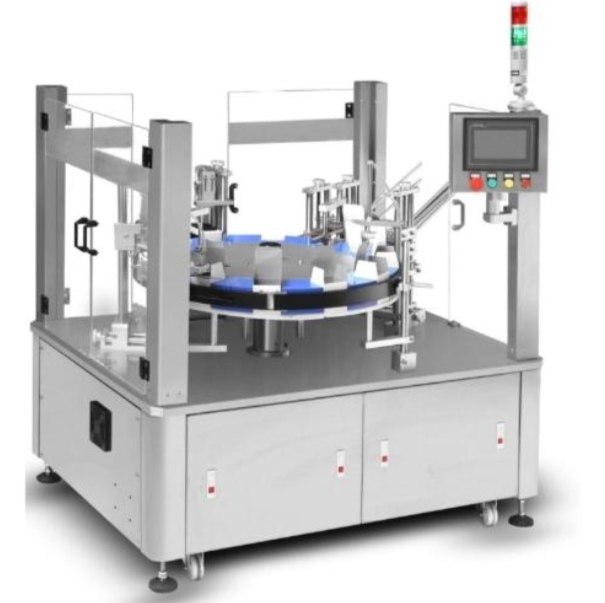
A cartoning machine is a machine that automatically packs products in boxes. According to the design of the machine, it is capable of forming cartons, loading products, closing the carton flaps, and sealing the final pack.
Cartoning machines have been applied in the packaging of foods, pharmaceuticals, cosmetics, daily chemicals, among other products. It all depends on the product design, carton design, quantity, packaging rate, and automation required.
What Is a Cartoning Machine?
A cartoning machine is a packaging machine meant to prepare cartons and pack products inside them. It is an automatic machine that performs packaging activities that would otherwise be done manually.
Different cartoning machines carry out different processes. Some models use horizontal product loading, while others load products vertically. Fully automatic systems can also connect with upstream and downstream packaging equipment to create a complete production line.
How Does a Cartoning Machine Work?
Although machine designs differ, the basic process usually follows several stages.
1. Carton Feeding
Flat carton blanks are supplied to the machine from a carton magazine. The feeding system separates the blanks and transfers them toward the forming section.
2. Carton Opening
The machine opens the carton and forms it into the required shape. Depending on the design, flaps may be folded or prepared for later sealing.
3. Product Loading
The product is transferred into the open carton. Horizontal machines generally load products from the side, while vertical machines can load products from above.
4. Carton Closing
After loading, the carton flaps are folded into position.
5. Sealing
The carton is then closed using the appropriate sealing method. Depending on the machine and carton design, this may involve tuck-in flaps, adhesive, or another closing method.
6. Finished Carton Discharge
The completed package leaves the machine and moves to the next stage of the packaging line.
JOCHAMP describes feeding, carton construction and folding, product loading, and carton closing as key stages of the cartoning process.
Main Types of Cartoning Machines
Different products and production environments require different cartoner configurations.
Horizontal Cartoning Machine
A horizontal cartoning machine loads products from the side of the carton. This configuration is commonly used for solid and regularly shaped products.
JOCHAMP offers horizontal cartoners with intermittent or continuous operation. Its product range includes several models designed for different carton sizes and production requirements.
Vertical Cartoning Machine
A vertical cartoner loads products from above. This arrangement can be useful for scattered, irregular, or loose products that are difficult to insert horizontally.
JOCHAMP identifies applications such as washing powder, candy, milk powder, and fasteners for its vertical cartoning machines.
High-Speed Cartoning Machine
High-speed cartoners are designed for operations that require greater production throughput.
JOCHAMP’s high-speed range uses continuous operation on applicable models. Its published information lists output of up to 100–280 boxes per minute for the high-speed category, while individual models can have different specifications.
Wrap-Around Cartoning Machine
Wrap-around systems form or wrap the carton around the products. They can be useful for multipack applications.
JOCHAMP lists products such as yogurt, instant noodles, and beer among applications for its wrap-around cartoning machines.
Semi-Automatic Cartoning Machine
Semi-automatic machines retain some manual operations, such as product loading.
They can be useful for smaller factories, laboratories, and applications where production volume does not justify complete automation.
Robotic Cartoner
Robotic cartoners use robots for product handling and loading. This can provide flexibility when products have different shapes or when automated positioning is required.
Robotic systems can also be integrated with other packaging equipment when the production line is properly designed.
Benefits of Using a Cartoning Machine
Reduced Manual Work
Automation can reduce repetitive carton preparation and loading tasks. This allows operators to focus on monitoring and other production activities.
Consistent Packaging
Automated movements can provide repeatable carton forming, loading, and closing. Consistency still depends on correct machine setup, product feeding, tooling, and maintenance.
Flexible Production
Many cartoners can be adjusted for different carton sizes within their designed operating range. The required changeover method depends on the machine model.
Better Production Efficiency
Automatic cartoning can support higher production volumes than fully manual packaging. High-speed and continuous-motion machines are particularly suited to demanding production environments.
Production Line Integration
A cartoner can often be connected to other packaging equipment. Depending on the application, this may include feeders, filling machines, labeling systems, checkweighers, coding equipment, or other packaging machinery.
What Products Can Be Cartoned?
Cartoning machines are used for many types of products.
Food Products
Applications can include biscuits, confectionery, packaged foods, and other suitable food products.
Pharmaceutical Products
Cartoners can package products such as medicine bottles, blister packs, vials, and other pharmaceutical items when the machine is configured for the application.
Cosmetics
Bottles, tubes, containers, and other cosmetic products can be cartoned using suitable feeding and loading systems.
Daily Necessities
Other types of products including toothpaste, toothbrushes, soap, batteries, and other consumer goods may also be appropriate.
Industrial Products
Nuts, bolts, small electronic gadgets, and other components can be packed using the machine if their size and handling characteristics fit the machine.
The product’s shape, weight, size, packaging materials, and loading characteristics should be analyzed before choosing the machine.
Why Carton Design Matters
A cartoning machine must be compatible with the carton being used.
Important factors include:
- Carton length, width, and height
- Board material
- Carton thickness
- Folding structure
- Flap design
- Closing method
- Glue requirements
- Product dimensions
A carton that does not match the machine’s operating range can cause feeding problems or poor closing. JOCHAMP notes that carton style, product type, production requirements, and plant conditions should be considered when selecting a cartoning machine.
Automation and Control Systems
Modern cartoning machines can use PLC and HMI systems to control and monitor machine operations.
A PLC manages programmed machine functions. An HMI gives operators a visual interface for settings, production counts, alarms, and other operating information.
Sensors can also detect cartons, products, or machine conditions. Servo systems may be used for controlled movement on suitable machine designs.
JOCHAMP’s high-speed cartoning machines include PLC and HMI control, sensors, servo-driven loading, and overload protection on relevant models.
How to Choose the Right Cartoning Machine
Selecting a cartoner should begin with the product rather than the machine’s advertised speed.
Consider Product Characteristics
Review the product’s:
- Size
- Shape
- Weight
- Fragility
- Feeding method
- Required orientation
Evaluate Production Requirements
Determine the required output per minute and expected operating hours.
A machine should have suitable production capacity without relying only on its maximum rated speed.
Check Carton Specifications
Provide the manufacturer with carton dimensions, material, folding structure, and closing requirements.
Select the Right Loading Direction
Choose horizontal loading when side insertion suits the product. Vertical loading may be more appropriate for certain loose, irregular, or top-loaded products.
Consider Automation
Decide whether your operation needs semi-automatic, fully automatic, high-speed, or robotic cartoning.
Check Line Integration
If the cartoner will connect to existing equipment, review product spacing, conveyor height, speed synchronization, communication signals, and available floor space.
Why Choose JOCHAMP for Cartoning Machines?
JOCHAMP has focused on cartoning machine development since 2005. Its current line of cartoning machines includes horizontal, vertical, high-speed, wrap-around, semi-automatic, and robotic cartoning systems.
It offers customised machines depending on factors like product, pack, production, plant size, and machinery to be integrated.
Its cartoning solutions are suitable for applications in food, confectionery, pharmaceutical, cosmetics, and other packing industries.
Frequently Asked Questions
What is a cartoning machine?
A cartoning machine is packaging equipment that forms cartons, loads products, and closes or seals cartons. The exact operations depend on the machine configuration and application.
What is the difference between horizontal and vertical cartoning?
Horizontal cartoners generally load products from the side of the carton. Vertical cartoners load products from above. This will be determined by the shape of the product, its feed mechanism, and carton style.
Are cartoning machines suitable for high-speed production?
Yes, cartoners for high-speed and continuous-motion production are made specifically for high-speed production environments. The specific machine depends on the desired speed of production, the product, and the pack style.
Is it possible to customize a cartoning machine?
It is certainly possible in many cases; the possibilities will depend on the manufacturer and cartoner.
What information should I provide when ordering a cartoner?
Good information to provide would be the type of product, size of the product, carton size, type of carton, desired speed of production, feed system, and packaging equipment.
Conclusion
Cartoning machines can be used to automate several aspects of secondary packaging, including carton formation, product filling, sealing, and even closing. These machines have different designs depending on whether the application is horizontal, vertical, high-speed, wraparound, semi-automatic, or robotic.
The best cartoner will depend on the product, carton design, production volumes, degree of automation required, and packaging line configuration. Evaluation of these factors prior to purchase will increase the likelihood of finding a cartoner that is well suited to the production process itself.
