
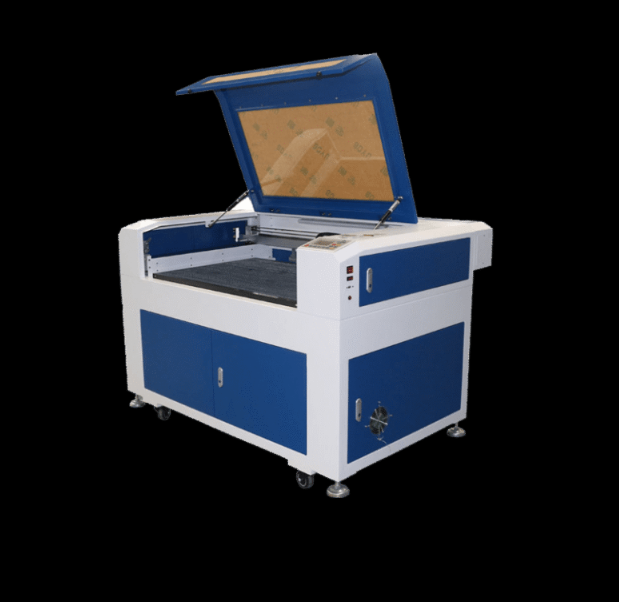
Modern manufacturers need cutting equipment that can deliver speed, accuracy, and consistent results without adding unnecessary complexity to production.This is one of the reasons why fiber laser cutting systems are so popular for the metalworking and manufacturing industries.
Laser cutting is not similar to conventional mechanical cutting because it is non-contact and thermal. The laser beam traces a program-defined cut line to separate the material.
What Are Fiber Laser Cutting Systems?
In the process of fiber laser cutting, the laser cutter has a laser in which the light is produced and amplified using optical fibers.
The light travels through an optical fiber to the head, where it is focused on the workpiece using optics. The light produces heat and melts or vaporizes the material along the intended path.
An assist gas can also be used to aid in the removal of melted material for a clean cut. The fiber laser cutting process is particularly ideal for metal processing due to its near-infrared wavelength that is absorbed by metals.
How Do Fiber Laser Cutting Systems Work?
A standard system consists of some key elements.
In particular, the fiber laser source produces the high-energy beam. The beam goes through fiber optics and reaches the cutting head rather than being focused with the help of mirrors, as in some older laser systems.
Then, the cutting head concentrates the beam into a small spot. After that, the CNC system positions the cutting head based on the design, and the machine cuts out the needed shape or part.
Thus, such factors as laser power, beam quality, spot size, material type, and cutting parameters affect the outcome. Parameter choice is essential for the process of metal processing.
Key Benefits of Fiber Laser Cutting Systems
High Cutting Precision
A focused laser beam can create accurate shapes, small features, and repeatable parts. This makes fiber laser systems useful when dimensional consistency is important.
Laser cutting is also a non-contact process. The cutting tool does not physically press against the material, helping reduce mechanical tool wear.
Fast Production
Fiber lasers have the capability to work on multiple metal pieces within a short period of time.
The cutting speed will depend on various factors, including the laser’s power, the material to be cut, its thickness, and the pre-programmed parameters for cutting.
Efficient Metal Processing
Fiber lasers can provide efficient energy conversion and do not require the same complex optical arrangement associated with some conventional laser technologies. This can simplify system design and maintenance.
Flexible Applications
Laser cutting equipment can be tailored according to production needs. A laser may be utilized for prototyping, customized fabrication, general metal work, and even larger-scale industrial production.
Laser cutting can also be combined with other production systems and automated systems to make it suitable for current production environments.
What Materials Can They Cut?
Fiber laser cutting systems are commonly used for metal fabrication. Depending on the machine configuration and laser power, applications can include materials such as carbon steel, stainless steel, aluminum, brass, and copper.
Material thickness is an important consideration. A system designed for thin sheet metal may have different power and configuration requirements from one intended for heavier industrial plates.
For this reason, manufacturers should evaluate their normal material types and thickness ranges before selecting equipment.
Common Industrial Applications
Fiber laser cutting is used across several manufacturing sectors.
In automotive manufacturing, laser systems can process components and sheet-metal parts with repeatable accuracy.
In metal fabrication, they can produce brackets, panels, enclosures, frames, and custom components.
The technology is also useful in aerospace, electronics, machinery manufacturing, and other industries where accurate metal processing is required. HS LASER describes its cutting equipment as suitable for industrial production, custom fabrication, and heavy-duty cutting applications.
How to Choose the Right Fiber Laser Cutting System
Selecting a machine should involve more than simply comparing laser power.
First, consider the materials and thicknesses you process most frequently. This determines the required power and machine configuration.
Next, evaluate the working area. The table size should accommodate your typical sheet dimensions without creating unnecessary handling problems.
The automation aspect is also critical since firms with high levels of production would do well with a machine that offers automated loading/unloading, material handling, among others.
Lastly, there is the laser source, cutting head, CNC, software, service, and spare parts. Technical support is vital for the installation, training, and maintenance of the machine. HS LASER offers technical consultancy, installation, training, remote support, maintenance, and spare parts services.
Why Work With an Experienced Manufacturer?
The laser cutting machine is a major production expense, and the most suitable one should correspond to the customer’s manufacturing needs, not just boast maximum power output.
HS LASER offers fiber laser systems used in cutting, welding, marking, and cleaning processes. Among the products offered by the company are laser cutting systems suitable for precise processing and industrial production.
Also, HS LASER emphasizes application analysis, custom solutions, sample testing, and technical support as its customer services. This could help a manufacturer assess whether the particular machine is suitable before buying it.
Final Thoughts
A fiber laser cutting system provides the perfect blend of accuracy, speed, versatility, and automation capability, which makes it useful for contemporary metal fabrication.
Nevertheless, it all boils down to your application needs when choosing the most effective system. The material used, its thickness, the quantity you intend to cut, the size of the cutting area, laser energy, and after-sales service need to be taken into account.
For any producer seeking to increase metal-cutting efficiency without compromising on quality, considering a fiber laser system could prove to be quite helpful.
Learn more about HS LASER laser cutting machine systems and configurations.
