
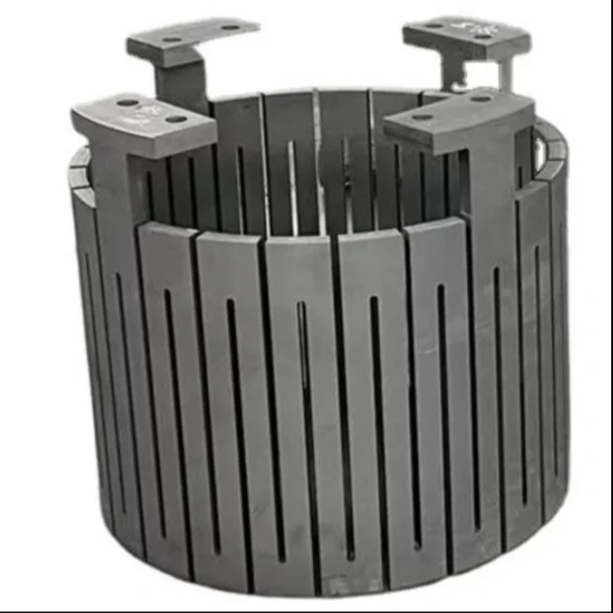
High-temperature furnaces require heating elements that can function efficiently under difficult conditions. Heating elements made of graphite are often utilized because of their conductivity, stability, and resistance to rapid fluctuations in temperature.
These heating elements are effective if they are applied in vacuum furnaces, semiconductor production equipment, metallurgical furnaces, laboratories, and other high-temperature operations. Design, graphite quality, electrical resistivity, and atmosphere in the furnace define their efficiency and service life.
What Are Graphite Heating Elements?
Graphite heating elements are electrically conductive devices used to produce heat energy using resistance heating. The electrical resistance of the graphite heating element produces heat when electricity passes through it.
The heat produced is mainly transmitted through radiation and conduction. Heat transmission through this process enables the heating element to heat the furnace chamber to desired temperatures.
Graphite heating elements can also be manufactured in different shapes and sizes depending on individual needs.
How Do Graphite Heating Elements Work?
The principle of operation of this furnace is simple.
Electrical current flows through the graphite element. Due to the electrical resistance of the material, heat is formed, which is transferred into the furnace chamber.
During the heating of the element, the transfer of heat by means of thermal radiation becomes more significant and contributes to the transfer of heat energy to other elements of the furnace and workpiece. The thermal conductivity of graphite is responsible for the heat transfer process inside the element.
The electrical resistance of graphite may depend on the temperature and vary due to the grade of the material and its graphite structure.
Why Use Graphite Heating Elements?
Graphite offers several properties that are useful for high-temperature furnace applications.
High-Temperature Performance
Graphite can operate at very high temperatures under suitable conditions. Haoxing’s product information specifies working temperatures above 2,000°C for its high-purity graphite heating elements.
Research on graphite heaters has also demonstrated their use in ultra-high-temperature furnace systems operating above 2,500°C under controlled atmospheres. Actual operating limits depend on the graphite grade, furnace design, atmosphere, and application.
Fast Heating
The conductivity of graphite ensures efficient conversion of electricity into heat. Thus, this property allows for fast heating of the furnace.
Quick heating may become handy in those situations when producers want to shorten process cycles without losing control over the temperature level.
Uniform Heat Distribution
The geometry of the elements affects the temperature distribution within the furnace.
Graphite heating elements may have various geometrical forms and configurations. It is possible to produce those that will ensure uniform thermal radiation through the hot chamber of the furnace.
Resistance to Thermal Shock
Industrial furnaces may undergo several cycles of heating and cooling. Thermal shock resistance of the material will lower the risk of cracking. It is especially valuable for those furnaces where thermal cycles occur frequently.
Common Applications of Graphite Heating Elements
Graphite heaters find their use in many industrial sectors where traditional heating materials are not applicable.
Vacuum Furnaces
Vacuum furnaces are one of the main areas of application of graphite heating elements. Vacuum furnaces are used in applications where heating is performed at high temperatures under strictly controlled conditions.
Graphite is particularly suitable for vacuum and inert gas environments, as high temperatures can be reached without the risk of oxidation of the heating element.
Semiconductor Manufacturing
High-purity graphite products are used in semiconductor and crystal growing equipment. The material purity is necessary in order to prevent any impurities from interfering with the manufacturing process.
Graphite heating elements can create high-temperature heating and a well-controlled thermal environment necessary for specialized equipment.
Metal Metallurgy and Heat Treatment
The high temperature generated by graphite heaters makes them useful in metal processing and heat treatment equipment.
The ability to create high temperatures makes graphite heaters suitable for some processes, such as sintering, annealing, brazing, and others.
Laboratory and Research Equipment
Laboratory furnaces usually have the necessity of controlling temperature control. Graphite heating elements can be used in research equipment where very high temperatures are necessary.
How to Choose the Right Graphite Heating Element
Choosing an element should begin with the furnace rather than the component itself.
Consider the Operating Temperature
Determine the maximum process temperature and the expected heating cycle. Higher temperatures can place greater demands on the graphite material and furnace atmosphere.
Do not select an element based only on its maximum temperature rating. The actual operating environment matters just as much.
Evaluate the Furnace Atmosphere
Atmosphere plays a crucial role.
Graphite tends to undergo oxidation under high temperatures in the presence of oxygen. This is the reason why graphite heating elements find extensive application in vacuum or inert environment conditions.
The furnace design should therefore provide suitable atmospheric control for the selected graphite element.
Check Electrical Requirements
The element’s resistance must be compatible with the furnace power supply and control system.
Resistance value, element dimensions, material grade, and operating temperature can all affect electrical performance. These parameters should be confirmed before production or replacement.
Consider Size and Shape
Heating elements can be produced in different geometries to suit different furnace designs.
The required shape, dimensions, connection points, and heating zone should be evaluated together. Haoxing states that its graphite heating elements can be customized according to customer drawings, equipment specifications, and application conditions.
Why Manufacturing Quality Matters
The performance of a graphite heating element depends heavily on the quality and consistency of the graphite used to manufacture it.
Material properties such as purity, density, strength, and thermal performance can influence heating efficiency and durability. Precision machining is also important because dimensional variations can affect installation and electrical performance.
Haoxing describes a manufacturing process that includes graphite material selection, molding and heat treatment, CNC machining, and quality control. The company also states that product dimensions, resistance values, purity, density, and machining tolerances can be customized according to furnace requirements.
For industrial users, consistent manufacturing is particularly valuable because a heating element is part of the overall furnace system. An element that fits correctly and provides predictable electrical performance can support more stable operation.
How to Extend Heating Element Service Life
The proper function of the furnace will also contribute to minimizing early deterioration.
Thermal shock and improper heating/cooling processes should be avoided. Sudden temperature changes can put pressure on the element.
Atmosphere management is another thing that should be taken care of. Graphite needs to be shielded from excessive oxygen contact since high temperatures can make it oxidize.
The right placement of the element within the furnace is vital, as well as proper wiring. Inspection will ensure detection of such issues as cracking, oxidation, deformation, or any connection faults.
Why Choose a High-Purity Graphite Heating Element?
High-purity graphite may be helpful where there is a need for the process to involve heating under controlled conditions and little contamination. This is particularly important where there are processes like those in semiconductor fabrication, crystal growth, among others, in which purity may affect the outcome of the process. According to Haoxing, their high-purity graphite heaters provide clean heating and customization to different furnace needs.
Frequently Asked Questions
What are the uses of graphite heating elements?
Graphite heating elements are employed to provide heat within high-temperature furnace systems. Some examples of their usage include vacuum furnaces, semiconductor tools, metallurgical processes, heat treatment facilities, and lab testing equipment.
How do graphite heating elements produce heat?
Heat generation takes place as a result of resistance heating. Heat is generated as electrical current passes through graphite material due to electrical resistance converting electricity to heat. This heat is then transferred by radiation and conduction.
What is the maximum temperature that can be achieved with graphite heating elements?
The temperature that will be attained depends on various factors such as graphite grade, furnace design, atmosphere, and operation. According to Haoxing, high-purity graphite heating elements have working temperatures exceeding 2,000°C.
Is it possible to customize graphite heating elements?
It is possible because graphite heating elements can be produced in different geometries and sizes. According to Haoxing, graphite heating elements are customizable based on customer drawings, equipment specifications, electrical resistance, and application conditions.
How can the service life of graphite heating elements be improved?
Proper temperature control, suitable furnace atmosphere, correct installation, and appropriate graphite selection can help extend service life. Limiting oxidation and avoiding unnecessary thermal shock are also important considerations.
Conclusion
Graphite heating elements serve well as a heating source for high-temperature furnaces in which electrical conductivity and temperature stability play a critical role. They are especially useful in the context of vacuum and controlled atmospheres.
The proper choice of the heating element depends on the operating temperature, furnace atmosphere, electrical resistance, size, quality of graphite material, and type of heating.
