
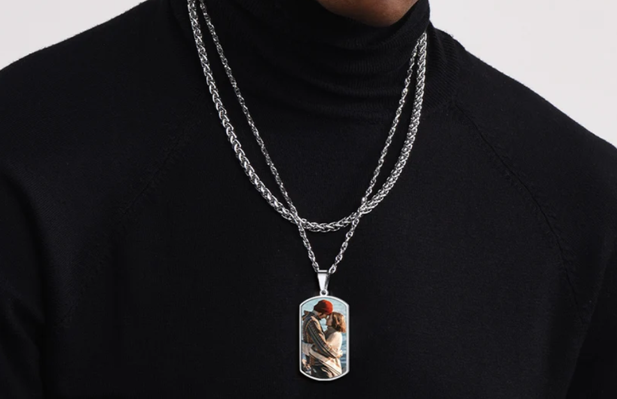
Photo jewelry has come a long way from the grainy, low-contrast pendants that were common a decade ago. Modern engraving and printing methods can reproduce a photo with real detail, but the quality gap between a well-made piece and a disappointing one is still wide — and most of that gap comes down to decisions made before the order is even placed, not the manufacturer’s skill.
The Photo Matters More Than the Metal
The single biggest factor in how a finished piece looks is the source image, and this is where most disappointing results actually start. Custom pendants with pictures are typically produced through one of two methods: laser engraving, which etches the image directly into metal using light and dark values, or UV printing, which applies color directly onto the surface.
A few things to check in a photo before submitting it:
- Resolution matters more at small sizes than large ones. A pendant is often under an inch across, so a slightly blurry photo that looks fine on a phone screen can turn into a muddy, undefined image once shrunk and engraved.
- High-contrast photos engrave better than flat, evenly-lit ones. Laser engraving works by burning varying depths into metal, so an image with clear light and dark areas translates far more clearly than a washed-out, evenly exposed shot.
- Busy backgrounds rarely survive the shrinking process. A close, simple portrait or a cropped section of a larger photo almost always outperforms a full scene crammed into a small pendant.
If a company offers a proof before production, always request it. It’s the easiest way to catch a problem before the piece is finished rather than after.
Engraving vs. Printing: Which Actually Holds Up
Laser-engraved pendants are monochrome — black and white or grayscale — but they’re extremely durable, since the image is physically etched into the metal rather than sitting on the surface. It won’t fade, chip, or wear off with daily contact.
UV-printed pendants can reproduce full color, which is appealing for photos where color is part of the point, but the ink sits on top of the metal and is more vulnerable to scratching over years of wear, particularly if the piece rubs against clothing or other jewelry regularly. For a piece meant to be worn daily for years, engraved black-and-white tends to hold its quality longer than printed color, even though color feels like the more faithful reproduction upfront.
When a Rosary Format Makes More Sense Than a Flat Pendant
Not every personalized piece needs to be a flat photo pendant. A men’s rosary necklace that combines a personalized photo or name element with traditional rosary bead styling gives the piece a specific religious weight that a plain photo charm doesn’t carry on its own. This format works particularly well for memorial pieces or gifts tied to a specific person of faith, where the rosary structure itself is part of the meaning rather than incidental design.
The bead count and material on a rosary-style piece typically follow traditional conventions even when personalized, so it reads as a genuine devotional piece rather than a novelty item with religious styling tacked on.
Sizing the Image to the Pendant Shape
Round and oval pendants crop differently than rectangular or heart-shaped ones, and a photo that works well in one shape can lose important detail in another. A close portrait crops well into an oval or round shape since faces are naturally roughly oval. A wider group photo or a shot with meaningful background detail generally needs a rectangular or bar-style pendant to avoid cutting out the parts that matter.
A Few Ordering Mistakes Worth Avoiding
- Submitting a screenshot of a photo instead of the original file — screenshots compress and lose detail that shows up badly once enlarged for engraving.
- Choosing a busy multi-person photo for a small pendant, where individual faces become indistinguishable once shrunk.
- Skipping the proof stage when it’s offered, then being unable to make changes after production has already started.
Getting a Piece Worth Keeping
The technology behind photo jewelry has genuinely improved, but it can’t fully compensate for a low-quality source image or a mismatched format. Spending a few extra minutes picking the right photo, and choosing engraving over printing for anything meant to last, makes a bigger difference in the final result than which specific company produces it.
