
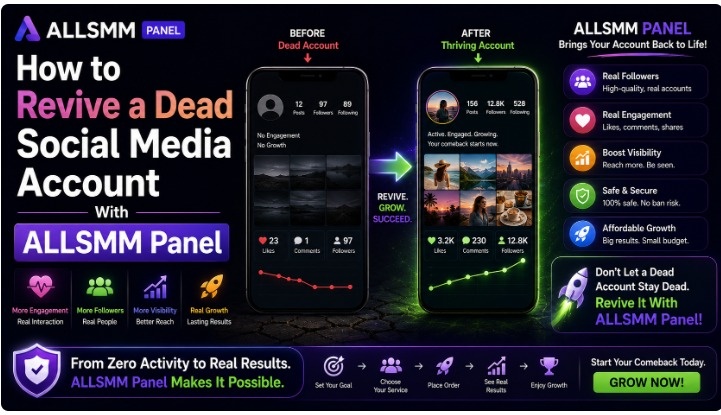
We all have one. That account we started with big plans, posted to for a few weeks, and then quietly abandoned. Maybe life got busy. Maybe the likes never came and it stopped feeling worth it. Either way, it just sits there now, frozen in time, with a follower count that never moved and a last post dated eight months ago.
I have restarted more dead accounts than I can count, both my own and for people I help. And here is what surprised me. Reviving a dormant account is often harder than starting a fresh one, because a dead account carries baggage. It looks abandoned, and abandoned is a worse signal than brand new. So let me walk you through how I actually bring these accounts back to life, and where a little help from a cheap SMM panel fits into that.
This is for anyone staring at an old account wondering if it is worth saving. Spoiler: usually it is, and it is cheaper to revive than to start over.
Why a dead account is worse than a new one
This feels backwards, so let me explain it. When someone lands on a brand-new account with 12 followers, they think “okay, they just started.” No judgment. But when they land on an account with 300 followers, a last post from ten months ago, and dead comments, they think something worse. They think “this person gave up” or “this thing failed.”
A new account has potential. A dead account has a story, and the story is abandonment. That is the real problem you are solving when you revive one. You are not just adding activity, you are overwriting a negative signal with a positive one.
The good news is you already have something a new account does not. You have those 300 old followers, some old posts, and whatever history got you there. That is a foundation. Dusty, but real. Your job is to make the account look alive again so both the old followers and new visitors take it seriously.
Step one: clean up before you relaunch
Do not just start posting into the void. Before anything else, tidy the place up. This part is free and it matters more than people think.
Update the profile photo and bio so they reflect what you are doing now, not what you planned a year ago. Pin your best old post or a fresh “I’m back” post to the top. Delete or archive anything that is embarrassingly off-brand now. Basically, make the first impression match the direction you are heading.
Think of it like reopening a shop that has been closed for a year. You sweep the floors, wash the windows, and put fresh stock in the display before you unlock the door. Nobody walks into a dusty shop and trusts it. Same with your profile.
Step two: understand the momentum problem
Here is the wall everyone hits. You come back, you post something good, and it gets almost no reach. Why? Because the algorithm forgot about you. Those 300 old followers have not seen you in months, so the platform is not confident they still care. It shows your comeback post to a tiny fraction of them, waits to see the response, and if the response is weak, it buries the next one too.
This is the dead-account trap. Low activity leads to low reach, low reach leads to low activity, and round it goes. Breaking that loop is the whole game. You need a spark of activity strong enough to tell the algorithm, and your old followers, that this account is worth paying attention to again.
That spark can come organically if you have the time and patience to grind for weeks. Or you can give it a nudge. This is exactly where a smm panel earns its place in a comeback plan, adding a measured layer of engagement that signals “this account is active again” without waiting months for the loop to break on its own.
Step three: what a panel actually is, quickly
In case you are new to the idea, a panel is just a service that delivers social media engagement, like followers, likes, or views, for a set price. A cheap one keeps those prices low. The honest ones deliver real-looking, lasting engagement. The bad ones dump obvious bots that vanish in a week.
The word cheap trips people up. Cheap and low-quality are not the same thing. A genuinely good service can be affordable because it buys close to the source and runs lean, not because it cuts corners. The trick is telling the two apart, which I will cover further down.
Step four: how to use a boost for a comeback
Reviving an account is a slightly different job than growing a new one, so the approach shifts. Here is how I do it.
- Post your comeback content first. Have two or three genuinely good posts up before you boost anything. The boost points attention at your profile, so there needs to be something worth seeing when people arrive.
- Add engagement to the new posts, not the old ones. You want to signal current activity. Likes and views on your fresh comeback posts tell the algorithm the account is active now. Boosting a post from last year does nothing useful.
- Layer in a modest follower bump. A small, steady increase in followers alongside your comeback makes the account look like it is regaining traction, which encourages real people to follow too.
- Spread it over days. A dead account that suddenly gains 5,000 followers in an hour looks fake and suspicious. Natural pacing over a week or two looks like an organic revival.
- Keep posting through the whole thing. The boost buys attention. Your content decides whether that attention sticks around.
The goal is not to fake a huge audience. It is to make the account cross back over the line from “abandoned” to “active and worth following,” so the algorithm and real users re-engage.
Fast start, natural finish
One thing I always check with any service is how the delivery is paced. When I place an order to revive an account, I want it to start quickly, within minutes, because staring at a screen where nothing is happening makes you feel scammed. A quick start is reassuring.
But I do not want everything delivered in that same minute. That creates a suspicious vertical spike that screams “bought,” which is the last thing a comeback account needs. The sweet spot is a fast start followed by natural pacing over hours and days. That is what I look for in a cheap smm panel, and it is what makes a revival look like real momentum returning rather than an obvious purchase.
A real comeback I helped with
A friend ran a small handmade leather goods account. She had built it to about 800 followers two years ago, then stopped when her day job got hectic. When she wanted to sell again, the account was a ghost town. New posts got maybe 15 likes, reach was nothing, and it felt pointless.
We cleaned up the profile first, new bio, fresh photos of her current work, and pinned a short “back to making” post. Then over about ten days we added a light layer of engagement to her three newest posts and a slow trickle of new followers. Small spend, well under what she expected.
The account did not explode, because comebacks rarely do. But the reach on her posts climbed back to where real people were seeing them again, some of her old followers re-engaged, and within a few weeks she had her first order in over a year. The boost did not sell the bags. It just got the account seen again so her actual work could do the selling.
How to pick a service you can trust
Not every provider is honest, and a bad one will make your dead account look worse, not better. Here is how I vet one without any special knowledge.
- It lets you start small. A trustworthy service is happy to take a ten dollar test order. Anyone demanding a big deposit up front is a red flag.
- It offers more than one platform and service. Followers, likes, views across the networks you use, so you can build a balanced revival instead of a lopsided one.
- The engagement sticks. Check your count a week later. Some natural drop is normal, but if half vanishes, the quality is bad.
- Real support exists. You want humans who reply in hours if an order stalls, not a dead contact form.
Tick those boxes and the price being low is a bonus, not a warning. A reliable, affordable smm panel is exactly the kind of tool that makes a comeback painless instead of a months-long grind. The cheapest option with none of those boxes checked, though, will just waste your money and your account’s reputation.
Mistakes people make when reviving an account
I have seen the same errors trip people up again and again. Skip these and you are ahead of most.
- Boosting before posting. Sending attention to a profile with a year-old last post wastes the boost. Post first, then boost.
- Going too big too fast. A dead account that balloons overnight looks fake. Slow and steady reads as a genuine revival.
- Only buying followers. A jump in followers with no likes or views on your posts looks hollow. Balance the mix.
- Expecting the boost to do the work. It gets you seen. Your content and consistency keep you alive. Treat it as a jump-start, not the engine.
FAQ
Is it worth reviving an old account or should I start fresh?
Usually worth reviving. You keep your old followers, your history, and your username, and it costs less effort than building from zero. Starting fresh throws all that away. Only start over if the old account is tied to a direction you have completely abandoned.
Will buying engagement for a dead account get me in trouble?
Not if you keep it natural. The risk comes from dumping thousands of fake-looking followers overnight. A modest, paced boost layered onto real comeback content looks like an organic revival and stays safe.
How much should I spend to revive an account?
Start with ten or twenty dollars. Reviving is about crossing the line back to “active,” not building a massive audience overnight. See how the account responds, then decide whether to add more.
Should I boost my old posts or new ones?
New ones. Engagement on fresh posts signals current activity to the algorithm, which is exactly what a dormant account needs. Old posts are history and boosting them does little.
How long until the account feels alive again?
Give it a few weeks. The boost helps quickly, but real revival comes from consistent posting alongside it. Most accounts I have helped started feeling alive again within two to four weeks of steady effort.
What makes a cheap panel reliable rather than a scam?
It lets you start small, offers multiple platforms and services, delivers engagement that lasts past a week, and has real support. Low price plus those traits is a genuine bargain. Low price without them is a trap.
