
Traditional machine learning models are designed to learn patterns from a fixed dataset and perform specific tasks. However, as real-world problems become more dynamic, there is a growing need for systems that can adapt quickly to up latest tasks with minimal data. This is where meta-learning, often referred to as “learning to learn,” becomes highly relevant. For professionals exploring advanced concepts through a data scientist course in Coimbatore, meta-learning offers a deeper understanding of how intelligent systems can generalise across tasks rather than just memorise patterns.
Meta-learning focuses on building models that improve their learning process over time by leveraging experience from multiple tasks. Instead of training a model for a single objective, meta-learning trains it to adapt efficiently to new objectives.
What is Meta-Learning?
Meta-learning is a subfield of machine learning where algorithms are trained on a variety of tasks and use that experience to learn new tasks faster. The idea is to capture knowledge at a higher level so that the model can reuse it when faced with unfamiliar problems.
Unlike traditional approaches, where models require large datasets and extensive training time, meta-learning aims to reduce both data dependency and training duration. This is particularly useful in scenarios like healthcare, robotics, and personalised recommendations, where data can be limited or constantly evolving.
For learners enrolled in a data scientist course in Coimbatore, understanding meta-learning helps bridge the gap between theoretical machine learning and real-world adaptive AI systems.
Types of Meta-Learning Approaches
Meta-learning methods can be broadly categorised into three main approaches:
1. Model-Based Meta-Learning
In this approach, models are designed with architectures that inherently support fast learning. These models often use memory-augmented neural networks or recurrent structures that can store and recall information from previous tasks.
For example, a model may learn how to classify images by remembering patterns it has seen before, enabling quicker adaptation when new categories are introduced.
2. Metric-Based Meta-Learning
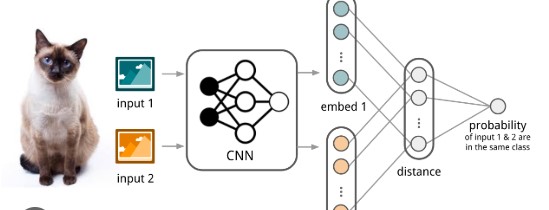
Metric-based methods focus on learning similarity measures between data points. Instead of directly predicting outputs, the model learns how to compare inputs and determine their relationships.
Popular techniques like Siamese networks and prototypical networks fall under this category. These are widely used in few-shot learning scenarios, where only a small number of examples are available.
3. Optimisation-Based Meta-Learning
This approach focuses on improving the learning algorithm itself. The most well-known example is Model-Agnostic Meta-Learning (MAML), where the model is trained to achieve optimal performance with minimal gradient updates.
Here, the emphasis is on finding initial parameters that can quickly adapt to latest tasks with just a few training steps.
Real-World Applications of Meta-Learning
Meta-learning is not just a theoretical concept; it has practical applications across multiple domains:
- Healthcare: Rapid adaptation to new diseases or patient-specific conditions using limited medical data.
- Robotics: Enabling robots to learn new tasks without extensive retraining.
- Natural Language Processing: Adapting to new languages or dialects with minimal data.
- Recommendation Systems: Improving personalisation by quickly adjusting to user behaviour changes.
These applications highlight the importance of flexible and adaptive learning systems. As industries demand faster and more efficient AI solutions, meta-learning becomes a critical skill for aspiring professionals.
Benefits and Challenges
Benefits
- Faster Learning: Models can adapt quickly to new tasks.
- Reduced Data Requirement: Works effectively with limited datasets.
- Improved Generalisation: Enhances performance across diverse scenarios.
Challenges
- Complexity: Designing meta-learning models requires advanced understanding.
- Computational Cost: Training across multiple tasks can be resource-intensive.
- Limited Standardisation: Still an evolving field with fewer established best practices.
For those pursuing a data scientist course in Coimbatore, gaining hands-on exposure to these challenges prepares them for real-world problem-solving in AI and machine learning roles.
Conclusion
Meta-learning represents a significant step forward in the evolution of machine learning. By focusing on how models learn rather than just what they learn, it enables the development of systems that are more adaptable, efficient, and scalable.
As industries continue to move toward automation and intelligent decision-making, the ability to build systems that can learn from minimal data and adapt to new tasks will become increasingly valuable. Understanding meta-learning not only strengthens foundational knowledge but also opens up opportunities to work on cutting-edge AI applications.
For anyone looking to advance in this field, especially through a data scientist course in Coimbatore, meta-learning provides a strong foundation for building next-generation intelligent systems.
