
Introduction
Research is an essential part of academic learning. It helps students develop critical thinking skills, expand their knowledge, and gain a deeper understanding of various subjects. Whether students are preparing assignments, dissertations, projects, or research papers, the ability to conduct effective research plays a vital role in their academic success. However, many students face numerous challenges during the research process. From finding reliable sources to organizing information, these difficulties can affect the quality and efficiency of their work.
Understanding these challenges and learning practical strategies to overcome them can significantly improve the research experience. This article explores the common difficulties students encounter while conducting research and provides effective methods to make the research process more productive and successful.
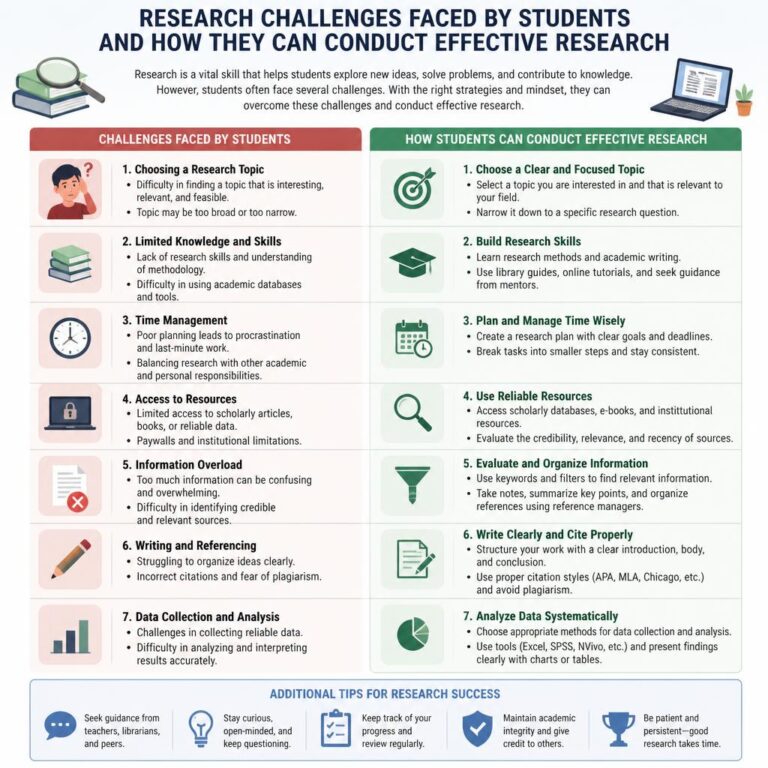
How Students Can Conduct Effective Research
Despite these challenges, students can improve their research skills by adopting systematic and practical approaches. The following strategies can help students conduct effective and efficient research.
1. Start with a Clear Research Question
A well-defined research question provides direction and focus. Before collecting information, students should identify the main objective of their research. A specific and focused question helps narrow down the topic and prevents unnecessary information gathering.
2. Use Credible Sources
Students should prioritize reliable academic resources such as:
- Scholarly journals
- Academic books
- University publications
- Government websites
- Reputable research databases
Using credible sources improves the accuracy and quality of research findings.
3. Develop Strong Research Skills
Learning basic research methodologies can greatly enhance research effectiveness. Students should understand how to:
- Conduct literature reviews
- Gather data systematically
- Evaluate sources critically
- Analyze information objectively
Many universities also offer workshops and online resources to help students develop these skills.
4. Create a Research Plan
A research plan helps students stay organized and manage their time efficiently. The plan should include:
- Research objectives
- Deadlines
- Source collection schedule
- Writing milestones
- Revision periods
Breaking large tasks into smaller steps makes the process more manageable.
5. Take Organized Notes
While reviewing sources, students should maintain detailed notes. Organizing information according to themes or categories can make writing easier later. Digital note-taking tools can also help students store and retrieve information efficiently.
6. Evaluate Information Critically
Students should not accept information at face value. Instead, they should ask questions such as:
- Is the source credible?
- Is the information current?
- Does the evidence support the claims?
- Are there alternative viewpoints?
Critical evaluation strengthens the overall quality of research.
7. Improve Academic Writing Skills
Clear and structured writing is essential for presenting research findings effectively. Students should focus on:
- Logical organization
- Clear arguments
- Proper grammar
- Concise language
- Accurate citations
Regular writing practice and feedback from instructors can help improve these skills.
8. Learn Proper Citation Techniques
Understanding citation styles such as APA, MLA, or Harvard helps students avoid plagiarism. Keeping track of sources throughout the research process makes referencing easier and more accurate.
9. Seek Guidance When Needed
Students should not hesitate to seek help from professors, librarians, or academic advisors. Expert guidance can save time, clarify doubts, and improve research quality.
10. Utilize Research Tools Responsibly
Modern digital tools can assist students in managing references, organizing notes, checking grammar, and improving productivity. However, students should use these tools responsibly and ensure that their research remains original and academically sound.
Common Research Difficulties Faced by Students
Students often struggle with various aspects of research. In today’s digital era, they must evaluate countless online sources, tools, and resources. Some students even use technologies such as the best ai detector free tools to verify content authenticity and maintain academic integrity while working on research projects.
1. Difficulty in Finding Reliable Sources
One of the most common challenges students face is identifying credible and trustworthy sources. The internet contains an overwhelming amount of information, but not all of it is accurate or academically acceptable. Students often find it difficult to distinguish between reliable sources and misleading content.
2. Lack of Research Skills
Many students begin research without proper training in research methodologies. They may not know how to formulate research questions, conduct literature reviews, or collect and analyze data effectively. This lack of foundational skills can make the entire process confusing and time-consuming.
3. Information Overload
The abundance of information available online can be both a benefit and a challenge. Students often collect excessive amounts of data without knowing which information is relevant to their topic. As a result, they may feel overwhelmed and struggle to focus on key points.
4. Time Management Issues
Research requires careful planning and consistent effort. Many students procrastinate or underestimate the amount of time needed for research activities. Balancing academic responsibilities, extracurricular activities, and personal commitments can make effective time management difficult.
5. Difficulty in Analyzing Information
Collecting information is only one part of research. Students must also analyze and interpret data critically. Some students struggle to evaluate evidence, compare viewpoints, and draw meaningful conclusions from their findings.
6. Academic Writing Challenges
Even when students gather valuable information, presenting it in a clear and structured manner can be challenging. Issues such as poor organization, weak arguments, grammatical errors, and improper citation often affect the quality of research papers.
7. Fear of Plagiarism
Plagiarism is a serious academic concern. Many students worry about accidentally copying content from sources without proper attribution. Understanding citation styles and paraphrasing techniques can be difficult, especially for beginners.
Benefits of Effective Research
When students conduct research effectively, they gain several advantages:
- Improved critical thinking skills
- Better academic performance
- Enhanced problem-solving abilities
- Stronger analytical skills
- Greater confidence in presenting ideas
- Preparation for future professional and academic opportunities
Effective research not only contributes to academic success but also develops valuable lifelong learning skills.
Conclusion
Research can be challenging for students due to issues such as unreliable sources, time management difficulties, information overload, and academic writing concerns. However, by developing strong research skills, using credible resources, planning effectively, and practicing critical analysis, students can overcome these obstacles and produce high-quality work. Additionally, modern resources such as the best ai detector free tools can support academic integrity when used appropriately. Ultimately, effective research enables students to achieve better academic outcomes and become more informed, independent learners.
