
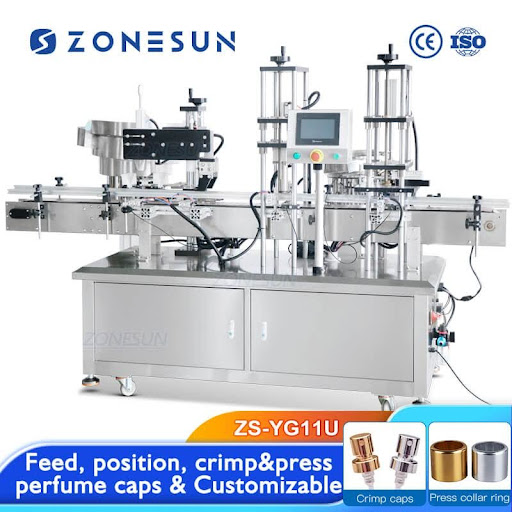
In most perfume production facilities, the capping stage often goes unnoticed until something starts to go wrong—like slipping caps, uneven torque, or a line slowing down for reasons nobody can quite figure out right away. Yet the choice of a perfume capping machine often ends up influencing throughput, rejection rates, and even how stable the upstream filling process feels.
It’s one of those machines that quietly exposes whether a production line was designed with real operational discipline or just assembled from catalog equipment.
For factories scaling from semi-automatic bottling into full commercial output, the question isn’t just which model is “best,” but which one holds up when fragrance viscosity changes, bottle shapes vary, and shifts run longer than planned.
Perfume capping machine selection depends more on line reality than specs
On paper, most perfume capping machine options look similar. Vendors tend to emphasize speed ratings, torque control ranges, and compatibility with “multiple bottle formats.” Those specs really only matter once the machine is working as part of a full line with fillers, conveyors, and inspection systems.
One common mistake is underestimating just how sensitive fragrance packaging can be—glass bottles with decorative shoulders, lightweight caps, and uneven neck finishes bring in variations that lab tests don’t always catch.
That’s where the difference between entry-level semi-automatic units and fully servo-controlled systems becomes obvious.
In smaller operations, a pneumatic capping machine still has a place. It’s flexible and relatively forgiving. But once production crosses a certain threshold—especially in commercial fragrance brands targeting retail chains—the inconsistency starts to show in torque drift and cap alignment.
From what installers often report, the real bottleneck isn’t speed. It’s repeatability across long production runs.
What actually defines a “best” perfume capping machine in factories
The idea of a “best model” rarely survives first contact with a factory floor. Instead, the right perfume capping machine is the one that balances mechanical stability with control precision under real operating conditions.
Servo-driven automatic cappers tend to dominate higher-end installations for a reason. These machines let you fine-tune the torque, which turns out to be more important than many buyers expect. Perfume bottles often have caps that not only seal but also serve as key branding elements, so even a slight over-tightening can damage the cap’s finish or throw off the bottle neck’s alignment.
In bigger commercial projects, engineers usually focus on:
Torque consistency over long shifts
- Quick format changeover without recalibration chaos
- Cap feeding reliability (this is often underestimated)
- Compatibility with inspection systems downstream
- Minimal mechanical drift under continuous load
One thing many buyers overlook is how sensitive production becomes when multiple SKUs run on the same line. A machine that performs well on one bottle type can behave unpredictably when switched to a slightly taller or heavier design.
That’s where modular servo systems usually justify their cost.
Automation level matters more than headline speed
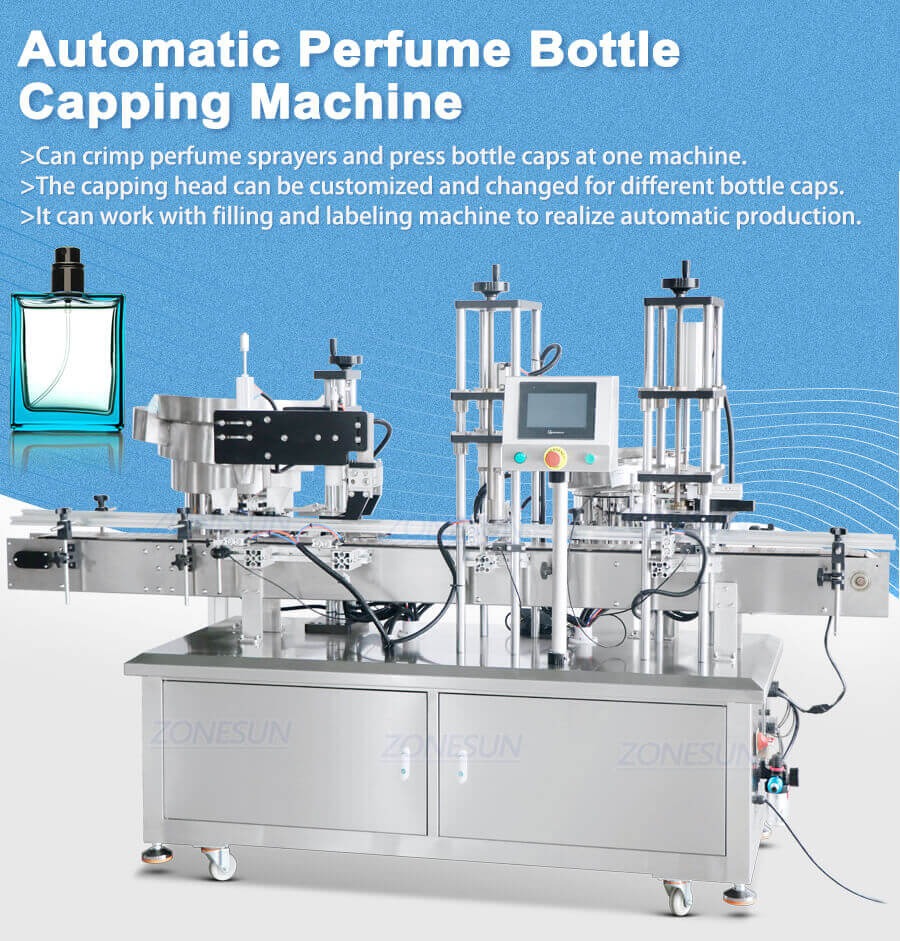
Speed ratings are often misleading. A machine listed at 60–80 bottles per minute might only sustain that under ideal conditions: identical bottles, perfectly uniform caps, and stable environmental conditions.
Real perfume production doesn’t behave like that.
Humidity changes, minor glass tolerances, and even cap liner variations can slow down mechanical systems that aren’t properly tuned. This is where automation level becomes more important than raw throughput.
Fully automatic perfume capping machine systems integrated into modern filling lines can sync with upstream dosing and downstream labeling units. That synchronization reduces micro-stoppages that operators often don’t log but feel throughout the shift.
From a systems perspective, this is where energy management and production efficiency intersect in subtle ways. A smoother line doesn’t just produce more units—it reduces compressor load cycles, conveyor stress, and unnecessary idle power consumption.
In some facilities transitioning into broader manufacturing upgrades—such as solar energy storage integration or hybrid power systems—the stability of machinery load profiles becomes surprisingly relevant. Irregular motor demand can complicate energy balancing, especially in plants using battery backup system setups for peak shaving or emergency continuity.
Maintenance and operational discipline often decide long-term value
Even the most advanced machine will underperform if maintenance is treated as an afterthought. Perfume capping systems are particularly sensitive to wear in torque heads and cap feeding rails.
A pattern seen across multiple installations is that downtime rarely comes from catastrophic failure. It comes from small inconsistencies that accumulate: caps feeding slightly misaligned, torque heads drifting out of calibration, or sensors gradually losing accuracy.
In factories running multi-shift operations, these issues compound quickly. A well-chosen machine reduces that friction, but it doesn’t eliminate the need for routine calibration checks.
Some experienced technicians prefer slightly less complex machines simply because they are easier to service without specialized vendor support. That trade-off between sophistication and maintainability is often more important than buyers expect during procurement.
Integration with broader packaging and energy systems
Modern packaging lines don’t operate in isolation anymore. Even fragrance manufacturers are increasingly integrating production planning with energy efficiency goals, especially those running large facilities or export-oriented operations.
A perfume capping machine that runs smoothly within a grid-tied solar system setup can contribute indirectly to lower peak demand spikes. It may sound like an indirect connection, but in high-volume manufacturing, electrical load smoothing matters when plants are optimizing for long-term renewable energy investment strategies.
Facilities that also incorporate solar power efficiency planning or partial commercial solar installation often look at machinery behavior differently. Stable load machines are easier to integrate into predictive energy models, especially when paired with backup systems for continuity during grid fluctuations.
This is less about marketing sustainability and more about operational predictability. Machines that behave erratically complicate everything from production scheduling to energy forecasting.
Conclusion: choosing the right perfume capping machine is about fit, not ranking
There isn’t a universal “best model” for a perfume capping machine, despite what product catalogs suggest.
What really counts is how well the machine handles the everyday realities—like different bottle designs, production volumes, and long-term use. Factories that focus on steady torque, reliable automation, and good integration with the whole line tend to dodge most of the headaches later on. But those that just chase speed often find themselves wishing they’d made a different choice after a year or two. In the end, the best machine is the one that keeps things running smoothly, even when things aren’t perfect—not just the one that looks great on a spec sheet.
