
Introduction
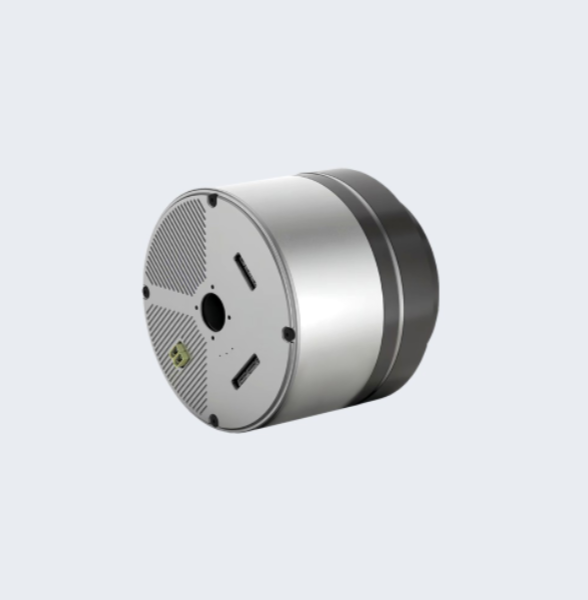
A robot arm joint is a kind of core element that lets controlled motion happen, while also giving precision and flexibility in modern robotic systems. From industrial automation lines to advanced surgical robots, these joints essentially decide how well a robotic arm can rotate, stretch, and place itself in 3D space.
Getting to know how a robot arm joint works is important for engineers, designers, and businesses that are putting money into automation technologies. In today’s fast-moving robotics industry, the need for top-level robotic articulation keeps rising, so joint design matters more than ever.
This guide goes over the main types, the key design principles, and the real-world use cases of robot arm joints, so you can see how they influence performance, accuracy, and efficiency within robotics engineering.
What is a Robot Arm Joint?
A robot arm joint is a mechanical part that connects different links inside a robotic arm and lets everything move in a controlled way. The motion could be rotation, or some type of sliding motion, or even that mixed situation where both happen. In robotics engineering, joints matter a lot because they help define degrees of freedom, DOF, and those DOF kind of decide how adaptable and exact the whole robotic system can be.
Most industrial robot joints are driven by servo motors or other actuators, which keep the movement smooth and the positioning accurate. In CNC automation, pick and place setups, or collaborative robots, it is basically the joint that gives the robotic arm its working mobility.
Types of Robot Arm Joints
Different robotic uses need different joint types. Each one gives its own kind of motion, and usually it’s picked by what the job wants, the load capacity, and how precise the robot must be.
Revolute Joint
A revolute joint is the most common choice for industrial robots. It lets the mechanism spin around one fixed axis, kind of like a human elbow or a shoulder. This joint shows up a lot in assembly lines and welding robots, too, mainly because it has a strong range of motion and it lasts a long time.
Prismatic Joint
A prismatic joint gives linear motion, but only along a single axis. You’ll commonly see it in robotic systems for material handling and those automated sliding mechanisms. These joints are good for work that needs a clean, straight-line movement, for example, CNC machining and automated storage units.
Spherical Joint
A spherical joint lets you rotate in a bunch of directions, sort of like a shoulder in a human. Because it provides three degrees of freedom, it tends to be a good fit for those tricky jobs where the orientation has to stay adaptable, like in robotic surgery or in more high-end manipulation arrangements.
Cylindrical joint
A cylindrical joint combines spinning with sliding motion along a single axis. In many designs, it shows up when the robot needs extension along with rotation at the same time, that combination boosts usefulness overall, especially when the working space is kinda compact.
Design Considerations for Robot Arm Joints
Designing a solid robot arm joint kind of needs careful engineering to keep that balance between strength, fine precision, and efficiency. One of the biggest things, in practice, is load capacity because the joint has to carry the robot’s own body and also whatever the gripper is holding or moving around.
Then there is torque control, which is crucial too, particularly in fast-paced industrial settings where the motion has to stay reliably accurate all the time. Engineers often look at materials like aluminum alloys or hardened steel because those kinds of options support durability while still keeping the weight on the lower side. Also, sensor integration is a big deal in modern robotic motion articulation; really, it connects everything. Encoders plus feedback systems help push motion accuracy higher, cut down errors, and allow real-time adjustments when conditions change a bit. They also use kinematics modeling to simulate how the joint will move and to tune performance before it ever gets deployed in the real system.
Maintenance and Optimization Tips
If you want long- term performance, you really need regular maintenance for the robotic joints, like staying on top of them, for the long run.
Proper lubrication helps cut down wear and tear, and doing calibration on a schedule means the accuracy stays dependable and doesn’t kinda drift. Keeping an eye on the vibration levels and how the thermal behavior ends up going helps flag early mechanical issues before they snowball into something bigger or more annoying to deal with.
On top of that, upgrading the control systems and applying predictive maintenance tools can basically extend the entire setup’s service life, while also lowering downtime and operational costs, rather clearly.
Conclusion
The robot arm joint is sort of the backbone of robotic motion, driving precision, flexibility, and efficiency through a lot of real-world uses. From a straight linear kind of movement to those tangled multi-axis rotations, the way a joint is designed matters a ton, shaping how today’s automation systems end up working. If teams take time to look at the different joint types, the design factors, and what happens in real life, then businesses and engineers can assemble more steady, more efficient robotic solutions.
And as robotics keeps growing, putting money into well-planned joint systems will likely stay a central thing for reaching better performance and smarter automation.
