
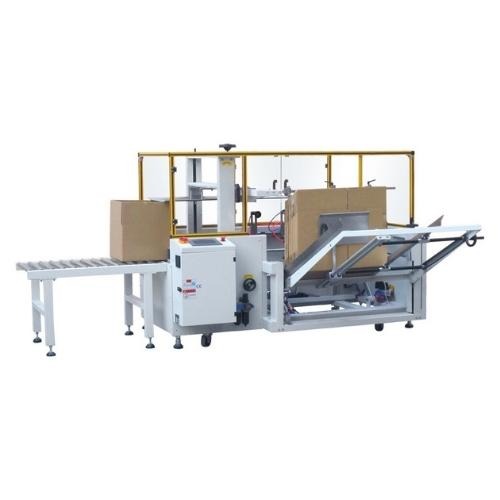
Go inside any contemporary manufacturing plant and discover one truth almost right away. The role of packaging has changed from the last stage of manufacturing to becoming an integral part of production itself. It does not matter whether a company is engaged in the production of foods, pharmaceuticals, chemicals, cosmetics, or some other types of goods; the choice of packaging machine manufacturers can affect many factors including production efficiency, product quality, labor expenses, and profitability overall.
While a great majority of customers start their research with technical specification of machines, an experienced purchasing department usually digs much deeper. Of course, it is important what type of equipment the manufacturer provides. However, there are other significant aspects to consider such as technical support, services provided, systems’ integration, and ability to integrate systems according to the changes in production process.
How to Choose a Good Packaging Machine Manufacturer?
Nowadays packaging machines have become more and more specific. For example, a manufacturer working for beverage bottling plants will most likely fail to provide good machinery for pharmaceutical blister packaging or industrial bagging systems.
The best manufacturers usually start from understanding the production process of the customer and only then provide recommendations and suggestions.
In practice, companies that invest more time during the design phase often experience smoother commissioning and fewer modifications after installation.
Matching Equipment to Production Requirements
Each line has unique criteria.
While some plants have the objective of maximizing output, others emphasize precision, adaptability, or hygiene of products. The wrong choice of machine setup leads to inefficiency that is hard to resolve post-installation.
A common oversight by many buyers is their consideration for future expansion in production. A machine capable of handling the current production output may end up being a bottle neck in the coming years as demand grows.
The following are some operational considerations before choosing a packaging machine maker:
Output speeds
Product size and weight
Materials used in packaging
Degree of automation
Floor space available
Cleaning and maintenance requirements
Regulatory requirements
Automation Has Become a Competitive Advantage
Automation is not restricted to large-scale production companies anymore.
Contemporary production lines consist of robotics, vision inspections, programmable logic controls (PLCs), and production monitoring software. These technologies help achieve greater uniformity and reduce human involvement. Small-to-medium production facilities implement automation technology to solve staffing issues and enhance their production process efficiency.
Based on the experience of many installers, production facilities that switch from semi-automatic production lines to fully automated ones tend to neglect the significance of operator training. Advanced equipment functions effectively only with well-trained production staff.
Engineering Support Is Just as Important as the Equipment
Purchasing packaging machinery is hardly ever done as one-off deal.
All of installation preparation, factory testing, site start-up, and production tuning will entail collaboration between the equipment manufacturer and the customer’s engineers.
One frequent pitfall involves considering the manufacturing company solely in terms of cost of the machine itself while ignoring their technical support. Quick availability of replacement parts, remote monitoring, and timely field service could significantly cut down downtime of your production line many years from now on.
This proves to be important beyond initial expectations, especially for plants running multiple shift works.
Customization Versus Standard Machines
Not all production lines need to have custom-designed systems.
Off-the-shelf equipment tends to cost less to buy and to maintain due to the availability of spare parts. On the other hand, custom-designed production lines might enhance productivity for the manufacturing of unusually sized products, unique packing material, or complicated production processes.
It all comes down to production volumes and planned future growth.
Understanding Total Cost of Ownership
The purchase price is just the tip of the iceberg.
Experienced industrial purchasers usually look at total cost of ownership and do not concentrate only on the initial cost. The energy consumption, the maintenance requirements, the uptime of the machine, the availability of spare parts, and the training of the operators are all factors that influence the overall running costs.
In larger-scale commercial applications, the higher initial cost can be justified by lower maintenance cost and increased reliability during the life of the equipment.
Questions that should be asked may include:
What preventive maintenance program is suggested?
What is the delivery time for the spare parts?
Is remote technical assistance provided by the company?
Is the machine compatible with the production system?
Will future upgrades be possible without changing the whole production line?
Answers to these questions can matter even more than the equipment specifications.
Industry Compliance and Quality Standards
This is because many times, packaging machines work under strict regulation.
In food manufacturing, clean and easily sanitized machines will be required. In pharmaceuticals, accuracy and validation will be a major requirement. In chemical manufacturing, explosive-proof and anti-corrosion machines will be necessary.
Selecting a packaging machine manufacturer who has been experienced in that particular industry decreases the level of risk and helps in adhering to standards.
Also, the manufacturer will have to ensure quality control in the production, testing, and inspection process.
Looking Ahead
AI, Predictive Maintenance, Machine Connectivity and Digital Production Monitoring have all become standard rather than premium offerings. These allow manufacturing companies to recognize performance trends and carry out maintenance before breakdowns happen, as well as monitor production without increasing manpower.
This does not imply that every factory must embrace the new automated technology package. The right thing to invest in is the one that matches your production needs.
Final Thoughts
Choosing the right packaging machine manufacturer depends on more than just comparing machine features and costs. The best results are achieved through the combination of good equipment with good engineering expertise, good system design, good service and adaptability as production needs evolve.
Manufacturers should be chosen by companies which are going to develop their production lines not only because of cost-effectiveness but also from the perspective of long-term benefits. Packaging machine manufacturer can become a great technical ally and contribute to company’s development for many years after equipment installation.
