
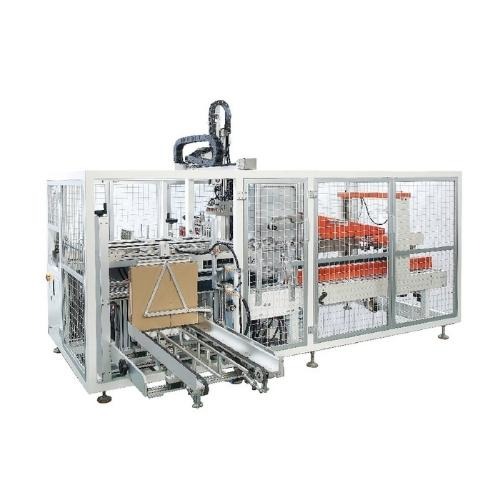
Even though a company might spend millions on efforts to create fast production lines, most times, they forget the final step which would make or break the delivery of their goods from their factories. Packaging is not only the final step but has become integral to speed, effectiveness, quality, and customer satisfaction. That is why choosing the right equipment and packaging machine maker has become essential to any business.
No matter whether it is food, pharmaceuticals, consumer goods, chemicals, or industrial parts, the companies strive to increase the volume of production and decrease operating expenses all the time. And proper packaging equipment will definitely facilitate such an objective.
Why the Right Packaging Machine Manufacturer Matters
Two similar packaging machines with identical features may operate very differently once put into use within a production line. Engineering excellence, automation ability, integration with software, and customer after-sales service can distinguish good machines from those that lead to frequent downtime problems.
As a rule, knowledgeable manufacturers pay much attention to the analysis of the workflow before they offer their equipment. They take into consideration such factors as size of the product, packaging materials, floor space, speed of the line, and possibilities for future expansion rather than offering a standard solution.
The consulting approach yields more successful outcomes than just buying the quickest machine.
Faster Production Starts with Smarter Equipment
The production rate is based not just on machine cycles per minute.
Machine must fit in well within the process of production and the system of palletizing. The whole process slows down in case there is a problem at any point of the line even if some machines are highly efficient.
As per the reports by installers, the synchronization of conveyors, fillers, labelers, and case packers plays a bigger role in production than making one machine faster.
The modern packaging machines also ensure fewer disruptions through automation, inspection, and intelligent sensors to detect small problems before major breakdowns happen.
Reducing Operating Costs Without Sacrificing Quality
However, apart from labor savings, there are many other ways to realize financial gain from purchasing packaging equipment; labor savings is one of the most significant, yet not the sole reason for its acquisition.
Properly designed equipment provides better consistency of packaged goods, decreases packaging material wastage, cuts down on rejects and maintenance needs. The above operational benefits often have a stronger effect on the bottom line than labor savings do.
One of the aspects that potential buyers often forget about is the price tag of unexpected downtime.
When acquiring a piece of equipment, one should pay attention to:
History of machine uptime;
Maintenance convenience;
Availability of spare parts;
Energy use; Operator skills needed for using the equipment.
All of the above typically influence operating costs more than initial cost of the equipment.
Automation Brings Long-Term Efficiency
Automation has been increasingly affordable by manufacturers of all sizes.
Use of programmable logic controllers, servo motion systems, robotics, and vision systems allows packaging lines to operate at a steady speed without making many adjustments manually. This helps in maintaining product quality while decreasing the physical strain on operators and variability in production.
It can be tempting to believe that full automation is always the way to go; however, some facilities may require semi-automation, which will help in dealing with frequently changing products rather than automation intended for steady large-scale production.
The choice should be made based on production goals, labor, and product diversity.
Planning for Future Expansion
Manufacturing never stops.
The product lines, packaging systems, and consumer demand continue to grow. Choosing modular machinery enables companies to increase manufacturing capabilities without having to completely replace a packaging system.
It proves to be more important than what one would have expected. Retrofitting a manufacturing line after a few years becomes more costly compared to planning for moderate growth when installing the line originally.
Looking Beyond the Equipment
A reputable machine builder does not just sell machinery.
From factory acceptance testing, installation services, commissioning, operator training, preventative maintenance, to remote diagnostics, all can enhance the performance of the equipment. Technical support becomes particularly important when the production schedule cannot afford any surprises.
With respect to larger-scale commercial ventures, those builders who offer engineering support during the installation process are likely to minimize the start-up delay and production optimization.
When looking at potential suppliers before a purchase, one needs to consider the level of their responsiveness even after the equipment delivery.
Measuring Return on Investment
Equipment for packaging constitutes a major financial investment, and its evaluation cannot be done on the basis of cost alone.
Increased speed, reduced waste generation, decreased maintenance expenses, less product defects, better packaging quality, and greater production flexibility all add up to increased value in the long run.
Companies that have multiple shifts will achieve a quicker payback due to higher efficiency translating into actual operational benefits every single day. Other firms, producing smaller quantities, may give priority to flexibility and reliability rather than productivity.
Both methods can prove effective if the right equipment is chosen according to production needs.
Final Thoughts
High speed and reduced operating costs do not result from the acquisition of the latest machine available. Instead, they stem from choosing a machine that fits the conditions in the manufacturing facility and working with a reputable packaging machinery producer that is well aware of those conditions.
Those firms that are looking to replace existing equipment with new machinery should pay attention to the entire manufacturing process and not only to specifications of the machines used. Good engineering advice, sound system design, flexibility, and reliability may be even more important than production speed.
