
Introduction
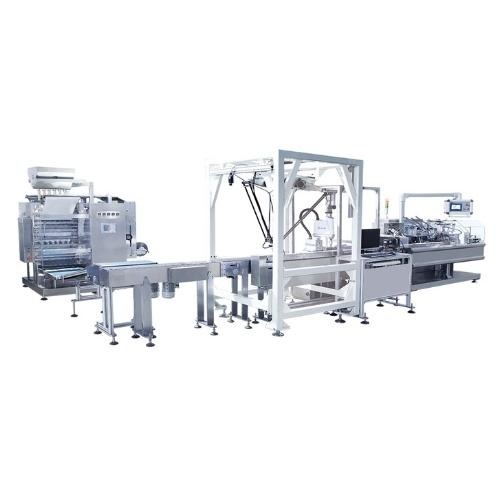
The HFFS machine is one such piece of machinery which helps keep modern packaging lines going with its quiet efficiency. The machine is responsible for the formation of a package, filling it with product, sealing it up, and then sending it down the conveyor line in one seamless process. Once all the right settings are made, the process seems effortless, despite the multiple coordinated processes taking place in just a few seconds.
If you spend some time in a packaging plant, you will soon see that the HFFS machine is frequently used for packaging items that require a neat presentation and protection. This includes anything from snacks to frozen food to medical equipment to household products.
What Is a Horizontal Form Fill Seal Machine?
An Horizontal Form Fill Seal Machine machine forms flexible packages using a roll of packaging material while the product travels through the process in a horizontal motion. In an HFFS machine, the product is not dropped into the bag in a vertical motion; rather, it is conveyed along the conveyor belt while the package is being formed.
This particular characteristic of HFFS machines makes it ideal for use with products that are hard to drop into a package, such as bakery products, produce, trays, pharmaceutical products, and individually packaged consumer goods.
How a Horizontal Form Fill Seal Machine Works
Although manufacturers offer different machine designs, the basic process follows the same sequence.
Step 1: Film Unwinding
The process starts with a roll of flexible packaging material, which is fitted on the machine at the start.
As the production commences, the material is unwound under controlled tension. This is crucial for the whole process because it is essential to maintain constant tension, otherwise, there will be a problem with wrinkles or sealing of packages.
Modern machinery may have automatic material tracking systems.
Step 2: Package Formation
Once the film enters the machine, forming components fold it into the desired package shape.
Depending on the product and package style, the machine may create pillow packs, flow wraps, gusseted packages, or other flexible packaging formats. Precision during this stage ensures the finished package looks uniform from one product to the next.
A neatly formed package isn’t just about appearance. Proper alignment helps improve sealing quality and reduces material waste.
Step 3: Product Loading
As the package begins taking shape, products move into position.
Some production lines feed products manually, while others rely on automated conveyors, robotic pick-and-place systems, or timing mechanisms that synchronize product placement with the moving film.
One detail experienced operators watch closely is product spacing. If products arrive too close together or too far apart, sealing accuracy can suffer.
Step 4: Filling and Positioning
Unlike the vertical packaging systems which work under gravity, the HFFS system supports the product during the entire process of filling.
This makes them very suitable for packaging delicate products which would be damaged in case they are dropped in the bag. Good examples of such products are bakery products, sandwiches, and delicacy confectionery.
The system places each product at the right place before the sealing process commences.
Step 5: Sealing the Package
Heat-sealing jaws close around the packaging film to create secure seals.
First, the longitudinal seal joins the film into a continuous tube. Then cross seals separate individual packages while sealing both ends at the same time.
Proper temperature, pressure, and sealing time must remain balanced throughout production. Small adjustments in these settings can noticeably affect package quality.
Step 6: Cutting and Discharge
After sealing, integrated cutting knives separate each finished package.
The completed packages exit the machine and continue to downstream equipment such as checkweighers, metal detectors, labeling systems, case packers, or palletizing stations.
By this point, the packaging cycle is complete, and the machine immediately begins forming the next package.
Advantages of Horizontal Form Fill Seal Machines
One factor that drives the use of HFFS machines by manufacturers is the machine’s ability to incorporate various packaging activities in one process.
The HFFS machine offers the manufacturer consistency in packaging, efficiency in material usage, reduction of labor costs, and dependable speed. The machine can also package items that may not be easy to package through a vertical method.
A practical advantage of the HFFS machine is that of presentation. Flow wrapped packages look professional.
Industries That Commonly Use HFFS Machines
Horizontal form fill seal machines are common in various industries due to their versatility.
In the food industry, such devices are used to pack cookies, candy bars, frozen dinners, cheese, and fresh fruits and vegetables. In the pharmaceutical industry, these machines are used to pack sterile goods as well as disposable supplies. In consumer goods companies, such machines are used for packing various products, including household products, hygiene items, etc.
Same packaging procedure is applicable for a great number of products.
Factors to Consider Before Choosing an HFFS Machine
Product Characteristics
The dimensions, form, and delicacy of your product will determine which equipment to choose.
Products having an unconventional form might need unique in-feed systems, while fragile products would do well if handled gently during packaging.
Compatibility of Packaging Materials
Not all machines work with all forms of packaging materials.
Before making any purchase, ensure that the machine is compatible with the packaging material films you want to use, whether recyclable or not.
Production Needs
Higher speeds are not always what matter.
Where the producer produces specialist products in small batches, he will care more about ease of changing than achieving maximum speed.
Common Maintenance Practices
Routine maintenance is one of the major factors that contribute to the efficient operation of an HFFS machine.
Sealing jaws can be cleaned, cutting blades inspected, film tracking checked, moving parts greased, and worn out parts replaced in order to avoid many unplanned stops.
It should be noted that operators appreciate easy-to-service machines. Even a few minutes saved during maintenance will sum up in months of production.
FAQ
Which type of products should be packaged in a horizontal form fill seal machine?
Products like snack bars, baked items, frozen products, medical equipment, fresh produce, household products, and other products which come individually wrapped can be easily packaged by using the HFFS machines.
How does HFFS machine differ from the VFFS machine?
Horizontal form fill seal machine packages products in horizontal movement, while a vertical form fill seal machine packages the products in vertical movement and usually relies on gravity to fill the bags, making it more suitable for packaging loose materials.
Are HFFS machines capable of handling high production?
Yes. Most of the industrial HFFS machines are made for continuous production and can package hundreds of products in just one minute.
What is the lifespan of a horizontal form fill seal machine?
If maintained properly, an industrial horizontal form fill seal machine may work for 15 to 20 years.
Conclusion
Gaining insight into how the horizontal form fill seal machine operates will make it much simpler for you to assess which one is most suitable for your packaging line. Everything from accurate film feeding through to proper sealing and clean separation of each package plays an important role in achieving effective production and producing quality products.
In addition to looking at the speed when considering different HFFS machines, you should focus on other characteristics as well. The ability to track the film accurately and properly, convenient access during maintenance work and smooth feeding of the products will be far more important in terms of actual use of the machine than its impressive specifications.
