
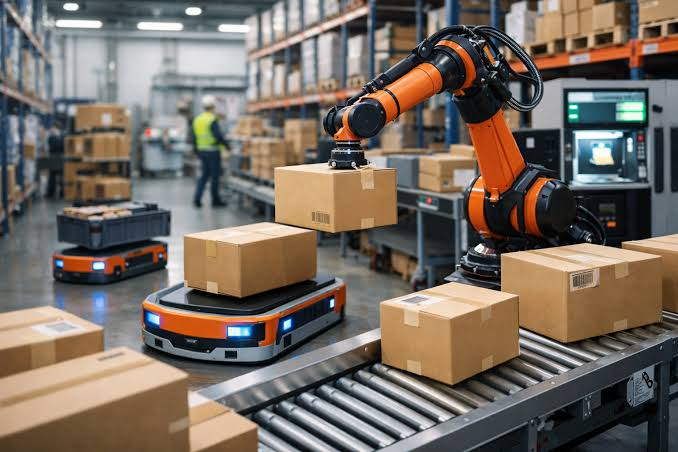
Supply chains are under constant pressure to move products faster, reduce operational costs, and meet rising customer expectations. As order volumes grow and labor challenges continue, businesses are increasingly turning to warehouse automation to improve productivity and maintain a competitive advantage.
Automation is no longer limited to large distribution centers. Organizations of all sizes are investing in technologies that streamline inventory management, accelerate order fulfillment, and improve operational visibility. At the center of these innovations is a modern Warehouse Management System that coordinates every stage of warehouse activity.
Businesses implementing automated warehouse solutions can better manage inventory, optimize workflows, and support more efficient supply chain operations.
Automation Is Redefining Warehouse Operations
Traditional warehouse processes often rely on manual data entry, paper documentation, and repetitive tasks that consume valuable time and increase the risk of human error.
Warehouse automation replaces many of these manual processes with connected technologies that improve speed, accuracy, and consistency.
Common automation tools include:
- Barcode scanning
- RFID tracking
- Automated storage and retrieval systems
- Conveyor systems
- Autonomous mobile robots
- Voice-directed picking
When integrated with Warehouse Management Software, these technologies help warehouses operate more efficiently while providing real-time visibility into inventory movement.
| Automated Process | Operational Benefit |
| Inventory tracking | Improved stock accuracy |
| Order picking | Faster fulfillment |
| Barcode scanning | Fewer manual errors |
| Warehouse analytics | Better operational insights |
| Shipment preparation | Shorter processing times |
Warehouse automation allows people to focus on higher-value work while technology handles repetitive tasks.
Faster Order Fulfillment Improves Customer Satisfaction
Customer expectations continue to rise, with many expecting same-day or next-day delivery.
Warehouse automation helps organizations meet these expectations by reducing the time required to locate inventory, process orders, and prepare shipments.
Warehouse Management Software coordinates automated workflows by assigning picking tasks, instantly updating inventory levels, and optimizing picking routes.
The result is:
- Faster order processing
- Higher picking accuracy
- Reduced shipping delays
- Improved customer satisfaction
Real-time system updates also allow customer service teams to provide accurate order status information throughout the fulfillment process.
Better Inventory Accuracy Through Real-Time Data
Inventory accuracy remains one of the biggest challenges in warehouse management.
Manual inventory processes often create discrepancies that lead to stock shortages, overstocks, and fulfillment errors.
Warehouse Management Systems continuously update inventory records as products are received, moved, picked, and shipped.
With automated barcode scanning and RFID technology, businesses can:
- Reduce inventory discrepancies
- Improve cycle counting
- Support demand forecasting
- Prevent stockouts
- Optimize inventory planning
Reliable inventory data enables better decision-making across the entire supply chain.
Automation Improves Workforce Productivity
Warehouse automation is designed to support employees, not replace them.
By eliminating repetitive manual tasks, employees can focus on activities that require critical thinking, problem solving, and customer service.
Warehouse Management Software helps distribute workloads more effectively by assigning tasks based on operational priorities and available resources.
Automation also reduces unnecessary walking through optimized picking routes and digital task management, helping employees complete more work with greater accuracy.
The most productive warehouses combine skilled employees with intelligent automation.
Stronger Supply Chain Visibility
Supply chain efficiency depends on accurate information.
Warehouse Management Systems provide managers with real-time dashboards showing inventory availability, order status, labor performance, and warehouse activity.
This visibility allows businesses to identify bottlenecks quickly and respond before operational issues affect customers.
Real-time reporting supports:
- Capacity planning
- Labor scheduling
- Inventory optimization
- Order prioritization
- Performance measurement
Access to current operational data allows organizations to make informed decisions that improve efficiency throughout the supply chain.
Integrating Warehouse, Freight, and Parcel Operations
Warehouse automation becomes even more valuable when connected with other logistics systems.
Many organizations integrate Warehouse Management Software with Freight Management Software to coordinate outbound shipments, monitor transportation schedules, and improve delivery planning.
Parcel Management Software also supports inbound and outbound package tracking, while Mailroom Management Software helps organizations manage internal deliveries and recipient notifications.
This connected ecosystem enables information to flow seamlessly across warehouse, transportation, and mailroom operations, reducing manual work and improving operational visibility.
Supporting Business Growth
As businesses expand, warehouse operations become increasingly complex.
Automation provides the scalability needed to handle growing inventory volumes and increasing order demand without requiring proportional increases in manual labor.
Modern Warehouse Management Systems can support:
- Multiple warehouse locations
- Higher shipment volumes
- Seasonal demand fluctuations
- Omnichannel fulfillment
- Expanding product catalogs
Scalable automation enables businesses to grow while maintaining consistent operational performance.
Preparing for the Future of Supply Chains
Warehouse automation continues to evolve with technologies such as artificial intelligence, predictive analytics, Internet of Things sensors, and machine learning.
These innovations will further improve inventory forecasting, warehouse optimization, equipment maintenance, and operational planning.
Organizations that invest in modern Warehouse Management Software today will be better positioned to adopt emerging technologies and build more resilient, responsive supply chains.
Final Thoughts
Warehouse automation has become an essential driver of supply chain efficiency. By combining intelligent technologies with modern Warehouse Management Systems, businesses can improve inventory accuracy, accelerate fulfillment, optimize workforce productivity, and gain greater operational visibility.
As supply chains continue to evolve, organizations that embrace warehouse automation will be better equipped to adapt to changing customer expectations, support sustainable growth, and build more efficient logistics operations.
