
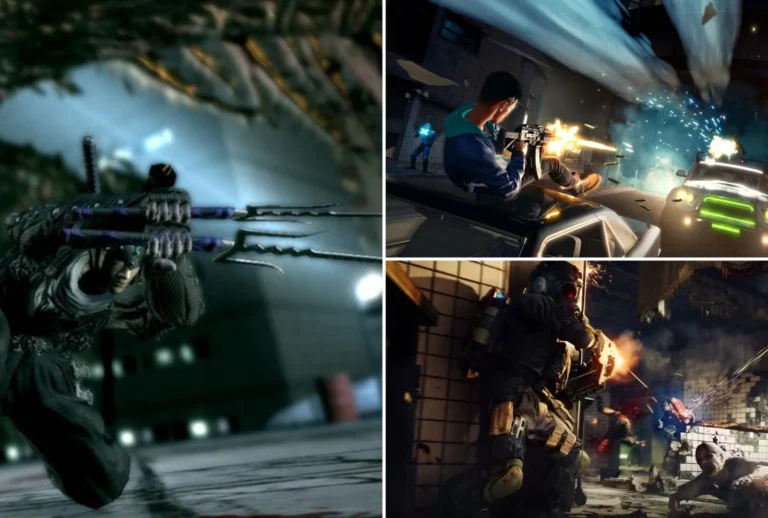
Multiplayer shooter action games have an appeal of their own. This has attracted and kept generations of gamers, from the 1980s to the present day, hooked. But why do such games keep drawing players? Let us explore the reasons for the popularity of shooter action multiplayer games in this blog.
Top Reasons Why Multiplayer Shooter Games Continue to Draw Gamers
Easy to Learn and Skill-based Mechanics
Most multiplayer action-shooting games have common, easy-to-learn mechanics. Players appreciate the low or negligible learning curve, as they can quickly progress to enjoying the game. For instance, PC-based shooter games involve mechanics like using the:
- W-A-S-D keys to move forwards, backwards, left or right
- left mouse button for shooting and right mouse button for aiming
- mouse wheel button for lobbing grenades
Similarly, mobile-based games like BGMI and others involve some of the mechanics with:
- two buttons for shooting on either side
- a reload button above the right shooter button which can be custom set for a comfortable eye position
- weapon slots at the bottom
Moreover, mastering these mechanics to gain in-game mastery is also what appeals to players.
Different Game Modes
Almost all action-shooter multiplayer games have different game modes, which can be event- or game-specific. These modes involve different elements, rewards, and accessories, and demand varying gameplay styles as well, making them quite appealing.
For example, BGMI had Aztec or Resident Evil-themed modes in the past. In the Aztec-themed modes, players could access new weapon skins and enjoyed intense gameplay in the temple-like structure. Similarly, the Resident Evil-themed mode included a character-themed mode, where players had to defeat a Resident Evil boss.
Competitive Elements
Many shooter multiplayer games have competitive elements such as point tables, progression-linked rewards, and tiers. The point tables foster a sense of healthy competition, as players attempt to outplay the table-toppers and claim their spot.
Moreover, players with higher points or elite tiers occasionally receive rewards such as new weapon skins, outfits, or even weapons.
For instance, reaching the Platinum III tier in BGMI leads to crate coupons, in-game currency, and season-exclusive outfits.
In-game Bonding
Quite a few shooters offer players the chance to communicate in-game. These games offer chat boxes, in-game mics and location-marking features. Players can use the chat boxes to provide in-game updates and the mics to not only strategise, but get to know each other.
Moreover, players can ‘connect’ with other players through in-game friend requests. These connections sometimes evolve into friendships in the real world, especially in local gaming communities.
Easy Switchability
Since many action-shooter multiplayer games share similar mechanics, players can easily switch between them. For example, gamers can switch between BGMI and Critical Strike CS: Online FPS quite easily due to similar button placements and styles. This switchability reduces the need to relearn the game and increases enjoyment.
Conclusion
The simplified mechanics of multiplayer shooter games, along with their varied modes, make them quite engaging. Players can experience different styles of gameplay across modes, which are enjoyable and offer rank- or progress-linked rewards.
Furthermore, the possibility of social bonding these games offer adds to their appeal, as players can make new friends.
