
The right metal stamping manufacturer can prove useful in the manufacture of repeatable metal parts. Metal stampings have wide applications from automotive terminals to electronics contacts among others.
However, selection of the best manufacturer should not be determined by price alone. Material capacity, tooling, manufacturing accuracy, quality control, and engineering support may affect the results.
What Is a Metal Stamping Manufacturer?
Metal stamping is the process of manufacture of parts from sheet metal by use of dies and stamping machines. This involves a number of operations including punching, bending, forming and more.
There are several types of metals that can be used for metal stamping based on the applications. Common metals used for metal stamping are steel, stainless steel, copper, brass, and aluminum to name a few.
Precision metal stamping is advantageous when repetitive dimensions are necessary in mass production.
How Does Metal Stamping Work?
This process begins with a customer’s drawing or part specifications after which engineers study the design and select the material and production method among others.
A stamping die is then used to shape the material. Depending on the part, several operations may be combined or performed in sequence.
The basic process may include:
- Material preparation
- Tool and die design
- Die manufacturing
- Prototype production
- Stamping
- Inspection
- Surface treatment or additional processing
- Packaging and delivery
This will depend on the part and how it needs to be made.
Why is Accuracy Important for Metal Stamping?
Small dimensional differences can affect how a stamped component fits or functions.
This is particularly important for terminals, contacts, brackets, shielding components, and other parts that must interface with other components. Tooling accuracy and stable production conditions can therefore have a direct effect on consistency.
HSK’s published product information, for example, describes precision metal stamping with customized specifications and reports accuracy of up to ±0.001 mm for one automotive battery terminal application. Such figures should be considered product-specific rather than a universal tolerance for all stamped parts.
Key Benefits of Metal Stamping
Consistent Production
Once suitable tooling and process parameters have been established, stamping can produce repeated component geometries efficiently.
This makes it useful for applications requiring large quantities of similar parts.
High-Volume Manufacturing
Stamping of metals could also be considered an efficient manufacturing process since the same set of dies can be reused.
Factors that determine the cost-effectiveness of stamping include the cost of the dies, amount of material, volume of production, and complexity of the part.
Component Design Complexity
Various stamping processes may be used to achieve particular designs.
These could include punching, bending, forming, or progressive stamping depending on the design of the component.
Material Efficiency
Proper die design and material layout can help reduce unnecessary scrap.
Material utilization should be considered during the engineering stage, especially when the component is produced in large quantities.
What Materials Can a Metal Stamping Manufacturer Process?
Material selection should be based on the final application’s requirements.
Stainless Steel
Stainless steel offers strength and corrosion resistance. It can be suitable for components exposed to demanding environments.
Copper and Copper Alloys
The properties of copper and copper alloys make them suitable for use in electrical applications due to their electrical conductivity and other properties.
Aluminum
Aluminum is a lighter material that can be used when there is need to reduce weight of components.
Carbon Steel
Carbon steel is one of the materials that have strength and used in making industrial stamped parts.
The information provided by HSK covers materials such as beryllium copper, phosphor bronze, white copper, stainless steel, brass, and others.
The material should always be selected according to the part’s functional requirements and manufacturing process.
The Role of Stamping Dies
The stamping die is one of the most important parts of the manufacturing process.
Its geometry determines how the sheet material is cut or formed. Poor tooling design can contribute to dimensional variation, burrs, deformation, and premature tool wear.
A capable metal stamping manufacturer should therefore have strong tooling knowledge. This is particularly important for components with tight tolerances or complex geometries.
Progressive dies can also combine several operations into a continuous production sequence. This approach can be useful for suitable high-volume components.
Prototype Development Before Mass Production
Prototype production can help identify problems before a project moves into full-scale manufacturing.
A prototype allows engineers to evaluate:
- Part geometry
- Material selection
- Tooling requirements
- Assembly fit
- Manufacturing feasibility
- Dimensional requirements
This step can reduce the risk of discovering major design problems after mass-production tooling has already been completed.
A manufacturer that can support both tooling and production can also make communication between engineering stages easier.
Common Applications of Metal Stamping
Automotive
The automotive industry uses many stamped components.
These can include terminals, brackets, clips, supports, and electrical components. HSK’s published product portfolio includes an automotive battery terminal produced through precision stamping.
Electronics
Electronic products often require small and precise metal components.
Contacts, terminals, shielding parts, and other conductive components can be produced through stamping.
Medical Devices
Medical equipment can require small metal components with controlled dimensions.
Material selection and manufacturing quality are particularly important for parts used in precision applications.
Industrial Equipment
Stamping may also be used to make brackets, connectors, supports and other customized parts for industrial goods.
The process will depend on the size, shape, material, and number of parts to be produced.
How to Choose a Metal Stamping Manufacturer
Check Tooling Capabilities
Ask whether the manufacturer can design and produce the required stamping dies.
Integrated tooling capability can simplify communication between die development and production.
Review Material Experience
The manufacturer should have experience with the material specified for your component.
Various metals react to stamping in a unique way.
Evaluate Quality Control
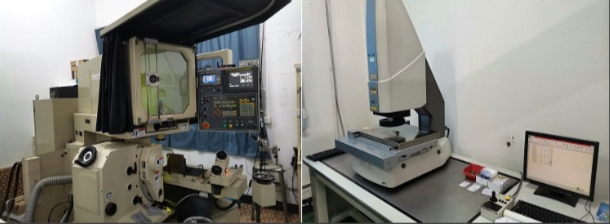
Inquire about the quality control measures used by the manufacturer on completed parts.
Some important aspects of quality control could be dimensional inspection, visual inspection, tooling inspection, and process inspection.
HSK mentions some of the issues encountered in precision stamping, including wear in molds, dimensional tolerance problems, burr generation, and process stability. It also emphasizes mold maintenance and process optimization as ways to improve consistency.
Consider Production Volume
The required production quantity should influence the manufacturing approach.
A pilot run or initial order will often necessitate a different tooling approach compared to a longer term, higher volume production run.
Look for Engineering Support
A reputable manufacturer will be able to evaluate drawings and discuss manufacturability.
This may be able to uncover any issues that might exist in terms of material selection, tolerances, tooling, or part design prior to manufacture.
Why Work With HSK?
HSK specializes in precision metal stamping and tooling manufacturing. Its published information describes a production approach that covers die design, stamping, inspection, and mass production.
Moreover, the firm says that their manufacturing services are designed to serve industries such as automotive, medical, electronics, and many more. ISO 9001, ISO 14001, and IATF 16949 are mentioned in the information provided by the firm.
For buyers looking for a metal stamping manufacturer, HSK’s combination of tooling and stamping capabilities can be relevant when a project requires customized components.
Quality Challenges to Consider
Metal stamping can provide efficient and repeatable production, but it still requires careful process control.
Tool wear can gradually affect dimensional accuracy. Incorrect die clearance, unsuitable process parameters, or material behavior can also contribute to burrs and deformation.
A manufacturer should therefore monitor tooling conditions and production parameters throughout a project.
Quality control should not be confined to inspecting only the final pieces. Process improvement can contribute to the reduction of frequent production issues.
Frequently Asked Questions
What is the function of the metal stamping manufacturer?
The function of the metal stamping manufacturer is to produce metal components using stamping presses and dies or other forming methods. Depending on the project’s requirements, there might be additional services provided such as designing tools, making prototypes, and inspections.
What kind of materials is used for metal stamping?
Metal stamping can use stainless steel, carbon steel, aluminum, copper, brass, and other metals and their alloys. The material depends on the characteristics required for the project.
Is metal stamping a suitable manufacturing process for large volumes?
Yes, stamping can be very effective in large volume production in cases where the tooling cost and other production costs justify the initial investment.
Why is tooling so important in metal stamping?
Tooling determines the way the material is cut and shaped. Good tools will allow maintaining dimensional consistency and avoiding issues like excessive burring and deformation.
What criteria must I apply in selecting a metal stamping fabrication facility?
Tooling, materials, production, quality control, engineering, prototyping, and knowledge of your particular industry or product type.
Conclusion
The selection of a proper metal stamping company could have a direct effect on the part quality, process consistency, and manufacturing costs in the future. The ideal vendor should know about tooling, materials, stamping techniques, inspection, and special needs of the final product.
Before choosing the manufacturer, one should examine such aspects as engineering expertise, production experience, quality control systems, and the capability of assisting you with the development and manufacturing of the product.
