
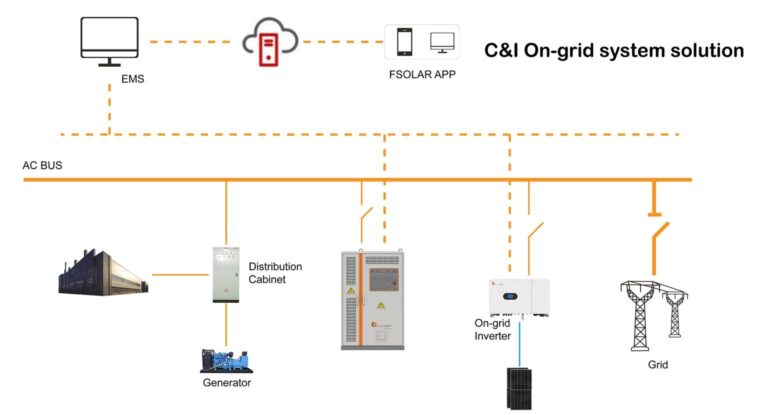
The cost of electricity is becoming unpredictable for several corporations. This is not due to rising utility rates alone; demand charges, unstable power grids, and increased time-of-use tariffs make up some of the factors. This is one of the reasons why C&I Energy Storage, which was a niche application in the past, has become an important aspect of doing business today.
Commercial and industrial entities have stopped viewing batteries as a backup solution in case of an emergency. Instead, they view them as a tool of operation that will help lower their costs and improve business sustainability.
Why C&I Energy Storage Is Gaining Momentum
Commercial energy storage systems work in a completely different way compared to home battery systems. Warehouses, production facilities, office complexes, retail complexes, and distribution centers use electricity in different ways, therefore, storage options are individual for each project.
It is not always the case that maximizing the capacity of storage leads to the best economic benefits. Many electric utilities measure their commercial consumers’ tariffs depending on the peak of demand in the billing period.
It is one of the reasons why battery systems become more popular in commercial solar projects.
Lower Energy Costs Through Smarter Energy Management
One of the biggest benefits of business storage is the flexibility it offers.
Instead of paying premium prices for electricity during the times when electricity costs the most, businesses will be able to use electricity that has been stored during the hours where utility rates are cheaper through solar energy storage or even charged during off-peak hours.
According to what installation experts say, the best results are achieved by companies that know their load curves beforehand rather than simply basing their storage capacity on electricity consumption throughout the year.
It is equally important to know when electricity is used and how much of it.
Improved Business Continuity During Power Interruptions
Not all businesses will be affected by power outages in the same way.
Small offices may only suffer from lost productivity for several hours; on the other hand, manufacturers, cold storages, health care providers, and data centers may experience severe monetary losses due to even brief outages.
A well-designed backup battery system is able to keep essential processes running until the main power supply is restored or the backup generator takes over. The essential equipment, communication system, security system, and production control systems will function normally without any immediate interruption.
There is one issue which many customers do not consider when buying a backup system, namely, not all circuits need backup power at all.
Better Performance for Grid-Tied Solar Systems
Most organizations that have adopted rooftop solar continue to consume substantial amounts of power during peak periods or nighttime hours.
In combination with a solar photovoltaic grid-connected system, storage can allow unused energy generated during the day to be stored instead of being instantly fed back into the grid.
As the rates for exporting solar energy to utilities are constantly changing in various markets, consuming energy onsite becomes increasingly appealing.
It is also cost-effective in terms of efficiency since energy generated onsite will be consumed efficiently.
Greater Operational Flexibility
Storage systems are many orders of magnitude smarter than many decision makers think.
Software that is sophisticated enough can automatically manage battery charging, solar production, building demand, weather forecasts, and utility rates. Increased visibility to energy use and less manual intervention for facility managers.
This turns out to be a bigger deal than people think. Storage provides operational flexibility, in addition to utility bill savings, for many businesses that operate multiple shifts, have seasonal production schedules or variable equipment loads.
Planning for Future Growth
Commercial facilities rarely maintain the same electrical demand for their entire lifespan.
Electric vehicle charging infrastructure, equipment expansion, warehouse automation, and electrification projects all increase energy requirements. Designing storage systems with future scalability in mind can simplify later upgrades and reduce infrastructure costs.
In larger commercial projects, modular battery systems have become increasingly popular because they allow additional capacity to be installed as operational needs evolve.
Understanding the Investment
C&I Energy Storage represents a significant renewable energy investment, so evaluating total lifecycle value is more useful than comparing equipment prices alone.
Decision-makers should consider:
- Demand charge reduction potential
- Electricity pricing structure
- Battery lifespan and warranty
- Available incentives
- Maintenance requirements
- Integration with existing energy infrastructure
- Expansion capability
A common mistake is focusing exclusively on battery capacity while overlooking software functionality, inverter compatibility, and manufacturer support. Those factors often influence long-term operating costs just as much as the hardware itself.
Reliable monitoring platforms also make preventive maintenance easier, helping facility managers identify performance issues before they affect production.
Balancing Benefits with Practical Limitations
Battery storage isn’t the perfect solution for every commercial property.
Payback may be longer for facilities with relatively flat electricity demand, low utility costs or limited operating hours. The economics of storage are very much governed by local tariffs, operating schedules and site specific electrical characteristics.
That said, organizations with sustainability goals often see storage as more than a financial investment. Better resilience, energy independence and reduced exposure to volatile electricity markets all contribute to broader business value.
Final Thoughts
There’s more than one reason to like C&I Energy Storage. Reduced operating costs, improved energy management, better resilience and higher flexibility – it’s this combo that makes storage more and more attractive for today’s companies.
If a company is contemplating commercial energy projects, they should begin by examining the actual use of electricity, not determine the battery capacity first. A C&I Energy Storage system that is well thought out, coordinated with solar generation and designed with operations in mind, stands a much better chance of providing long term value than one that is designed around equipment specs alone.
