
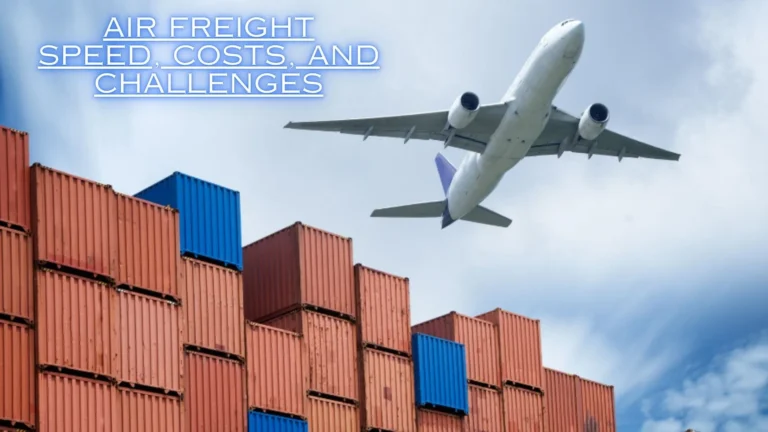
Speed, precision, and resilience now define successful logistics. Businesses no longer compete only on price or product quality. They also compete on how fast they move critical goods, how well they respond to disruption, and how effectively they protect supply chains against sudden shocks. In that setting, aviation has taken on a more strategic role than many decision-makers once expected.
Air transport is no longer reserved for luxury goods or emergency shipments alone. It now serves as a practical tool for companies that need continuity, flexibility, and access to distant markets without delay. From medical supplies and aircraft parts to high-value electronics and time-sensitive documents, the ability to move cargo quickly has become central to modern planning.
One reason for this shift is the growing fragility of global supply networks. A delayed container, a port strike, severe weather, or a customs bottleneck can disrupt production schedules within hours. When road or sea transport fails to meet deadlines, air support often becomes the fastest route back to stability. For many organisations, that option is not a luxury. It is part of a serious contingency plan.
A faster response to an unpredictable market
Markets now change at a pace that leaves little room for hesitation. Consumer demand can spike overnight. Manufacturers can run short of essential components with almost no warning. Retailers can face lost revenue if seasonal stock arrives too late. In these situations, air-based logistics offers a direct answer.
The main advantage is obvious: speed. Yet speed alone does not explain the full value. Air transport also reduces uncertainty. A shipment that takes weeks by sea can arrive in days by air, giving planners tighter control over inventory, production, and customer expectations. That level of predictability helps businesses make better decisions under pressure.
This matters especially for sectors where downtime is expensive. If a factory lacks one vital machine part, an entire production line may stop. If a hospital waits too long for specialist equipment, the consequences are even more serious. Air logistics helps close those gaps before they become larger operational failures.
More than cargo planes and airport schedules
Many people still imagine air logistics as a simple matter of loading goods onto a plane. In reality, the process is far more complex and far more interesting. Successful operations depend on coordination between freight forwarders, customs specialists, ground handlers, warehouse teams, and digital tracking systems.
A well-run air logistics chain starts long before takeoff. Goods must be packed correctly, documented properly, cleared for transit, and matched with the right routing. Once in motion, every hour counts. Delays at one stage can affect the entire chain, which is why expertise matters so much in this field.
Technology has also changed expectations. Real-time tracking, predictive planning, and data-led route management now help operators reduce friction and improve reliability. Companies want visibility as well as speed. They need to know where a shipment is, when it will arrive, and what risks may affect the journey. Aviation-based logistics increasingly delivers that transparency.
A strategic tool for business continuity
Recent years have shown that resilience should sit at the centre of every supply strategy. Lean operations may save money in calm periods, but they often struggle when disruption hits. Air transport gives businesses a way to respond quickly without redesigning their entire network.
This is particularly valuable for companies operating across several regions. A business may source materials in one country, assemble products in another, and serve customers across multiple continents. In that model, even a small interruption can create a chain reaction. Air solutions help contain the damage and protect service levels.
There is also a growing recognition that rapid transport supports more than commerce. It supports trust. Clients remember when a supplier meets a tight deadline under difficult conditions. Partners remember who remains dependable when other routes fail. In that sense, logistics is not just an operational function. It is part of a company’s reputation.
The future will reward flexibility
The next phase of logistics will favour businesses that combine efficiency with adaptability. Sea, road, rail, and air will each keep their place, but the smartest organisations will know when to shift between them. They will not treat air transport as a last-minute fix. They will treat it as a planned and valuable part of a broader strategy.
That approach reflects a larger truth about modern trade. Stability no longer comes from assuming everything will go as planned. It comes from preparing for the moment when it does not. Companies that understand this will be better placed to protect revenue, serve customers, and keep operations moving when conditions become difficult.
Air logistics will therefore remain essential, not because every shipment belongs on a plane, but because some shipments simply cannot wait. In a business climate shaped by urgency and constant change, that difference matters more than ever.
