
Introduction
The selection of a cartoning machine could lead to better efficiency in packaging operations, decrease on labor costs and provide protection of the items during transit and storage processes. However, not all machines would suit all production lines; while one system could be ideal for the production of a pharmaceutical company, it may be inappropriate for use by a food producer or cosmetic company.
This guide on buying a cartoning machine contains some vital information to take into account prior to purchasing the machine. This includes such important issues as production capacity, carton types, etc.
What Is a Cartoning Machine?
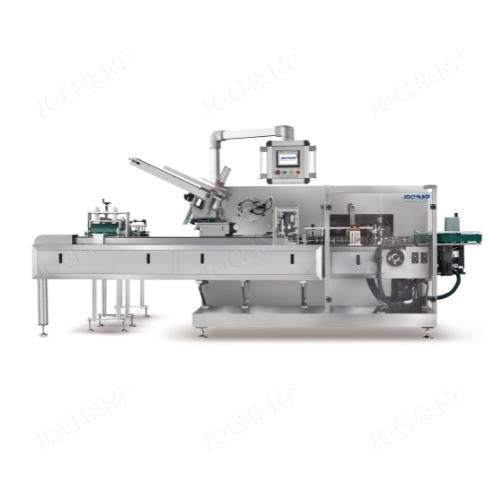
A cartoning machine is packaging equipment that automatically forms, fills, and closes paperboard cartons. It is widely used across industries such as food and beverage, pharmaceuticals, cosmetics, personal care, household products, and consumer goods.
Depending on your production needs, a cartoning machine can:
- Form flat carton blanks into finished boxes
- Insert products manually or automatically
- Add instruction leaflets or promotional inserts
- Seal cartons using tuck flaps or adhesive
- Prepare products for shipping or retail display
The right equipment helps improve packaging consistency while reducing product damage and manual handling.
Types of Cartoning Machine
Understanding the main machine types is the first step toward making a smart purchase.
Horizontal Cartoning Machines
Horizontal cartoners load products from the side before closing the carton. They are commonly used for:
- Food products
- Frozen meals
- Bakery items
- Pharmaceutical blister packs
- Cosmetic kits
These machines work well for products that are stacked, wrapped, or grouped before packaging.
Vertical Cartoning Machines
Vertical cartoners load products from the top into an upright carton. They are often used for:
- Bottles
- Jars
- Pouches
- Powders
- Granules
Gravity assists product loading, making this design suitable for many free-flowing or irregular products.
Automatic vs. Semi-Automatic Models
Automatic cartoning machinery ensures higher efficiency in terms of speed at very little need for human intervention. These machines are best suited for moderate to large scale production operations.
In case of semi-automatic machines, there is some loading work involved, but their cost of acquisition is considerably less. These are more feasible for developing companies.
Key Factors to Consider Before Buying a Cartoning Machine
Selecting packaging equipment involves more than comparing prices. Focus on how the machine fits your production process.
Production Speed
Estimate your current output and future growth.
Ask questions such as:
- How many cartons per minute are required?
- Will production increase over the next three to five years?
- Can the machine maintain speed without sacrificing quality?
Buying equipment with a small amount of extra capacity often prevents costly upgrades later.
Product and Carton Compatibility
Every product has unique packaging requirements.
Check that the machine can handle:
- Product dimensions
- Carton sizes
- Product weight
- Packaging materials
- Multiple stock keeping units (SKUs)
A machine that supports quick size changes can significantly reduce downtime.
Packaging Quality
Consistent carton forming and sealing improve both product protection and shelf appearance.
Look for features that provide:
- Accurate carton erection
- Reliable product insertion
- Secure flap closing
- Minimal carton waste
Poorly formed cartons can lead to customer complaints and increased shipping damage.
Ease of Operation
A user-friendly machine reduces training time and operating errors.
Helpful features include:
- Touchscreen controls
- Recipe storage for different products
- Clear maintenance alerts
- Simple adjustment mechanisms
Operators should be able to perform routine changeovers without extensive technical support.
Maintenance Requirements
Good equipment ensures fewer unexpected shutdowns.
Before you buy:
How frequently does preventive maintenance have to take place?
Are there easy access to replacement parts?
Is there technical assistance available from the supplier?
Is there remote troubleshooting possible?
A slightly higher cost for buying can be justified.
Consider Total Cost of Ownership
The purchase cost is just one component of the investment.
Consider the following recurring costs:
Installation
Training for operators
Power requirement
Spares and maintenance
Upgrading the equipment
In other words, a company can buy a less expensive machine at first but then incur high maintenance costs due to constant breakdowns and low productivity.
Integration With Existing Packaging Lines
Most manufacturers currently have machines like conveyors, case packing machines, labelers, check weighers, or palletizers.
Be sure that your new cartoning machine is compatible with all your current machinery.
Inquire from your supplier regarding:
Conveyor compatibility
Machinery communication
Automation features
Expandability possibilities
Integration planning makes installation much easier.
Practical Buying Tips
Before entering into a purchasing agreement, try these practical measures:
Ask for an actual demonstration using your real product.
Examine sample cartons made using the machine.
Visit a location where the equipment is already installed if possible.
Confirm warranty details and service response time.
Inquire about availability of replacement parts in the United States.
Check operator training and installation services.
Ask about estimated changeover times with various carton sizes.
Such basic measures will show you the pros and cons that the brochures might hide.
Common Buying Mistakes to Avoid
Most packages are underutilized as a result of people prioritizing cost-saving over performance.
Common pitfalls include:
Choosing machines solely based on cost
Failure to take into consideration future growth in production
Maintenance considerations overlooked
Buying without trying out the product
Failure to assess the service provided by the manufacturer
Choosing a machine that does not have flexibility
A well thought-out buying process often means increased efficiency.
FAQ
In which industries is cartoning machinery utilized?
Cartoning machinery is extensively used in the manufacture of food products, medicines, cosmetic and personal care products, house hold items, nutraceuticals, and consumer packaged goods.
Which type of cartoning machine should I select – horizontal or vertical?
It all depends on your product design, loading method, speed, and packaging requirement. The horizontal type is suitable for most packed goods, whereas the vertical one works best with bottles, pouches, and flowing goods.
Should I invest in automatic cartoning machines?
If you are running your production with consistent volumes, then automatic machine systems will definitely increase efficiency and performance of your business.
How long will my cartoning machinery run?
An industrial cartoning machinery runs for several years with regular maintenance and replacement parts.
Conclusion
Investment in the best cartoning machine involves selecting equipment which meets production requirements and does not necessarily imply going for the cheaper one. Production rate, product suitability, quality of packaging, maintenance, and operation costs should be taken into consideration so that an effective decision can be made in regard to the machine’s purchase. The correct choice of the cartoning machine ensures efficient operations and reliable packaging.
