
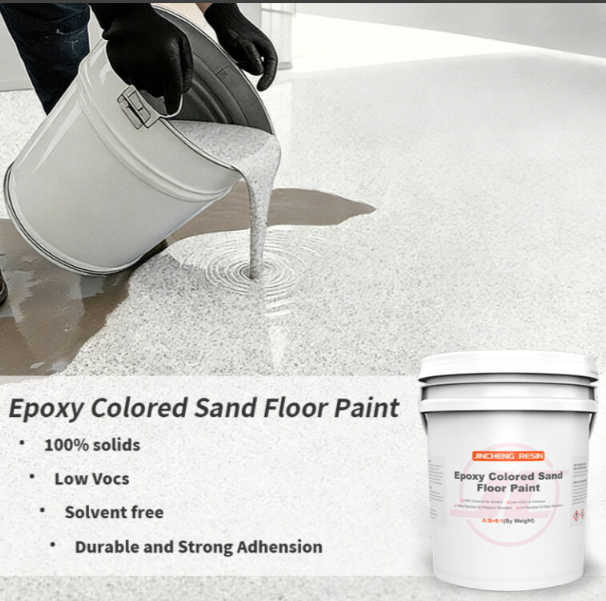
Not only should the floor serve its basic function, but it should also withstand various forces, including traffic, moisture, chemicals, and abrasions. Besides, it should retain its aesthetic appeal. The floor with the epoxy coating will meet both criteria mentioned.
The epoxy coating system can be made with various hues, patterns, and textures. The epoxy system with colored sand can be very helpful for those who want their floors to be slip-resistant without sacrificing the epoxy flooring features.
What Is Colored Epoxy Floor Coating?
The colored epoxy floor coating is a flooring system that combines epoxy materials with pigments or colored aggregate.
Colored sand epoxy flooring is one of the epoxy coating variations. It combines the epoxy resin with colored quartz sand. According to JINCHENG, its colored sand epoxy flooring system is made to ensure high hardness, wear resistance, compression resistance, water resistance, and customizable color.
Contrary to ordinary floor paints, the well-designed epoxy system will create a smooth, continuous surface.
Why Choose a Colored Epoxy Floor Coating?
The key benefit of using epoxy flooring is its blend of functionality and aesthetics.
A typical concrete floor will be effective but dusty and unsightly, not to mention that it can become stained easily. The right epoxy coating could add to the aesthetics of the concrete without damaging it.
Colored epoxy floors also increase options for customization. Based on the type of epoxy, you could pick various colors, aggregates, and decorative elements to match the environment.
Key Benefits of Colored Epoxy Flooring
Durability and Wear Resistance
These areas may constantly receive foot traffic, the movement of equipment, and mechanical action.
In the colored sand epoxy floor, there is use of hard aggregate in the epoxy. JINCHENG states that its colored sand formulation achieves a Mohs hardness rating of 6–7 after curing and is designed to resist wear and compression.
The actual performance is a function of the composition, substrate preparation, thickness of coating, and process conditions.
Chemical and Oil Resistance
Floors in garages, workshops, factories, and service areas may come into contact with oils and chemicals.
Epoxy systems can provide resistance to many common substances, although chemical compatibility should always be confirmed for the specific environment. JINCHENG describes its colored sand epoxy coating as resistant to acids, alkalis, oil stains, and other common chemical exposures.
A floor exposed to aggressive chemicals should be evaluated more carefully than one exposed only to routine spills.
Water and Moisture Resistance
Moisture can create problems for concrete surfaces and some flooring systems.
JINCHENG describes its colored sand epoxy flooring as having a dense structure and good water resistance. The company also positions the product for humid areas such as bathrooms and kitchens.
However, surface moisture should still be assessed before installation. A coating cannot reliably compensate for active water intrusion or an unsuitable substrate.
Decorative Flexibility
Color is one of the most useful features of this flooring technology.
Different shades can be used to create a clean, modern appearance or define specific areas within a commercial or industrial facility. JINCHENG’s colored sand system is available in multiple colors, with customization options for certain applications.
This makes the technology suitable for projects where flooring needs to support both branding and functional requirements.
Easier Cleaning
A seamless coated floor can reduce areas where dirt and contaminants collect.
This can simplify routine sweeping and mopping, particularly in commercial and industrial spaces. However, cleaning performance depends on the final surface texture and the chemicals used during maintenance.
Where Is Colored Epoxy Floor Coating Used?
Industrial Workshops and Factories
Industrial Workshops and Factories
The use of the factory facility means exposure to machines, pedestrian traffic, oils, and wear from mechanical stresses.
An appropriately selected epoxy with coloring will give a tough surface and an appearance of being more organized and clean. The application of such a product as colored sand epoxy flooring by JINCHENG is suitable for industrial workshops and factories.
Warehouses
Warehouse floors need to withstand the constant movement of people, pallets, wheeled equipment, and other equipment.
A hard and seamless coating can make maintenance easier. If there are forklifts or other equipment that may generate considerable loading and wear, the entire system needs to be selected.
Garages and Parking Areas
Garages can experience tire traffic, oil, fuel, water, and dirt.
Colored epoxy flooring can help create a protective surface that is easier to maintain. A textured aggregate finish may also provide additional grip compared with a very smooth surface.
Showrooms and Retail Spaces
Appearance becomes especially important in customer-facing environments.
Colored epoxy flooring can provide a continuous decorative finish without the visual breaks associated with some traditional flooring materials. Different colors and patterns can be used to complement a showroom or retail interior.
Commercial and Residential Areas
The epoxy paints can also be applied selectively in certain residential and commercial settings.
Such settings include garages, utility rooms, workshops, and other places that receive much traffic. In such a case, one has to ensure that the decision about the product is based on the surface that will be coated.
How to Choose the Right Colored Epoxy Floor Coating
Consider the Environment
Start by identifying where the floor will be installed.
A residential garage has different requirements from a factory, warehouse, or commercial showroom. Consider traffic, machinery, moisture, chemicals, temperature, and cleaning frequency.
Evaluate the Substrate
Concrete condition has a major effect on coating performance.
Before installation, check for:
- Cracks
- Weak or damaged concrete
- Oil and grease
- Dust
- Existing coatings
- Surface moisture
- Uneven areas
These problems should be addressed before the coating is applied.
Select the Right Finish
The desired appearance should be considered alongside performance.
Smooth finishes can provide a clean visual effect and simple maintenance. Colored sand or other aggregate-based systems can provide texture and additional grip.
Check Application Requirements
Temperature and humidity can affect curing and application.
Colored sand epoxy floor from JINCHENG requires a construction temperature of 5 to 35 degrees Celsius and humidity below 85%. Application is not recommended during rainy and snowy conditions.
However, always consult the specific manufacturer’s guidelines, as there are varying application specifications.
Why Surface Preparation Matters
A well-applied coating cannot make up for bad surface preparation.
The substrate needs to be clean, solid, and prepared properly before application of the resin system. Such materials like dust, oil, loose concrete, etc., will affect bonding.
According to the condition of the floor, mechanical preparation might be needed. In addition, all the cracks need to be repaired before coating.
Moisture should receive particular attention. Excessive moisture beneath a coating can contribute to adhesion problems, blistering, or other forms of coating failure.
Colored Epoxy vs. Other Decorative Flooring Options
Colored epoxy is only one option for decorative flooring.
Metallic epoxy will give you a shiny and attractive look. Flake epoxy makes use of decorative flakes and is great for garage and commercial settings.
Colored sand epoxy, on the other hand, uses resin and aggregate to form the epoxy. It gives a textured look and slip-resistant properties.
The selection of which one to go with depends on the priorities of the project, whether it is aesthetics, slip resistance, chemicals, abrasions, maintenance, or a combination of them all.
Why Choose an Experienced Epoxy Flooring Manufacturer?
The quality of the flooring system depends on more than just the resin. JINCHENG offers several epoxy flooring categories, including metallic, marble, flake, and colored sand epoxy systems. The company also provides customized flooring solutions for different colors, performance requirements, and applications.
For contractors, distributors, and commercial buyers, this broader product range can make it easier to select a flooring system based on the project’s actual requirements.
Explore JINCHENG colored epoxy floor coating solutions
How to Maintain Colored Epoxy Flooring
Maintenance will help maintain aesthetics as well as functionality.
Dust and other particles have to be removed regularly to prevent scratching. Use compatible cleaners with your coating system.
Scratches and wear-and-tear might occur in heavily traveled areas and need to be checked regularly.
Never expose the floor to any harsh chemicals without prior approval from the coating system manufacturer.
Frequently Asked Questions
For what purpose is colored epoxy floor coating used?
Colored epoxy floor coating is used for decorative and protective purposes. Some examples of its uses are factories, warehouses, garages, showrooms, commercial areas, and some specific residential areas where durability and aesthetics are equally important.
Is colored epoxy flooring appropriate for high traffic areas?
Yes, colored epoxy flooring is appropriate for high-traffic areas if the entire system has been correctly designed and installed. Substrate preparation, coating formulation, thickness, aggregates, and traffic are just a few of the factors that determine performance.
Is colored epoxy floor coating slip-resistant?
Some colored sand epoxy systems can provide improved traction because of the aggregate incorporated into the surface. JINCHENG specifically describes its colored sand epoxy flooring as slip-resistant.
Can colored epoxy flooring be customized?
Yes. Colored epoxy systems can be produced in different colors and decorative patterns. JINCHENG states that its colored sand epoxy flooring supports customizable colors for certain applications.
How do you maintain colored epoxy flooring?
Cleaning using the appropriate mopping methods will help remove dirt. The cleaning chemicals used should be suitable for use on the coating, and the areas that experience high footfall should be monitored for wear and tear.
Conclusion
A colored epoxy floor coating is a combination of flexibility in terms of decoration and protection in a number of environments such as commercial, residential, and industrial applications. The colored sand coating system is another alternative where there is a need for a rough finish.
The selection of the proper floor coating system involves consideration of factors including substrate type, level of traffic, moisture conditions, exposure to chemicals, appearance needs, and application conditions.
