
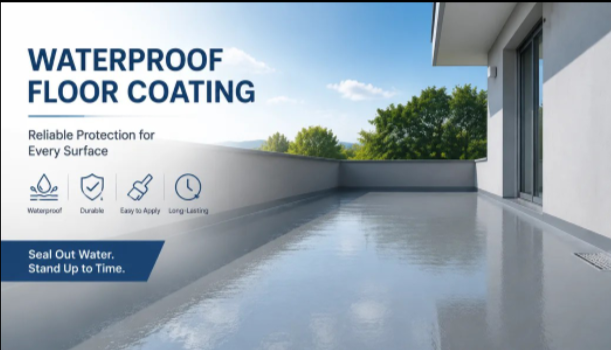
Concrete floors are widely used in garages, warehouses, workshops, commercial buildings, basements, and industrial facilities because they are strong and durable. However, untreated concrete can absorb moisture, develop cracks, stain easily, and gradually deteriorate when exposed to water or harsh conditions. A waterproof floor coating can provide an additional layer of protection while also improving the floor’s appearance and durability.
What Is Waterproof Floor Coating?
Waterproof floor coating is a protective layer applied over a concrete or other suitable flooring surface to help prevent water and moisture from penetrating the floor. Depending on the formulation, these coatings can also provide resistance against chemicals, abrasion, stains, and everyday wear.
Modern coating systems are available in different formulations, including polyurethane, epoxy, acrylic, and polyaspartic coatings. The right option depends on the environment, expected traffic, moisture exposure, and performance requirements.
Why Waterproofing Concrete Floors Matters
Moisture is one of the most common problems affecting concrete surfaces. Water can enter through pores and small cracks, potentially contributing to surface deterioration, mold growth, staining, and other maintenance issues.
Applying a waterproof coating creates a protective barrier over the surface. This can be particularly useful in areas where floors are frequently exposed to water, humidity, cleaning chemicals, or spills.
Waterproofing can also make concrete floors easier to maintain. A properly selected coating creates a smoother, more sealed surface that can be cleaned more easily than unfinished concrete.
Key Benefits of Waterproof Floor Coating
1. Protection Against Moisture
The primary purpose of a waterproof coating is to reduce water penetration. This makes it suitable for areas such as basements, garages, workshops, bathrooms, and other spaces where moisture exposure is common.
2. Better Resistance to Wear
Some coating systems are designed to withstand heavy foot traffic, equipment movement, and regular abrasion. This can help extend the service life of the underlying floor.
3. Easier Maintenance
A sealed floor generally has fewer exposed pores and imperfections where dirt and liquids can accumulate. As a result, routine cleaning can become simpler and more efficient.
4. Improved Appearance
Floor coatings are available in different colors, finishes, and textures. Besides protecting the surface, they can give an old or unfinished concrete floor a cleaner and more uniform appearance.
5. Resistance to Chemicals and Stains
Certain coating formulations provide resistance to oils, solvents, cleaning products, and other chemicals. This can be particularly important in workshops, factories, laboratories, and commercial facilities.
Choosing the Right Waterproof Floor Coating
Not every coating is suitable for every environment. Before selecting a product, several factors should be considered.
Surface condition: The existing concrete should be inspected for cracks, contamination, moisture problems, and structural damage.
Moisture exposure: Areas with frequent water exposure may require a coating system specifically designed for wet environments.
Traffic levels: A residential garage may have different requirements from a warehouse or manufacturing facility with heavy equipment.
Chemical exposure: Industrial environments may need coatings with stronger chemical resistance.
Application conditions: Temperature, humidity, surface preparation, and curing requirements can affect the performance of the finished coating.
Proper Surface Preparation Is Essential
Even a high-performance coating may fail if it is applied to a poorly prepared surface. Concrete should generally be clean, dry, and free from oil, grease, dust, loose particles, and other contaminants.
Depending on the condition of the floor, preparation may involve mechanical grinding, shot blasting, crack repair, or other surface-treatment methods. Following the manufacturer’s application instructions is also important for achieving proper adhesion and long-term performance.
Where Can Waterproof Floor Coatings Be Used?
Waterproof floor coatings can be used in a wide range of residential, commercial, and industrial environments. Common applications include garages, basements, warehouses, workshops, parking areas, factories, commercial kitchens, and utility spaces.
The ideal coating system depends on the specific conditions of each location. A product designed for light residential use may not provide the same performance required in a high-traffic industrial facility.
Final Considerations
A waterproof floor coating can be a practical way to protect concrete surfaces from moisture while improving durability, cleanliness, and appearance. However, the coating should be selected according to the floor’s condition and the demands of the environment.
Proper preparation, correct application, and suitable product selection are just as important as the coating itself. When these factors are considered together, a waterproof floor coating can help create a more durable and easier-to-maintain flooring surface.
