
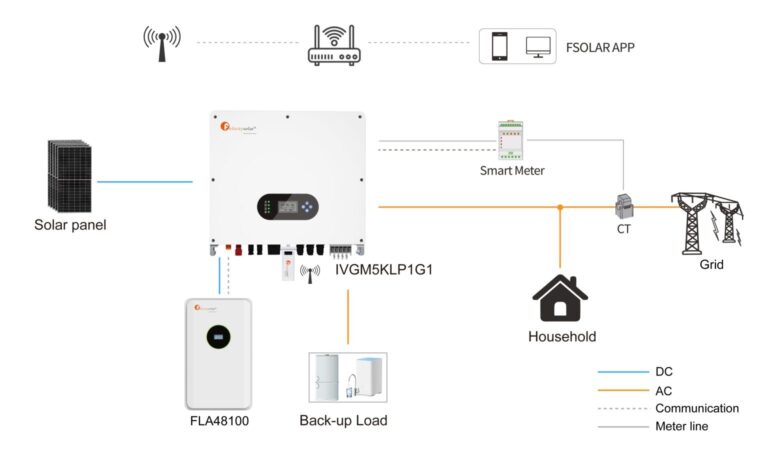
There have been changes in the way people discuss domestic solar in recent years. Instead of just questioning about how many solar panels are required, they now ask about the ability to maintain lights even when there is a power failure, save on the cost of electricity at night time, and maximize the benefit of produced energy. This is when residential ESS comes into play.
Choosing the right system isn’t as straightforward as comparing battery capacities. Every household has different energy habits, local utility policies, and backup expectations. A storage system that performs well for one family may be oversized—or undersized—for another.
Why a Residential ESS Has Become a Practical Investment
The ESS residential system can either store excess energy produced from the solar system or, in certain cases, utility charging at times of low rates. The energy is not returned to the grid but can be used later during higher rates or blackouts.
Changing net metering policies have also influenced buying decisions. In many areas, exporting excess electricity no longer delivers the financial return it once did. Using more of your own solar production often provides better long-term value.
From what installers often report, homeowners are placing greater emphasis on energy independence than they did even five years ago. Reliability has become just as important as monthly utility savings.
Matching the System to Your Energy Needs
What many consumers fail to take into consideration is the fact that the battery sizing should be done on the basis of real electricity usage and not only the solar panel array size.
A house that uses large amounts of electricity during evenings could benefit from more battery capacity, while a house using electricity during daytime will not gain much from increasing its system.
Start by evaluating:
- Average daily electricity consumption
- Peak evening demand
- Frequency of grid outages
- Critical appliances that require backup
- Existing or planned grid-tied solar system capacity
These details have a much greater impact on system performance than selecting the latest battery model.
Battery Technology Matters—But It’s Not Everything
Modern-day ESSs for homes use LFP batteries. These batteries have great longevity, good thermal stability, and low maintenance costs compared to old types of batteries.
Capacity is the most important characteristic of any battery. But while the capacity can be sufficient, the power of an inverter might not be enough to run multiple devices at once.
Different companies provide warranties of different periods. Instead of focusing solely on years of coverage, compare guaranteed retained capacity, expected cycle life, and performance conditions outlined in the warranty documentation.
Smart Energy Management Makes a Bigger Difference Than Many Expect
Energy management software is an integral part of today’s energy storage solutions.
While some systems would merely charge and discharge automatically, other systems would take into consideration household consumption needs, weather forecasts, and generation potential and utility rates. There are systems which have been designed to maximize self-consumption of the generated electricity and those designed for emergency situations only.
In practice, software configuration can significantly influence financial returns. Two nearly identical battery systems may produce different savings simply because one has been optimized for local electricity pricing.
Homeowners should also ask whether monitoring platforms allow remote updates and provide detailed usage reports. Those insights make it easier to understand how the system performs throughout the year.
Installation Quality Often Determines Long-Term Performance
The best equipment does not make up for bad installation.
Correct cable dimensions, compatible inverters, good ventilation, electrical protection, and commissioning all affect reliability. It usually matters much more than one would think at first, particularly after several years of usage.
A frequent pitfall is choosing equipment without thinking of expansion in the future. Homeowners tend to buy electric cars, heat pumps, or any other household equipment which consumes more electricity.
While residential projects focus on household resilience, the same planning principles apply to larger commercial solar installation projects, where storage sizing and operational strategy are equally important for maximizing performance.
Maintenance Expectations
Though residential battery systems do not require too much maintenance, they cannot simply be neglected either.
Regular checks, system upgrades, and performance monitoring can make sure that the backup battery system is functioning efficiently for its entire lifetime. It is also possible to spot any problems with dust buildup, communications or failing batteries with the help of system monitoring.
Cost, Value, and Return on Investment
A residential ESS remains a significant renewable energy investment, and payback periods vary considerably depending on local electricity rates and utility policies.
Several factors influence overall value:
- Electricity pricing structure
- Available incentives or tax credits
- Battery lifespan
- Daily solar production
- Household consumption habits
- Backup power requirements
Some households recoup their investments mainly through savings in energy usage. Some invest in generators in order to continue functioning when power supply is disrupted, due to the added value that goes beyond money.
Costs associated with purchase should not be considered alone.
Final Thoughts
Choosing the appropriate residential ESS is not a matter of opting for the biggest battery capacity but rather about creating a system that suits your own energy consumption pattern.
For those interested in choosing the best possible ESS when considering solar power, the most sensible thing to do is to reconcile backup plans, expenses, and future energy needs.
A well-organized residential ESS will allow you to have your house covered for many years ahead, accommodating changing energy consumption.
