
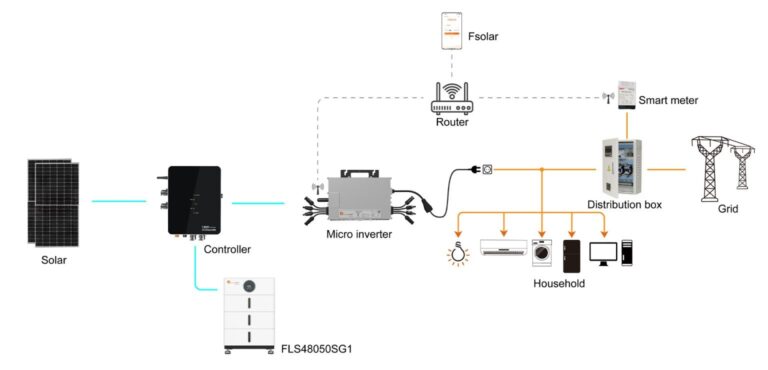
Not too long ago, almost all solar customers were interested only in the efficiency of panels. This discussion is becoming outdated. Increased rates, demand charges of utilities, instability of the power grid and changes in net metering programs make solar energy storage solutions an indispensable part of the system. Whether you have to install your system at home or operate a large commercial facility – storage takes much more attention today than several years ago.
The difficulty of choosing a battery lies not only in selecting an solar energy storage solution but in finding the optimal match between actual electricity consumption, frequency of outages, and expected financial results of the investment over a decade or even more.
Why Solar Energy Storage Solutions Became Crucial in 2026
A solar panel produces power only when the sun is shining. Without a battery, surplus energy will either be sold to the utility company or wasted depending on local rules and conditions. Batteries make it possible to use that power whenever needed making solar power usage more efficient and independent from utility company power supply.
Commercial facilities face a different set of challenges. In larger commercial projects, storage is frequently designed around peak demand reduction rather than blackout protection. Lowering expensive demand charges can significantly improve the financial performance of a commercial solar installation.
Choosing the Right Battery Technology
LFP batteries are still the most favored among all other types as they feature not only durability but also high levels of safety and low maintenance costs. Though other battery types are used for certain applications, LFP batteries have proven to be the best solution in many situations.
It should also be noted that the buyers often neglect the fact that battery capacity is not the only factor that influences the efficiency of the battery system. It is also necessary to take into account the inverter output power.
Other specifications deserve equal attention:
- Usable capacity rather than advertised capacity
- Expected cycle life
- Round-trip efficiency
- Warranty terms
- Operating temperature range
- Compatibility with existing inverters and monitoring platforms
These factors often have a greater impact on long-term satisfaction than the battery brand alone.
Matching Storage to Energy Management Goals
Every property consumes electricity differently. That’s why modern energy management software has become almost as valuable as the battery itself.
Some systems automatically charge during periods of lower electricity pricing and discharge when utility rates increase. Others prioritize self-consumption by storing excess daytime solar production for evening use.
From what installers often report, customers who spend time reviewing their actual consumption data before system sizing tend to achieve better economic results than those selecting storage based only on battery capacity.
A well-designed grid-tied solar system with integrated storage also provides flexibility. If utility programs or electricity pricing changes over time, software updates can often adjust battery operating strategies without requiring hardware replacement.
Cost Considerations and Return on Investment
Battery prices have become more competitive, yet storage remains one of the largest investments in a solar project.
The financial value depends on several variables:
- Local electricity rates
- Net metering policies
- Peak demand charges
- Backup power requirements
- Daily energy consumption patterns
- Available incentives and tax programs
A common mistake is assuming the largest battery always delivers the highest return. Oversizing storage can extend the payback period unnecessarily if daily energy consumption doesn’t justify the added capacity.
Industrial buyers and facility managers usually evaluate storage differently. Downtime, production losses, equipment protection, and operational continuity often outweigh simple electricity savings when calculating return on investment.
Installation and System Design Considerations
Correct installation is as important as quality equipment.
Location of batteries impacts temperature during operation, accessibility for maintenance, and reliability. If the installation is indoors, it might need ventilation or special utility room; if it is outdoors, then the design should withstand local environmental conditions.
The engineering aspect includes the choice of the right size of inverters, electrical protection measures, means of communication, and possibilities for future growth. Designing for potential expansion of battery storage capacity at a later stage can save money on upgrades should there be an increased need for power.
This is often much more important than one might first realize. Adding capacity to a pre-installed electrical system that is too small is often a lot more costly than designing in some extra capacity at the time of initial installation.
Maintenance Expectations
Today’s battery systems are not very maintenance-intensive compared to earlier forms of batteries.
However, the software of these systems needs to be monitored for any upgrades and the electrical connections need to be checked from time to time as part of any planned maintenance visits.
Is Solar Energy Storage the Right Renewable Energy Investment?
All properties do not necessarily need batteries for storage. Properties that are able to access reliable utility power and have high net metering options may not experience immediate benefits from storage.
However, when there are fluctuating costs of electricity, more blackouts and utilities paying less for solar energy production than for buying retail electricity, the calculation is different.
For organizations that seek sustainable development, storage could help in achieving operational resilience while at the same time making investments in renewable energy generation strategies.
Final Thoughts
It is now much more advanced to the point that it provides power during daylight hours only. The best solar storage solutions options are based on operational reality, reasonable back up expectations, and long-term energy management goals rather than on trying to maximize battery capacity.
If you are an individual looking for reliable back-up power, an EPC company designing solar panels for a business, or a facilities manager concerned about energy costs in the future, proper sizing and integration of the equipment will generally be more productive than the latest gadgetry. It really helps in the situation where there is proper matching of energy use and storage.
