
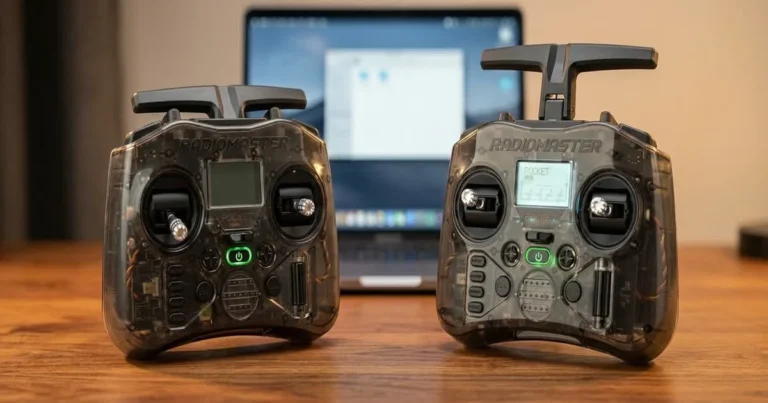
The radio system is one of the most important parts of an FPV drone setup. While motors and flight controllers determine how the drone moves, the radio system creates the connection between the pilot and the aircraft.
A reliable radio controller provides accurate control, stable communication, and confidence during every flight. Whether you are a beginner learning your first FPV drone or an experienced pilot building a long-range platform, choosing the right radio system can significantly improve your flying experience.
With many protocols, frequencies, and controller designs available today, selecting the right equipment can be confusing. Understanding the basics of FPV radio systems makes the decision process much easier.
The Role of a Radio System in FPV Drones
An FPV radio system consists of two main parts:
- The transmitter (radio controller)
- The receiver installed on the drone
The pilot uses the transmitter to send commands, while the receiver receives those signals and sends information to the flight controller.
The communication system controls essential functions such as:
- Throttle
- Roll
- Pitch
- Yaw
- Flight modes
- Auxiliary switches
A high-quality radio link ensures that commands are transmitted quickly and accurately.
For FPV flying, especially racing and freestyle, even small delays can affect control performance.
Why Choosing the Right Radio Controller Matters
Not all controllers are designed for the same type of pilot.
Beginners may prefer:
- Simple operation
- Comfortable ergonomics
- Affordable pricing
- Easy setup
Experienced pilots often look for:
- Advanced customization
- Multiple switches
- Better range
- External module support
- Improved reliability
The best choice depends on flying style, experience level, and future upgrade plans.
Understanding ELRS Protocol
ExpressLRS (ELRS) has become one of the most popular radio protocols in the FPV community.
It is widely adopted because of its:
- Low latency
- Long range capability
- Open-source development
- Efficient performance
Compared with older radio systems, ELRS provides excellent performance for both freestyle and long-range applications.
Many modern FPV pilots choose ELRS because it offers a strong balance between reliability and affordability.
2.4GHz vs 900MHz Radio Systems
Most modern FPV radios operate on either 2.4GHz or 900MHz frequencies.
2.4GHz Systems
Advantages:
- Lower antenna size
- Lower latency
- Popular among freestyle pilots
- Compact receivers
Suitable for:
- Racing drones
- Freestyle drones
- Everyday FPV flying
900MHz Systems
Advantages:
- Longer range
- Better penetration
- More suitable for exploration flights
Suitable for:
- Long-range FPV
- Mountain flying
- Large platforms
The choice depends on the type of flying you plan to do.
Important Features When Choosing a Radio Controller
A good FPV controller should provide the right combination of comfort, performance, and flexibility.
Ergonomic Design
Pilots often spend hours holding their controllers, so comfort matters.
Important factors include:
- Grip shape
- Weight balance
- Button placement
- Gimbal quality
A comfortable controller improves precision and reduces fatigue.
Gimbal Quality
The gimbals are responsible for controlling:
- Throttle
- Pitch
- Roll
- Yaw
Higher-quality gimbals provide smoother and more accurate control input.
For competitive pilots, precise stick movement can directly affect flight performance.
Battery Life
Long flight sessions require reliable controller battery performance.
Modern controllers may support:
- Built-in batteries
- External batteries
- Rechargeable systems
Longer battery life means fewer interruptions during flying.
Firmware Support
Modern FPV controllers often support firmware updates.
This allows manufacturers and developers to improve:
- Compatibility
- Features
- Performance
- Security
Choosing a Radio Controller for Beginners
New FPV pilots often make the mistake of purchasing advanced equipment before understanding their needs.
A beginner-friendly controller should offer:
- Simple setup
- Reliable connection
- Comfortable design
- Good community support
It is also useful to choose a controller that can grow with your skills.
Many pilots start with an affordable radio and continue using it even after gaining more experience.
Choosing a Radio Controller for Experienced Pilots
Advanced pilots usually need more customization.
Important features may include:
- Multiple channels
- Adjustable switches
- External module support
- Advanced configuration options
Freestyle and racing pilots often customize their radio settings to match their flying style.
Long-range pilots may prioritize:
- Maximum range
- Signal reliability
- Receiver compatibility
Radio Compatibility With FPV Drone Components
A radio controller must work correctly with the receiver installed on the drone.
Before purchasing, pilots should check:
- Protocol compatibility
- Receiver type
- Firmware version
- Frequency system
For example, an ELRS transmitter requires an ELRS-compatible receiver.
Understanding compatibility prevents unnecessary setup problems.
The Growing Importance of Compact FPV Radios
In recent years, compact radio controllers have become increasingly popular.
Smaller controllers provide:
- Easier transportation
- Lower weight
- Comfortable handling
- Affordable entry points
They are especially useful for pilots who travel frequently or want a lightweight setup.
Products such as the RadioMaster Pocket have gained attention among FPV beginners and experienced users because they combine portability with modern radio technology.
Finding Reliable FPV Radio Resources
Choosing FPV electronics requires careful research because compatibility and performance are critical.
Specialized FPV suppliers such as MEPSKING provide access to different control systems, receivers, and accessories, helping pilots compare options based on their drone setup and flying requirements.
Instead of selecting a controller only based on price, pilots should consider long-term usability, protocol support, and upgrade possibilities.
Common Mistakes When Buying FPV Radios
Choosing Without Checking Protocol
A transmitter and receiver must use compatible communication systems.
Ignoring Future Upgrades
A basic controller may become limiting as flying skills improve.
Selecting Based Only on Appearance
A stylish controller is not necessarily the most reliable option.
Forgetting Ergonomics
Comfort and control precision are essential for enjoyable flying.
Conclusion
A radio controller is the connection between the pilot and the FPV drone. Choosing the right system improves reliability, control accuracy, and overall flying confidence.
Understanding protocols such as ELRS, frequency options, compatibility requirements, and controller features allows pilots to make smarter decisions.
Whether you are starting your first FPV journey or upgrading an advanced build, investing in a reliable radio system creates a stronger foundation for better flying experiences.
